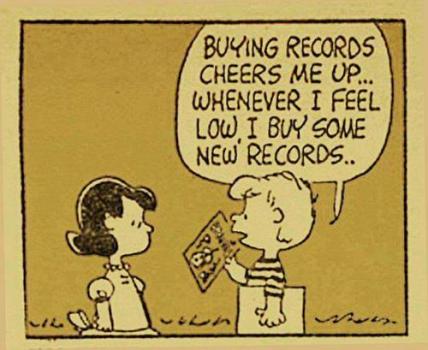
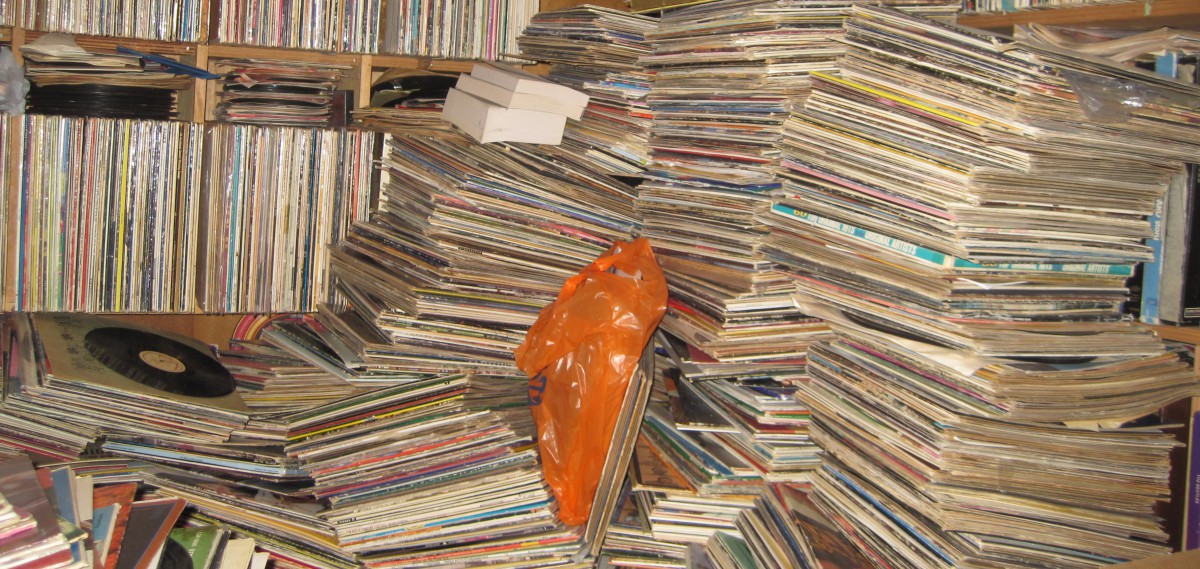
My 500 Favorite Albums of All Time, Day 18, #11-20

Word of advice to everyone out there: NEVER change the code to your house right before you leave on vacation without testing the code. Someone very close to me did just that, while giving my wife and me the honor of watching our granddog (Oops! I didn’t give it away, did I?). So, I go over to said house owned by a very close acquaintance to hang out there while demolition takes place in our bathroom. So, I loaded up the dogs, mine and our granddog, to take them to the granddog’s house. After getting there, I had to go back to my house due to a worker needing my presence.

Upon returning to the vacationers’ house, the codes would not work. A couple of hours later, a locksmith arrived to get me back into the house in order to take out three extremely stressed dogs for a walk. The best part of the walk? Running into a neighbor who has been taking care of the mail. That person has been stacking the mail in the garage (that code works!) yet was also unable to get either the old or new codes to work on the front door. By the way, neither worked on the utility door that connects the garage to the house. Needless to say, it has been a very interesting morning.

Now that I have caught my breath, let’s get the next-to-last blog on this topic rolling.

20. Marvin Gaye – What’s Going On (1971). Marvin Gaye completely changed the games of soul/R&B and Motown in one quick swoop when he released What’s Going On. Most strikingly, Marvin’s lyrics directly lamented the plight of inner city black men in society and its subsequent breakdown. He was questioning why so many poor black men were being sent over to Vietnam just to be killed. While the lyrics were raging against the machine, Marvin’s music was going to a whole new level. Not only was Marvin influenced by the psychedelic rock, funk and Southern-fried Stax soul of the day, he was equally smitten with the jazz fusion and world music of the day. All of this made for a musical brew that broke new ground including its ongoing influence on hip hop. To say What’s Going On was ahead of its time while being of its time really doesn’t give the album the justice it deserves.

19. Teenage Fanclub – Bandwagonesque (1991). Teenage Fanclub’s sophomore LP answers the unasked question, “What would Big Star sound like if they came of age in the early 90s?” But, since Big Star really didn’t have a roadmap, they needed themselves before ever becoming TF. Oh, those time-traveling limitations are a bitch. Anyway, these four Scotsmen obviously grew up listening to Big Star because they used their albums as the jumping off point, adding more feedback that was the rage in the early-90s. Teenage Fanclub bridges the gap between the sweet sounds of power pop, indie rock/alternative rock and some shoegaze/grunge thrown in for good measure, But, it’s those oh so sweet melodic hooks that pull you in. SPIN magazine got it correct when they named this album Album of the Year in 1991, beating out Nirvana’s Nevermind.

18. The Beach Boys – Pet Sounds (1966). When The Beatles released Rubber Soul, Brian Wilson took note and got to work in the studio, eschewing touring. When the boys got back into the studio, Mike Love was taken aback by the maturity and sophistication of the music that Brian had written, recorded and produced. Love felt that Brian was indulging his muse, not understanding the full-influence of this left turn away from the pop/rock sound The Beach Boys had found success with. Calling the songs on this album “teenage symphonies to God,” Brian threw down the gauntlet that made Paul McCartney take note, which caused The Beatles to respond with Sgt. Pepper. But, no one, and I mean absolutely NO ONE had the vocal prowess of The Beach Boys. And, that’s what truly made this album an absolute masterpiece that rivals almost anything written by Mozart and Beethoven.

17. Big Star – #1 Record (1972). There were a loosely associated coterie of knuckleheads spread out across the world who all longed for the days of the original Beatles sound while longing to punch the music up a bit with the rawness of the early Who songs. This was the beginning of power pop behind the visions of Badfinger, Raspberries and Big Star. But, it was the star-crossed Big Star whose sound has outlasted the rest of the original practitioners of power pop. This quartet debuted with this ironically titled album #1 Record with nothing but bad luck, as the label totally fumbled the promotion and push behind the band. But, the reputation of the band, as well as this album, grew over the next 50 years, influencing everyone from REM to Matthew Sweet to The Bangles to Teenage Fanclub. Big Star is much like The Velvet Underground whose influence is much greater than the sales during its time. Yet, the people who bought their albums probably all started bands. Look for Big Star to be inducted in the the Rock & Roll Hall of Fame in the next decade.

16. The Cars – The Cars (1978). Few albums had the impact during its time like this eponymous titled debut album by The Cars. I remember reading all about the album in Creem and Rolling Stone, among others. However, it took months for the album to catch on with radio and the album-buying public. But, when they all finally acquiesced, the music was everywhere and has remained so ever since. The album plays like a greatest hits compilation. Now, this can be said about many albums, but few albums actually hold up to the weightiness of those words like The Cars. After nearly 45 years since its release, this album continues to hold up.

15. R.E.M. – Lifes Rich Pageant (1986). When word got out upon the release of this album that R.E.M. had John Mellencamp producer Don Gehman working with the band at Mellencamp’s studio, many began to cry, “Sellout!” However, all Gehman did was to get the band’s playing focused and to bring singer Michael Stipe’s vocals to the forefront of the song’s mixes. Gehman’s true production brilliance comes in someone finally making studio R.E.M. sound like live-in-a-club R.E.M. To me, this album tends to get lost in the midst of a brilliant run of terrific albums, with many turning to Murmur, Reckoning, Document, Green, Out of Time, Automatic for the People and New Adventures in Hi Fi as the band’s best. Just know that I will lead the fight for this album as one of the band’s greatest releases ever.

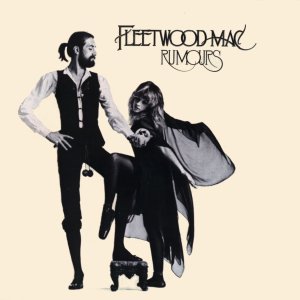
14. Fleetwood Mac – Rumours (1997). Ready for some irony? This album was released and super-popular with the world during the very moment my parents’ divorce was taking place. So, for the longest time, this album agonizingly accurate portrayal of my family’s life. But, as I grew up, I noticed a tenderness to the lyrics of Rumours that ran contrary to my mom’s venom toward my dad. Once I got that, Rumours‘ stature began to grow exponentially in my view. The music is impeccable, as is the production and everyone’s singing and playing. However, if there is a more soulful bass player than John McVie, please point that player to me because I feel like McVie is a very underrated player.

13. U2 – The Joshua Tree (1987). I cannot believe that this album did not make my Top 10. This is the album I expected the band to make after seeing their transcendent Live Aid set that was topped only by Queen. I had been following U2 from the beginning so I knew their trajectory and was just waiting for these four Dubliners to put everything together. When The Joshua Tree was finally released in the spring of 1987, I knew immediately upon the first listen that I had greatness on my turntable. From the opening “noise” of “Where the Streets Have No Name” through the standout singles “With or Without You” and “I Still Haven’t Found What I’m Looking For” all the way to the closing of “Trip Through Your Wires,” you knew that the band had grown as musicians and songwriters while learning to texture their music with sounds from their instruments with the help of their producers Daniel Lanois and Brian Eno. The band’s grand vision of the saving grace of rock music reached a pinnacle in which they could not take any further. But, before U2 remade their sound, they conquered the world, for the first time, with this triumphant album.

12. Pink Floyd – The Dark Side of the Moon (1973). When the Floyd debuted in 1967, they were a blues-based band drenched in psychedelia because of the songwriting of then-leader/songwriter Syd Barrett. Then, Barrett developed a LSD-induced psychosis, which caused the band to replace him with guitarist/singer David Gilmore. It took the band a few years to work out their direction and hierarchy, but everything came together as bassist Roger Waters began to exert his leadership on this very album, a journey through the fragile state of the human mind. The musicianship is impeccable, and the production was years ahead of its time. But, it was the songwriting that went to the next level, making this album one of the all time greatest.

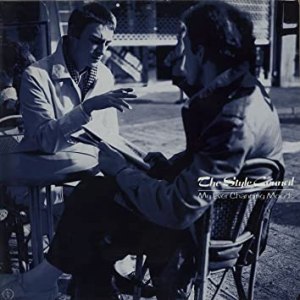
11. The Style Council – My Ever Changing Moods (1984). In 1982, Paul Weller disbanded The Jam, much to the chagrin of millions of fans in the UK. Then, he partnered up with keyboardist Mick Talbot, with the intention of the duo writing songs to be performed with an ever-revolving cast of musicians. Their intention was to dive head first into the R&B/jazz-side of the mod life that Weller had explored from the rock side in The Jam. Still, these men dove into their music, to create a unique blend of R&B, jazz, pop and Europop that was both sophisticated and commercial. Plus, the group, which grew to include drummer Steve White and background singer Dee C. Lee, quickly gelled to give us this mix of love songs and left-leaning political thought as a reaction against the evils that beset the working class during the age of Thatcher and Reagan. It was the perfect album at the perfect time, as I was searching for something that reminded me of the early 70s soul that I listened to on the radio with lyrics that reflected the 80s. All in all, The Style Council solidified my love of Paul Weller’s career.
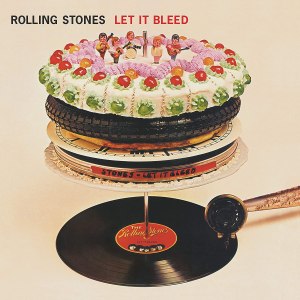
Next time, it’s the Top 10! Peace.

My 500 Favorite Albums of All Time, Day 17 – #21-30

Top 30!!!!! Woo hoo!!! This long and winding road of self-celebration is beginning to wind down, and, quite frankly, I will be relieved when it’s down. The prep time for this was long and arduous, yet when I started I was enthusiastic and hyper-focused. And as is the case with me and my short attention span, once the research is done, then I become bored with the process and ready to move on. This time, I really became bored when this big countdown began. Yet, I fought through it. I believe this endeavor will only help me learn to write when I feel both good and bad. This just may have been a great exercise to help me learn to write for an extended period of time in order to write a fiction book.

Regardless as to whether I write a book or not, I will continue this exercise. I do this because I have stored all this seemingly useless information about rock music that I want to get out of my system. So, I still have not run out of ideas to cover on this thing.

Now, let’s get going with the countdown.

30. Stevie Wonder – Songs in the Key of Life (1976). By the time Stevie Wonder released this double album plus an EP, he had been at the top of his game after obtaining his artistic freedom from Motown since 1972 across four albums, including this one. This stunner of an album has Wonder flexing his muscles across many different genres, from sweet soul (“Isn’t She Lovely”) to ambitious soul (“I Wish”) to a jazz/big band/modern dance number (“Sir Duke”). With this album, Mr. Wonder reached the top of the summit to which he clung for another seven years before his commercial appeal began to decline.

29. Peter Gabriel – Peter Gabriel (III: “Melting”) (1980). During his tenure with prog rock gods Genesis, Peter Gabriel showed that he was theatrically quirky, unafraid to bring to life the lyrics of a song through costumes and pantomime. So, when he went solo back in 1977, fans were anxious to hear and see just how the man would perform. On his first three solo albums, all of which were titled Peter Gabriel, including this one, Gabriel came off more in line with the Do It Yourself (D.I.Y.) ethos of the post punk era than his old band. With this album, Gabriel made a haunting album with a drum sound that generally ignored cymbals that influenced a generation of band sounds, including the drummer from Genesis, the guy who became the new leader of Gabriel’s old band and had been the drummer all along Phil Collins. Collins took the sound to whole new levels on his first couple of solo LPs. The best songs on this album are the anti-war anthem “Games Without Frontiers” and the ode to a South African hero called “Biko” (the man’s name was Stephen Biko).

28. Pixies – Doolittle (1989). I remember this album being so huge on the Oxford, Ohio, radio station I used to listen to back in the day WOXY-FM 97X (97.7) that the local record store could not keep the album in stock. That meant I had to special order the record through them in order to assure me getting a copy. And thank goodness I did! This album was a complete mind-blowing experience in which to listen. Those of you too young to remember this album, what a shame. However, it’s no wonder Nirvana’s Nevermind was a moment in time because of the sonic similarities heard in both albums. The difference lies in Pixies lyricist/songwriter/singer/guitarist Black Francis (Frank Black) who’s lyrics are abstract and dark (the direction made popular by U2 on Achtung Baby). Go out and buy this album if you don’t own it. There is something innately beautiful lying underneath all the noise on top, making the musical dynamics perfectly compelling.

27. Tracy Chapman – Tracy Chapman (1988). The music of 1988 seemed totally up for grabs with dance pop and hair metal dominating the charts. In the midst of this musical chaos, a subdued, understated folk album by a new artist chronicling the plight of her fellow African Americans throughout the States captured the imagination of the critics and music-buying public with her direct lyrics set to the finest folk music since the pre-electric days of Bob Dylan. Aging hippies to the alternative skater kids of the late 80s all found common ground with this album. While “Fast Cars” was the hit song, the a capella “Talkin’ ‘Bout a Revolution” was the soul of the album. Chapman had difficulty duplicating the success of this album, but that should not diminish her significance in music. At a time when few were outside of the hip hop world were describing the plight of inner city minorities, Chapman accomplished the same thing without the bombast. Unfortunately, much of what Ms. Chapman described on this album still rings true today nearly 40 years later. Which only leads me to wonder, “Why?”

26. Tom Petty & the Heartbreakers – Hard Promises (1981). This album arrived in stores around the time I graduated from high school, so it coincides with a major change in my life. That summer, this album was planted on my turntable. It seemed as though each and every song on the album was written by Tom about me. It was as if my whole psyche had been set to music for everyone to hear without any of them knowing that truth. Plus any album that begins with the greatest opening lyrics of an album ever, “Oh, baby, don’t it feel like heaven right now?/Don’t feel like something from a dream?”, is going to be an all time favorite of mine. This album is the perfect Petty album in that he had not yet jettisoned his Byrds-influence jangle and power pop sound for his more adult take on the Traveling Wilburys acoustic rock. While Petty’s later albums spoke to the adult version of me, this album is truly the last one to relate to the younger, non-adult version of me.

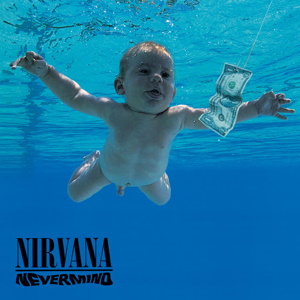
25. Nirvana – Nevermind (1991). Hello, USA! Welcome to the punk rock movement on Top 40 radio. Say a big, “Thank you!” to Mr. Kurt Cobain for finally finding the correct formula that appealed to the public. For whatever reason, punk made very few inroads on the commercial side of music. That is until a Beatle-loving punk from the rainy Pacific Northwest brought his town of Seattle’s punk rock amalgamation called grunge to the forefront. Suddenly, Cobain and the rest of Seattle scene cohorts became stars seemingly overnight, even though most of them were slugging it out in the clubs up there for the better part of a decade. What Kurt did was give voice to all the pent up frustrations of Generation X, who were the first to grow up as latch key kids from predominantly divorced parent households. Reaganomics were not kind to these families despite what Mr. Reagan’s campaign ads told us. And it was that frustration and alienation that Nirvana, as well as the rest of the grunge and alternative nation, gave voice to. Remember, this album knocked Michael Jackson’s Dangerous album out of the top spot on the Billboard album chart during the Christmas holiday. Translation, this was NO fluke!

24. Pink Floyd – The Wall (1979). Is there an album that touched the zeitgeist of my generation any better than Pink Floyd’s The Wall? I honestly believe that no album better explained what the younger Boomers and older Gen X-ers were going through at that moment in time as you are attempting to leave your teenage years behind and move into adulthood. Bassist Roger Waters wanted to do a concept album about the effects World War II had on his family and subsequent life. Yet, the war became a metaphor for so many of us who either lost a parent in Vietnam or to some other tragedy or our family was broken because of our parents’ divorce. With the Wall we collectively built for each other as individuals as well as societal, many of us had stunted growths until much later in our lives, as the hero in The Wall experienced. This album became the first album to really explain the Generation X psyche. Plus, the music is so damn good. Too bad its recording led to the subsequent demise of the band with Roger Waters still playing bass and conceptualize album themes.

23. The Beatles – Abbey Road (1969). On SNL, Chris Farley had a regularly occurring sketch known as “The Chris Farley Show” in which he interviewed various celebrities appearing that week on the big show. There was one sketch in which Farley was “interviewing” Sir Paul McCartney. He asked Paul, “Uh.. remember when you were in The Beatles? And, um, you did that album Abbey Road, and at the very end of the song, it would.. the song goes, “And in the end, the love you take is equal to the love you make”? You.. you remember that?” Paul then replied, “Yes.” Then, Chris came back with, “Uh…is that true?” Paul, keeping a straight face the whole time, comes back with, “Yes, Chris. In my experience, it is. I find, the more you give, the more you get.” Now, that was all in jest, as we know. But, when Farley mouthed the phrase, “That’s awesome!” while pointing to Paul, we all realize that Paul’s song had now reached a critical mass in which most people understood the reference. And Abbey Road is stuffed full of memorable moments like George Harrison’s two contributions, “Here Comes the Song” and “Something,” giving us a preview for his first solo album, while John dropped the eternal “Come Together.” But it was Paul’s montage of partially written songs joined together as “The Medley” that at one time explains The Beatles’ greatness while simultaneously putting the final nail in the coffin of the band. This album became the last album recording session in which all four members participated.

22. New Radicals – Maybe You’ve Been Brainwashed Too (1998). By the end of the 90s, I was beginning to feel my age becoming an impediment for enjoying popular music. So, one day I joked to my boys that I wished Todd Rundgren’s sound would make a comeback. Lo and behold, a few months later, I heard this song on the radio that made me recall the Rundgren sound of my youth called “You Get What You Give.” So, I made a bee-line directly to Target that very day to find this CD and purchased it immediately. Then, it never left my house CD player unless I was going to play it in the car because I was hearing Rundgren AND Hall & Oates all over this thing. And, I was momentarily in heaven once again listening to new music. Unfortunately, that was the last time I reacted that way until the 2019 Bob Mould album Sunshine Rock. Then, as suddenly as New Radicals appeared, they broke up in order to become, and remain, a one-hit wonder. And, with that news, my dream of music following me into the new millennium ended.

21. Alanis Morissette – Jagged Little Pill (1995). First off, there is nothing worse than a woman scorned. Other than that said woman putting her relationship to music so that all the other scorned women realize they have a voice for their frustrations. Good lord! 1995 was a rough year in which to coach and teach young women in high school with this album getting big play on the radio, MTV, in their cars and at their homes. If they didn’t collectively all have little attitudes that year that was probably deserved. I saw the guy pool they were choosing their dating pool from, so I got why they were angry. Seriously, I do have an inkling that a female artist with this kind of anger just might be the thing now that Roe vs. Wade has been overturned. I just want women to know that I am on their side! Oh, and by the way, Alanis made a terrific alternative rock album that will live on in history. It’s just a great album that was released at the right time in history.

Next time, we are on to the Top 20! Peace.

My 500 Favorite Albums of All Time, Day 16 – #31-40

Well, we all survived a whirlwind weekend as my brother came in from out of town to finish off some family business. Now that’s over, therefore, we can relax a little…hopefully!

Let’s do something fun! How about another 10 from my list of 500 favorite albums? Here we go again.

40. Jimi Hendrix Experience – Are You Experienced (1967). Now, here is a stereotypical album from the Summer of Love. Even though Hendrix’s brand of psychedelic rock is steeped in the blues, I cannot imagine just how foreign this music sounded when placed in a juxtaposition with the sugary pop and renegade rock of the moment. I do understand why so many Boomers were blown away by Hendrix. I also believe that no one has even come within miles of this man’s guitar technique. Many have come close, for starters Stevie Ray Vaughan or Eddie Hazel of Parliament/Funkadelic, but no one has duplicated or expanded upon Hendrix. Maybe, in retrospect, it makes sense that guitarists went to painting abstract textures rather than frustrating themselves to expand upon Hendrix’s art. It goes nearly without saying that this album is both a class and a masterpiece.

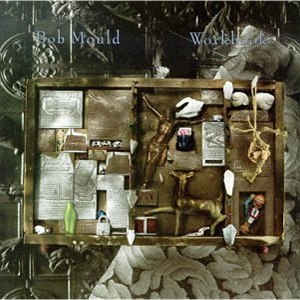
39. Bob Mould – Workbook (1989). When Bob Mould announced that he would be releasing a solo album, many of those “in the know” thought we were in for a revved Hüsker Dü-ish album of feedback and grinding guitars overlaying on a pop melody base. But, Mould, instead, went for the completely unexpected. He went acoustic and relatively quiet. By doing that, Bob created a masterpiece in unadulterated beauty by playing up the folk side of his songwriting. In the process, Mould established himself as an artist to watch during the 90s. Was this album his answer to Crosby, Still & Nash’s debut or Neil Young’s Harvest? If not, Workbook is a spiritual cousin to those two classics.

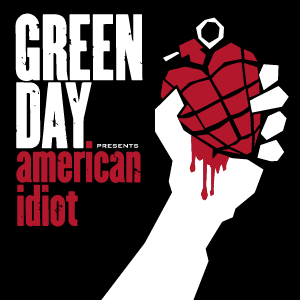
38. Green Day – American Idiot (2004). Whenever the country is drawn into a war, rock music comes roaring alive to eventually protest it if the war is deemed unjust. Well, by 2004, it was becoming quite clear that the country may have been tricked into a war in Iraq. But, when 90s resident punk smartasses Green Day lost the master tapes for their upcoming album, the trio regrouped to create a concept album/rock opera to vent their frustration with the war policy in the Middle East. And no one expected THIS band to rise to the occasion to put words and music together, articulating yet another generation’s apprehension about participating in another unjust war. In one well-thought out album, Green Day put their snotty Gen X twenties to ascend to an elder statemen role within the rock community. Perhaps in reality, the band’s enduring reputation just might stem from this album.

37. OutKast – Speakerboxxx/The Love Below (2003). To fully comprehend just how good this hip hop album is that the Baby Boomer parents of Millennial children LOVED this album. OutKast became the hip hop duo that crossed over from the younger generations to the AARP Boomers. And, I feel like “Hey Ya!”, one of the many hit songs from this double CD set, may just be the song of The Aughts, if not one of the greatest songs in rock history.

36. D’Angelo & the Vanguard – Black Messiah (2015). Just as many of his fans were beginning to give up on D’Angelo ever releasing new material, you hear from The Roots’ drummer and one of the world’s most knowledgeable rock insider ?uestlove discussing the status of a new album in the works. And then within a few days of that interview comes the news that The Man was dropping a new one later that very day. And, then it happened! All of a sudden, we were knee-deep in D’Angelo-mania in the press. And, for once, did an album live up to the 15-year pause between full-length releases. And, everything was back in place in his music, with all of D’Angelo’s brilliant flourishes of his Prince-meets-hip hop music to know that this album was going to be D’Angelo’s moment against any further albums are measured. Black Messiah is D’Angelo’s Purple Rain.

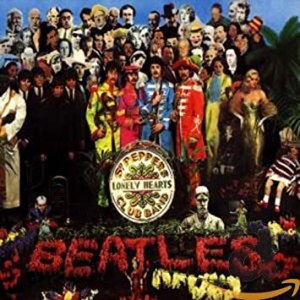
35. The Beatles – Sgt. Pepper’s Lonely Hearts Club Band (1967). If you are a Boomer, this album is probably the single-most important album of the Summer of Love. This album was an attempt to one-up The Beach Boys’ Pet Sounds from the previous, which ironically enough had been an attempt to one-up The Beatles’ Rubber Soul. But Sgt. Pepper was unlike any album before it. To a Gen X-er’s or Millennial’s ears, the album might sound quaint and antiquated. Yet, the album remains a milestone and a standard to which all subsequent albums are measured. Sgt. Pepper is the whole package, from the packaging to the advertisements of the day to the music itself. The album was an total sensory immersion, with the cover being unlike anything before it. Much like Led Zeppelin IV, the songs have been overplayed through the years and no longer packed the wallop they once did. I was only four when it was released, so I am simply measuring it’s impact upon my life. I prefer a couple other Beatles’ albums.

34. The Rolling Stones – Sticky Fingers (1971). As I have stated many times before, 1971 was a stellar year for rock music. So, we should expect to see a classic Stones album. First off, I don’t think there was one person who wasn’t intrigued by the zipper on the cover, which was for the tight pants of the well-endowed man. The music is sexually-charged and drug-induced. This is The Stones at their finest, especially on “Wild Horses.”

33. Dr. Dre – The Chronic (1992). When Dre dropped this album, he was telling the world that their was a sound beyond Straight Outta Compton, an album on which he helped define the sonic structure. Now, he was raiding George Clinton’s music for samples as he created the West Coast-centric G-funk sound. On The Chronic, Dre introduced us to several important rap voices including the laidback drawl of Snoop Dogg, then known as Snoop Doggy Dogg. Of course, this album became one of the soundtracks to the LA riots after the police beating of Rodney King on a driving violation. This is one of the first magnificently produced hip hop albums that continues to resonate through the music world today.

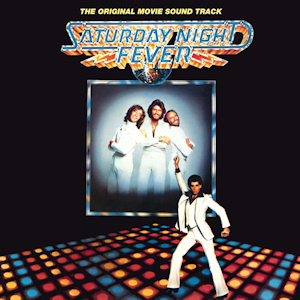
32. Bee Gees & Other Artists – Saturday Night Fever [Original Motion Picture Soundtrack] (1977). Seriously, there was a time in the mid-70s when people believed disco was cutting edge and great underground music. So, the manager of the Bee Gees, Robert Stigwood, decided to get into the movie business by buying the film rights to some fiction article from a New York magazine, with the thought that his band would create some new songs utilizing their newfound sound on their last surprise big selling Main Course album. So, the boys complied, giving Stigwood five new songs that were about to change the world. Then, Stigwood had his people grab some of their favorite songs on the dance floor to create the 70s album that changed the industry for good. The album and movie had a synergy that rocketed both to the top, with single after single being released and hitting the top. By the time the soundtrack ran out of steam, everyone was tired of disco, and, unfortunately, it became a bad name. But, for a glorious three-year period, disco was king, and the Bee Gees ruled the world.

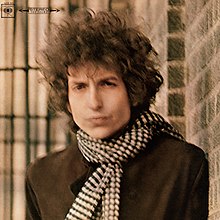
31. Bob Dylan – Blonde on Blonde (1966). Bob Dylan was so inspired working with The Band in this new electric music world that they recorded a double album’s worth of music. But, this music would change the world. Dylan had made inroads on music, but this album signaled that Dylan was changing rock music right before our ears. How can you beat “Rainy Day Women #12 & 35” and “Just Like a Woman” for fun and seriousness?

Until next time, peace.

My 500 Favorite Albums of All Time, Day 16 – #41-50

I survived another great weekend! On Thursday, my brother flew in from out of town because we had finally gotten permission to go through our beloved uncle from the maternal side of our family tree even though its been a quarter century since his passing. Our aunt, bless her heart, just never could find the strength to let us go through his library in order to find things we might want. Leading up to out day to do this adventure, my aunt had put up our uncle’s collection of artifacts he collected from the Civil War, much to the chagrin of my brother. Yet, our uncle’s directive was NOT for us to inherit but to finance our aunt’s travels she made after his death.

Personally, I understood it. Maybe up until five years ago, I too would have been very concerned about inheriting some of those valuable items. But, I no longer interested in those things. Personally, I wanted to find his writing, be it his history teaching notes, personal correspondences, journals and the entries and, perhaps of most importance to me, his creative writings, which I know he did. I did find some writing but not the journals nor the creative endeavors.

While my brother, the retired military veteran, did find some nice pieces and books to keep for his collection, including our uncle’s dog tags, I walked away with our grandmother’s first edition hardback of Gone with the Wind and my grandfather’s elementary school reading book with a copyright date of 1909. Both of those items have some emotional ties to me. Plus, our aunt gave me their album collection, most of which would have value to collectors of Civil War songs compilations and recordings of various historical figures’ speeches. However, I do have a special place in my heart, as well as my collection, for Christmas albums. Therefore, I am keeping a small number of those. Needless to say, it was a very productive trip to see our aunt and take her to lunch. On the downside, it was an emotional day for my brother, who tends to be the more emotional of the two of us.

Yesterday, he went through most of the last of his stuff from Mom’s house that I had kept for him to peruse whenever he came back. So, he has greatly reduced his footprint in our home. When he and his wife return next time, he will finish that job. After that, my boys, their families and our dad and stepmom came over for dinner. Our house was loud, obnoxious and just plain fun as the grandkids had a great time playing in the house, followed by dinner and a dessert, all of which led to those rascals eating cookies and needing to burn off their energy outside for 30 minutes before going home. All in all, the non-parents loved watching the littles playing. Plus, Grandchild #3 (GC3) debuted his newest trick for the whole family: walking. Of course, that milestone was thoroughly enjoyed.

So, today, I come to you extremely tire and very sore. Still, I will soldier onward to bring to you the first ten of my favorite albums of my Top 50. Peace!

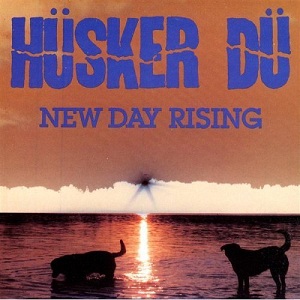
50. Hüsker Dü – New Day Rising (1985). Next to Paul Weller, Bob Mould is rock’s most underappreciated visionary. And like Weller, Mould’s career has three phases: American hardcore leaders Hüsker Dü (They were the forerunners of Pixies and both influenced Nirvana’s sound), alternative power pop trio Sugar and as a stellar solo artist. But, it was as a leader/singer/songwriter/lead guitarist with Hüsker Dü in which Bob rose to prominence. In 1984, the band broke out with a double album rock opera entitled Zen Arcade. The following year, that same trio followed up a strong 1984 with a crazy 1985, during which the band released two fantastic albums, of which one was this album, in addition to a single, a cover version of The Byrds’ “Eight Miles High.” This album finds the boys in full control of their sound and made their songs drip with pop hooks underneath all of the buzzsaw guitars and feedback.

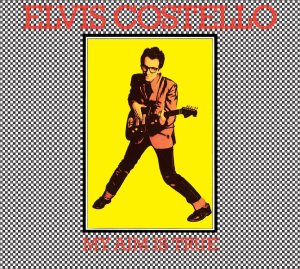
49. Elvis Costello – My Aim Is True (1978). There are all kinds of urban legends concerning this album, most of which are just untrue. The most prominent false rumor is that Huey Lewis played harmonica on this album. No, but the band in which he sang at the time, Clover, was the Costello’s first backup band on vinyl, a short time before he put together The Attractions. Still, the chemistry between Elvis and his studio musicians was obvious after a single playing of the album. I knew immediately that I had listen to one of rock’s greatest albums. My Aim Is True sounds as fresh today as it did in the winter of 1977-78 when I bought the LP.

48. The Who – Who’s Next (1971). After the success of The Who’s Tommy, guitarist/songwriter Pete Townshend wanted to create a rock monstrosity of a multimedia rock opera called Lifehouse. As the creative process drug on, Townshend began to recognize there were technologic limitations in 1970 in order to pull the whole project together. At the last minute, he concluded that he had a single album’s worth of songs that were coherent and needed to be released. That album, which was light years ahead of Tommy, was released to much hype, fanfare and commercial and critical success as any album had up to that point of the release of what is now known as Who’s Next. Many point to this album as The Who’s masterpiece. I played the hell out of this album in high school, and it probably speaks to every teenager since its release.

47. The Beatles – Revolver (1966). The music created in 1965 is generally considered to be when rock & roll morphed into rock music. Bob Dylan went electric, joining a legion of rockers by leaving the folk world behind. Additionally, R&B music was becoming more musically sophisticated as those players from Muscle Shoals, Alabama, began to dominated the black music charts. And, The Beatles first began the shift of pop/rock music from seemingly throwaway songs to a much more intricate sound on Rubber Soul, which directly led The Beach Boys to create Pet Sounds, and themselves to create Revolver. For my money, THIS is the boys from Liverpool to record the very mature sounding album, which means in short that this is my favorite Beatles album.

46. The Rolling Stones – Sticky Fingers (1969). As I said earlier, the Stones changed for the better when Mick Taylor replaced Brian Jones in the band. Now, The Stones were the badasses they always felt they were. This album is stuffed full of great rock songs that continue to make the lists of the greatest songs of all time. There a fistful of songs guaranteed to offend you (“Brown Sugar,” “Sister Morphine,” “Bitch,” to name a few) and just flat out classic rock songs (“Can’t You Hear Me Knocking”). At the time of this album, The Stones may actually have been the greatest rock band in the world.

45. Carole King – Tapestry (1971). By 1971, Carole King had made a huge reputation as a fantastic songwriter as one-half of the songwriting tandem Goffin and King, with then-husband Gerry Goffin. But few were ready when the woman dropped an album of new songs and new versions of some of her old hits to kick off the whole singer/songwriter era of rock music. This album allowed future female artists to create rock albums with personal lyrics. If Carole had not made this album, maybe we would have never gotten Stevie Nicks, Carly Simon, Alanis Morissette, Taylor Swift or Olivia Rodrigo, for a start. That sentence speaks for itself as the importance of this album.

44. Michael Jackson – Thriller (1982). As the biggest selling studio album of all time, Thriller remains noteworthy. Throw in the facts that this album was the first to have seven Top 10 hit songs, leaving only two songs that were never released as singles, and the videos for “Billie Jean” and “Beat It” worked with a couple of Prince videos to break down the racial barrier that seemed to have been briefly set on MTV. Yet, for an album to accomplish all of this, it has to have great music. And Thriller does, as Michael furthers his argument to become known as The King of Pop.

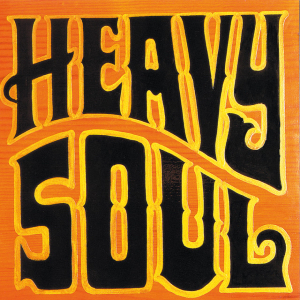
43. Paul Weller – Heavy Soul (1997). I know that many Weller fans throughout the world felt the man was done as a voice of a generation when The Style Council called it a day after their last album’s shelving by the record company in 1989. Then, when the 90s rolled around, he burst back onto the scene as a solo artist not afraid to indulge all of his influences from the obvious Mods of The Jam days to the soul and light jazz of his Council days while also including the influence of Traffic, all of which Paul combined into a mature and compelling sound upon which he has extended his career to this day, all the while maintaining the high songwriting standards he set upon himself with The Jam back in 1977. He is England’s best kept secret.

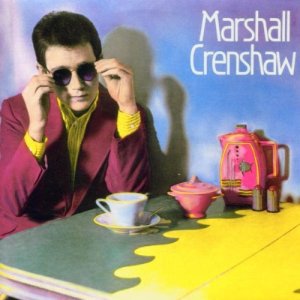
42. Marshall Crenshaw – Marshall Crenshaw (1982). By the time 1982 rolled around, pop radio was in the beginning stages of having their playlist influenced by a new cable channel called MTV. Of those early artists played on the budding power broker, Crenshaw blasted out from the pack with his fresh take on the guitar-based sounds of Buddy Holly. While his music might have been updating an old sound, it was his Costello-influenced lyrics which made Marshall stand out further from the crowd. This exuberant debut did not sell like it should have, but Marshall Crenshaw did bring power pop and the name of Buddy Holly kicking and screaming into the 80s just as many believed the synthesizer was taking over. Here is a perfect album of pop/rock confection.

41. Simon & Garfunkel – Bridge Over Troubled Water (1970). This duo was made up of two guys who grew up together only to become successful adult men who could no longer creatively nor honestly stand to be together any longer. Yet, during this turmoil the second most commercially successful duo in rock history held things together long enough to knock out this terrific rock chock full of rock classics. This is a display of love for each other and their music for Garfunkel and Simon to stick together long enough to create the best batch of songs of their illustrious career.

Until next time…

My 500 Favorite Albums of All Time, Day 15 – #51-60

As we inch closer to the top of my list, we have covered 440 terrific albums. Many of my favorite albums will not be found on many lists of the greatest albums of all time. And, I really don’t care. Music is an objective activity, so someone’s cup of tea will not be shared by too many others. As you may have noticed, I really don’t have what I would call a country music artist on this list. The reason is simple, I really don’t care for the genre. I will acknowledge its huge impact on rock music in general and on a favorite genre like Americana. But, generally speaking, most of it sounds like nails going down a chalkboard, though, and I’m being totally honest, I really do prefer the nail sound on a chalkboard since I do occasionally get goosebumps from it.

I have to admit that it is odd for someone who grew up in a rural area surrounded by many who loved country music, but I have always been drawn to the artier side of music and the whole soul/R&B/funk/hip hop sound of the inner city. I may have been a jazz-loving beatnik in a former life, who knows? All I know is that I separate music into good and bad, and it just so happens that many country songs find its way in the latter category. That is especially true for some of the newer artists who, in the words of Tom Petty, “sound like a band 80s band with a fiddle.” How can you argue with Tom?

Here’s the last of my favorite albums that did not make my Top 50.

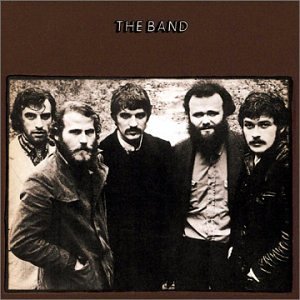
60. The Band – The Band (1969). This nearly perfect album is my second favorite by The Band (after The Last Waltz). I love how these four Canadians and one Yankee got to the heart of rural America. And they did it set to some of the greatest playing ever put to vinyl. This album is stuffed of classics, though “Up on Cripple Creek” was The Band’s only Top 40 hit, believe it or not.

59. The Velvet Underground – The Velvet Underground & Nico (1967). The Velvet Underground were the antithesis of the prevailing groovy winds during the Summer of Love. Instead of flower power, peace & love, we got the gritty tales of a morally bankrupt and dying NYC and a cast of misfits trying to live in an apocalyptic vision come to life. Lou Reed’s songs were beautiful in their journalistic distance without any kind of moral teachings coming from him. Despite the support of pop culture gadfly Andy Warhol, the album sold barely any copies. Yet, like Big Star who followed a scant five years later, The Underground inspired every one of those who purchased a copy to start a band. They are the godfathers of the punk and post punk movements.

58. Led Zeppelin – Led Zeppelin III (1972). This Zep album stands out from the rest as most songs are acoustically-based, as if they were gearing up for a session on MTV’s Unplugged, even though that show was 20 years in the future. Still, they did give us one helluva rocker in the “Immigrant Song.” Plus, the original cover is fun for a teen to spin around to see which pics would show up in the windows. One of the first truly interactive covers.

57. Eminem – The Slim Shady LP (1999). I remember people my age and older just shaking in revulsion to the name of Eminem. To hell with them! They were missing one of the greatest, funniest and most inciteful voices at the turn of the century. Sure, Em got his beats from Dr. Dre, but he gave those menacing sounds a psychotic voice that put the whole package over the top. Plus, Em was no Vanilla Ice. He was the real deal, praised by many of the past, present and future MCs in the hip hop world. “Hey kids! Do you like Primus?” What a way to introduce yourself!

56. Amy Winehouse – Back to Black (2006). What a magnificent album by a once-in-a-lifetime talent! Amy Winehouse was the real deal, a white Jewish girl from England who sang like the black jazz greats of the 40s, 50s and 60s. But, Amy did not live in the past. She and producer Mark Ronson and others helped her solidify her vision of marrying the past with the present to create a sound that singers continue to try to catch up with. It’s such a shame that an artist as talented as Ms. Winehouse left us so early in her life. Adele has tried to fill her void, but not as satisfyingly as the real thing.

55. Bob Dylan – Highway 61 Revisited (1965). With the crack of the drum at the beginning of “Like a Rolling Stone,” Bob Dylan was signifying that rock music had arrived. With that one sound, Dylan shed the trappings of his folkie background while taking rock music into a whole new area of discovery. It sounds like hyperbole, but all of the previous rules for rock music were jettisoned at the moment with a whole new canvas on which to create.

54. Kendrick Lamar – To Pimp a Butterfly (2015). As Kanye drifted off into his mental illness, the hip hop torch was passed back to the West Coast to yet another Dr. Dre acolyte Kendrick Lamar. Hip hop immediately went back to the street poets and truth tellers with Lamar coming into his own as a rapper and visionary. This is a magical mystery tour of the streets.

53. Eminem – The Marshall Mathers LP (2000). Is this album THE hip hop masterpiece of all time? If it isn’t, it’s definitely a Top Five album. On this album, Slim Shady cuts loose with all his pent-up venom and sarcasm in some of the greatest rhymes set to the most menacing beats ever. Of course, “Stan” is just a brilliant song.

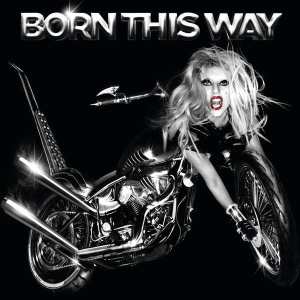
52. Lady Gaga – Born This Way (2011). No, no, no, hell no! Lady Gaga is NO Madonna wannabe as many thought. Nope! This young lady was a tour de force unto herself. She did an 80s music tribute update on this album, and it is simply fantastic. Born This Way was packed with radio-friendly hits, yet it continues to age well. Her musical vision only begins at the point in which Queen, Bowie and Madonna intersect. But the music journey she is taking us on is completely her own.

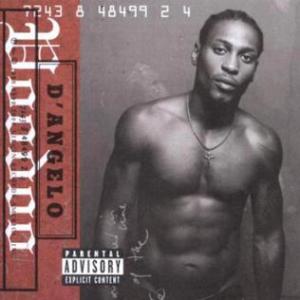
51. D’Angelo – Voodoo (2000). D’Angelo really is a hip hop era Prince. Seriously. Except this man works meticulously, explaining why he has released so few albums over his 25-year career. At the time, I believe their was no singer as sexy to women as D’Angelo. And this album was a tour de force of hip hop, soul & rock. Since Prince had a difficult time incorporating hip hop in his sound, D’Angelo is there to be the bridge that Prince desperately wanted to cross but couldn’t. It’s a shame that the two men didn’t collaborate. Of course, who would have been the alpha?

Next time, we will enter the Top 50. Peace.

My 500 Favorite Albums of All Time, Day 14 – #61-70

For whatever reason, and I’m not sure why, I have experienced high pain days. Maybe, it’s the beginning of school doldrums, or it’s just my lot in life. I really don’t know, but I’d like to get over it. I thought a load or two of laundry would pull me out, but NOOOO! And, I got the very same no go from my favorite TV shows. Nothing seems to be filling the void, be it pain related or because of my annual heartache I experience since my body forced me to retire. Whatever it is, it’s not cool.

So, let’s just dive into the next ten albums as we inch closer to my all time favorite.

70. Weezer – Pinkerton (1996). When this album was released, initially, the critics were upset that this was not the second coming of the Blue Album, an exuberant 90s burst of power pop. Instead, many thought Weezer hit their sophomore slump. Although the music once again is a 90s take on power pop or better yet Cheap Trick, the lyrics are much more personal with a heavy dose of angst. However, over time, the reputation of Pinkerton grew as this very personal take on teen angst delivered via a power poppish/pop punkish sonic landscape became known as emo rock with bands such as Dashboard Confessional, Fall Out Boy, the initial version of Panic! At the Disco and so many others followed the Pinkerton formula. Now, the album is a classic, and Weezer should be a shoo-in for Rock & Roll Hall of Fame induction soon.

69. The Beatles – The Beatles [a.k.a. The White Album] (1968). With this double album, the public were witness to the breaking down of the creative bond which held these four gentlemen together. Each side is given to one Beatle in which to indulge his muse while the others pretty perform as a backup band. All of a sudden we have four sides of solo Beatles as opposed to the world’s greatest band. While the experiment is widely successful, that success actually lays the groundwork for the upcoming breakup of the Fab Four. To me, this is the least Beatle of all The Beatles albums they released.

68. Led Zeppelin – Led Zeppelin IV [a.k.a. ZOSO] (1971). Quite possibly the granddaddy of all 70s albums. This album seemed so pervasive that I don’t remember too many of the people with whom I grew up NOT owning this album. Seriously! Out of my graduating class of about 300 students, I believe I knew six kids that never owned the album. Why was it so popular? “Stairway to Heaven,” “Black Dog” and “Rock and Roll” immediately come to mind for starters.

67. Bob Mould – Sunshine Rock (2019). When Mould released this solo album, he was about to enter his fourth decade of recording. Since the early days of the 20Teens, Bob had been in something of a creative renaissance. He had produced four solid albums and an excellent memoir. So, I wasn’t surprised that he did a little looking back and forth on this album to create what I feel just might be his definitive work to date. It’s as if he were covering every phase of his illustrious career with songs that could have been on a latter-day Hüsker Dü album, his acoustic solo debut, any of his Sugar LPs and EPs or his current solo albums. Next to a complete career overview, Sunshine Rock allows a listener to get to know every phase of Bob’s musical life in one place. Plus, the album got me through the last days of my mom’s life and the days after her death. So, the album will always hold a special place in my heart. Thanks Bob!

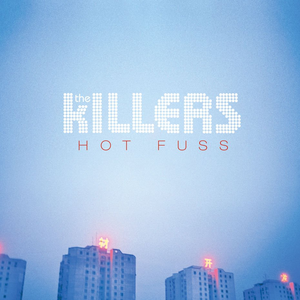
66. The Killers – Hot Fuss (2004). Back in 2004, my older son was in college. He had come home for some of his stuff that he wanted at school. While home, he had me a burned CD labeled “Hot Fuss – The Killers.” He said this new band will be in my new wave wheelhouse. Boy, was he ever correct. This band quickly became one of my favorite 21st century bands, although they may be more of a singles band now rather than an album band that their debut promised. The Killers had a sound that was steeped in The Cars but more modern. They were the right band at the right time for this old man. And, Hot Fuss is a flat-out excellent album.

65. Metallica – Metallica [a.k.a. The Black Album] (1991). When this album dropped in 1991, Metallica were poised to become the biggest metal band on the planet. On the eponymously titled album, Metallica toned down the thrash and wrote songs that were slightly more melodic. Some old fans cried sell-out! While the general public bought this album by the truckloads. This album also marked that Metallica were leaving their thrash metal days behind for a more lucrative classic hard rock sound. However, by taming the beast just a bit, producer Bob Rock discovered a terrific band with unparalleled musicianship.

64. Weezer – Weezer [a.k.a. The Blue Album] (1994). Released at the tail end of the third wave of power pop, this album proved to transcend that genre on the band’s way to becoming the Gen X version of Cheap Trick. Leader Rivers Cuomo proved to be a top-notch songsmith, writing songs full of off-kilter characters going through irony-dripping moments in life. This album was a breath of fresh air as grunge was running out of steam. Unfortunately, the album is held in such high regard that anything the band has done in its wake pales in comparison, which is a little unfair.

63. John Cougar Mellencamp – The Lonesome Jubilee (1987). After Springsteen and Petty, the battle for the Voice of America goes to a second tier of singer/songwriters of which Mellencamp is generally listed among. While many believe Scarecrow is his peak, I prefer this album over all others. Here Mellencamp begins a methodical transition from a rock minister espousing how rock & roll can save your life to a middle American troubadour. On The Lonesome Jubilee, John expands his excellent backup band to include some Appalachian instrumentation such as fiddles, accordions, banjos, dobros and the like to augment their Hoosier take on Stones-based rock music. This album sounds as if The Band and The Stones combined. And, no one has described what its like to be in your thirties and forties than Mellencamp did on “Cherry Bomb” and “Check It Out.”

62. Us – Achtung Baby (1991). In 1987, U2 finally conquered the States with their patented soaring stadium anthems of hope during a time of gloom. But, as their little experiment in American-influence on Rattle & Hum proved, it was time for them to change their approach a bit. So, the band took their trusty producers Daniel Lanois and Brian Eno to Berlin for a little make-over like Eno did for David Bowie in the mid-70s. What came out of that journey was nothing short of spectacular. The sincere U2 of their twenties were gone and replaced by a more jaded yet grounded U2 in their thirties. With those experiences influencing their music, the band incorporated irony and cynicism into their lyrics along with some musical and artistic touches of Dadaism. As we now know, the band’s popularity seemed to quadruple overnight in the aftermath of this album coupled with their amazing Zoo-TV Tour of 1991-93.

61. Jellyfish – Bellybutton (1990). As the 90s rolled around, I began to lament the loss of pure pop bands with Beatles and Beach Boys influences as The Bangles and Squeeze began to fade. Game Theory never really caught on with the public, and we were starting to hear the names of Nirvana, Soundgarden and Screaming Trees as I left Oxford, Ohio’s alternative rock radio station behind for the modified Top 40 and classic rock mixture of Central Indiana. Alas, I turn on MTV in the summer of 1990 and discover this new band called Jellyfish. And, I am drawn to their pure pop sound and sophisticated production. And you can hear all of my favorite touchstones in their music like Queen, Squeeze, Wings, Beatles, Beach Boys, et al. This was one tasty debut that continues to give back 30+ years later.

My 500 Favorite Albums of All Time, Day 13 – #71-80

The plan today is to listen to McCartney III followed up by the reimagined version that was released a short time later. I am finally getting around to doing these albums for a back-to-back comparison. Not surprisingly, I have wanted to do this all summer, but I have been just way too busy. Now that school is beginning, I can finally get back into my writing groove.

While listening to two versions of the same Paul McCartney, I am going to tackle the next ten of my countdown. Excuse me while I clear my throat!

80. My Morning Jacket – Evil Urges (2008). To the MMJ crowd, this album is a controversial enigma. First off, I LOVE MMJ! I fully believe they are one of the Top 5 artists thus far of the 21st century. Yes, they do hold down a specific niche in rock music as one of the latest jam bands. But, these guys, much like The Band before them, are much more than that. Most of the time, the band tends to stick to a space age version of Americana, but on this one, they unleashed their inner Prince, which is why it is so controversial in the MMJ world. Personally, I LOVE it! There is not a weak song on an album that simply speaks to me both lyrically and musically. “I’m Amazed” was the hit, but with songs like “Librarian” and “Highly Suspicious” gives the album legs. I will fight to the death to defend the honor of this great album.

79. Lana Del Rey – Norman Fucking Rockwell (2019). When Lana Del Rey performed on SNL at the dawn of her career, I thought she completely sucked. Everything went wrong that night. Yet, her studio albums kept intriguing me. By 2019, she was extending beyond a Chris Isaak-influenced film noir version of the singer/songwriter into a unique version of herself. NFR is her masterpiece thus far. Every song is beautifully moody, not unlike a Kate Bush album. Maybe she kept trying on personas before coming up with this one, but who really cares? LDR is awesome!

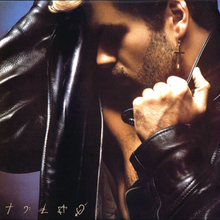
78. George Michael – Faith (1987). I think Wham! got a bad rap back in the day. They were much more than a boy band. C’mon! George wrote all of the songs, including all the musical hooks that made them ear worms. So, when he went solo in 1987 on this album, why were critics so surprised by this album? Solo, George was able to stretch out his wings in a more mature manner to create some of the best 80s dance/pop this side of Michael Jackson. This album is stuffed full of hits, including my personal fave “Father Figure.”

77. Led Zeppelin – Led Zeppelin II (1969). After Jimmy Page put together his “New Yardbirds” renaming them Led Zeppelin upon a joke made by The Who’s Keith Moon who said this band would go over like a lead balloon, Zep found their footing as their own band on this album while no longer being a Jeff Beck Group knock-off as on the first album. This album birthed a million sound-alike bands.

76. Cheap Trick – At Budokan (1978). Originally, the idea behind this album was to make a live album as a “thank you” to the enthusiastic reception the band had received from their newly minted Japanese fans. Then, the American audience caught wind of the album’s excellence and began to buy it, making the album the biggest-selling import album ever at the time. What is on vinyl is the typical Cheap Trick concert, in which they rip through many songs on their first three albums. The album may be known for the hit song “I Want You to Want Me,” but the rest of the album rescues the included songs from their slightly-tamed studio versions. For my money, you might never hear a better opening to a song than their version of Fats Domino’s standard “Ain’t That a Shame.” “Come On, Come On,” “Surrender” and “Clock Strikes 10 O’Clock” remain among my favorite versions.

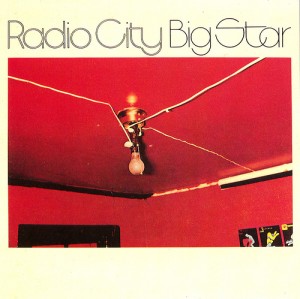
75. Big Star – Radio City (1974). Much like The Velvet Underground before them, Big Star never sold many records in their heyday. But, as Brian Eno once said about VU, everyone who bought a Big Star record started a band. To many of the alternative bands of the early-80s, Big Star were gods. That was my introduction to them, nearly a decade after their recording careers ended in unfulfilled promise. Unfortunately, the Paul McCartney of Big Star, the late Chris Bell, left the band before the recording of this album, but some of his songs remain on Radio City. So, the John Lennon of the band, former Box Tops vocalist, the mercurial Alex Chilton stepped up to fill the album with stellar rockers and lots of power pop delights. While fans miss Bell’s sweet vocals and tasty guitar licks, the album still plays to the strengths of the band. This is the album where you will find “September Gurls.”

74. The Rolling Stones – Beggar’s Banquet (1968). I am of the opinion that The Stones were never better than during the Mick Taylor years. This is not a dis of what the late Brian Jones brought to the band. I feel like Taylor brought out the edge in the band. Take a couple of classic songs from this album. “Sympathy for the Devil” might have been pulled off with Jonesy, but Taylor gives the song a sleazy feel. And, I don’t think the ultra-talent Jones could have let go on “Street Fighting Man” as Taylor did. For my money, I prefer my Stones with Taylor. Could you imagine just what he would have brought to Some Girls? I salivate just thinking about it.

73. Janet Jackson – Rhythm Nation 1814 (1989). Arguably, Gary, Indiana’s Jackson family is America’s most talented entertainment family. But, who knew when Thriller blew up in the mid-80s that little sis Janet was plotting to become the singing family’s most fearless recording artist? After taking control of her musical career three years earlier on her appropriately titled Control album, she went full-blown funk on the second album of her career revival. Once again under Jimmy Jam and Terry Lewis’ watchful eyes, Janet’s songwriting blossomed. She tackled relationships on “Miss You Much,” society on “Rhythm Nation” AND went head on into the rock world much better than her brother did on either “Beat It” or “Dirty Diana” with “Black Cat.” At the time, Janet the young lady got in shape and developed dance moves to rival Michael to become the biggest pop star on the planet. She is the musical bridge between Michael and Prince, thanks to Jam and Lewis, former members of The Time.

72. Pearl Jam – Ten (1991). Released around the same time as Nirvana’s Nevermind, Pearl Jam followed Nirvana into the grunge spotlight. Where Nirvana followed the American hardcore path to grunge, Pearl Jam came from the classic rock area with a pinch of punk thrown in for good measure. That’s was PJ was more appealing to Boomer since the band was based in the blues, as evident on their cassette/CD-only cut “Yellow Ledbetter.” Their update version of The Who was especially compelling on “Alive,” “Jeremy” and their all-time classic “Black.” This album is kinda like Boston’s debut as it made a burgeoning new rock vocabulary palatable for the world.

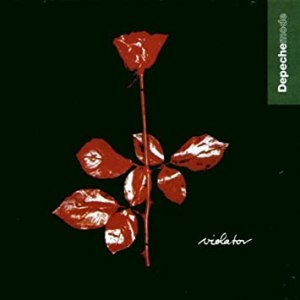
71. Depeche Mode – Violator (1990). Depeche Mode’s music, much like The Cure’s, seemed to take the whole decade to get darker while becoming more popular with the American public. Originally, DM began as one of the better synthpop bands behind keyboardist and resident pop genius Vince Clarke. But, after that debut album, Clarke left to start Yaz (or Yazoo, as the duo is known as well), so the rest of the members had to learn to write. As they developed their skills, the lyrics and music got darker due to the influence of the UK Goth music movement. By the time the band got to the excellent LP, they were filling up venues like USC’s Rose Bowl. “Policy of Truth,” “Enjoy the Silence” and “Personal Jesus” are the songs on this album.

We are up to #70, so the top albums are coming up quickly. Peace.

My 500 Favorite Albums of All Time, Day 12 – #81-90

We survived the granddaughters spending Friday and Saturday with us as their mommy and daddy went to Pittsburgh with some friends to see Rage Against the Machine. Personally, I wanted to see them, but I just can’t travel that long for a concert anymore. Plus, those two littles just kicked my ass. However, we are giving those two some memories even though the younger one won’t remember a thing except that we have developed a relationship with her.

Anyway, let’s get to the countdown.

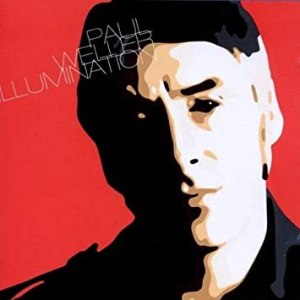
90. Paul Weller – Illumination (2002). Mr. Weller began the new millennium with an excellent set of songs that displays all of his strengths as a singer/songwriter/guitar without succumbing to the modern studio trappings.

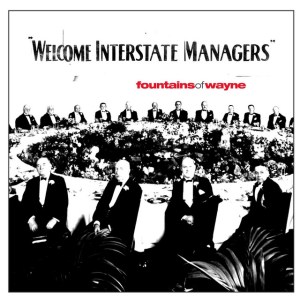
89. Fountains of Wayne – Welcome Interstate Managers (2003). Finally, power pop gods, and the creative force behind the fake band The Wonders from the terrific Tom Hanks film That Thing You Do, got the hit album and song (“Stacey’s Mom”) the band always deserved.

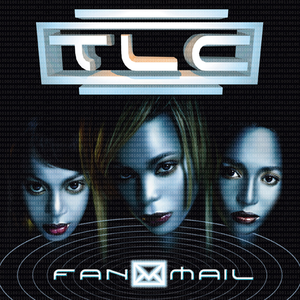
88. TLC – Fanmail (1999). TLC burst onto the scene as some cutesy girls from Atlanta who made some fine hip hop-influence bubblegum R&B confections in the early-90s. By the time of the release of this their third album, they had grown into young women stretching to control their careers and get out from under a contract that had made their former management rich but left the ladies in bankrupt. When this album dropped, you could hear their maturation permeate throughout the lyrics, music and accompanying videos and tour. It’s shame that the band in all purposes died when the trio’s troubled rapper Lisa “Left-Eye” Lopes tragically died in a car accident. No matter the talent level of the other two women, they were missing the third leg of the stool of the band’s chemistry. Yet, what a legacy this album left behind.

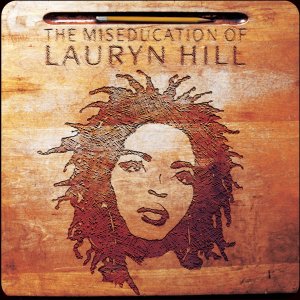
87. Lauryn Hill – The Miseducation of Lauryn Hill (1998). As the visual centerpiece of arguably hip hop’s most talented group, Ms. Lauryn Hill burst on the scene when Fugees’ monster hit song “Killing Me Softly” burned up the charts. Her looks were model-worthy and her vocals were born in the line of the greats like Aretha and Chaka. But, no one was ready for what she created on her debut solo album The Miseducation of Lauryn Hill. Now, those powerhouse vocals were set loose on lyrics worthy of an urban Joni Mitchell or Carole King set upon a musical landscape that seemed to be designed more by A Tribe Called Quest than anything the Fugees unleashed on their debut. I would probably rank this album higher if I were a younger woman, because I understand how Ms. Hill speaks to their concerns as young mothers, young black women, young women in general. Still, as an old white male, I do not believe that I can fully grasp everything she describes. But, what I can do is empathize, which seems totally inadequate.

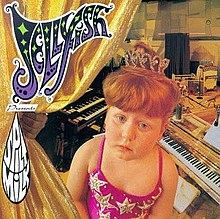
86. Jellyfish – Spilt Milk (1993). Jellyfish is a Californian cult band that only produced two albums, with Spilt Milk being the second and last of studio material. The band debuted during the fall of hair metal and the rise of alternative music. Song their complex Pet Sounds/Revolver/A Night at the Opera pure pop gems were totally out of step with the current musical trends. Many aficionados consider this to be their masterpiece, while I tend to look at both releases as co-masterpieces with Spilt Milk being a slight step down. Here, you get all of the Gen X-based mid-70s pop/rock influences (from aforementioned albums) to groups like Wings, Player and Squeeze. This is a pop lovers’ wet dream. You just gotta overlook the band’s silly image of Goodwill-inspired Alice in Wonderland clothing. Members have gone on to solo and production work, as well as guitarist Jason Faulkner and keyboardist Roger Manning Jr. touring as members of Beck’s band.

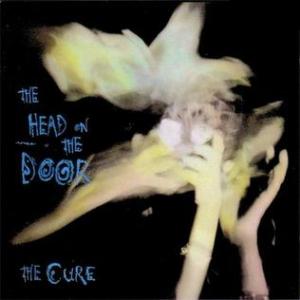
85. The Cure – The Head on the Door (1985). While the band’s two follow-ups, Kiss Me Kiss Me Kiss Me and Disintegration, were The Cure’s commercial breakthroughs, The Head on the Door is the album that people should have latched onto since it is stuffed full of the band’s best songs. Any album that contains “In Between Days,” “Push,” “Close to Me” AND “A Night like This” HAS got to be considered a classic.

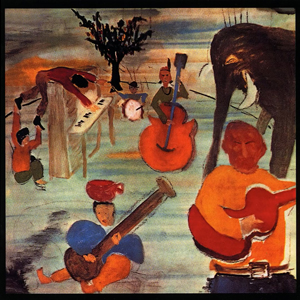
84. The Band – Music from Big Pink (1968). Let’s face it, how many artists can say they made an album that created a whole genre of rock music? Now, let’s narrow the list further by asking how many did it on their debuts? Hmmm, maybe Elvis Presley? Uh, Little Richard? Well, Bob Dylan? I’m not sure if any of them really invented anything on their debuts. They all signified that something was in the water. On the other hand, in 1968, there was country music (Johnny Cash), there was pop/rock (The Beatles), bubblegum (Tommy James & the Shondells), folk rock (Simon & Garfunkel), soul (Aretha Franklin), funk (Sly & the Family Stone) or hard rock (Blue Cheer). Then, upon this album’s release, a new thing, eventually dubbed Americana, was released by The Band. All I need to say is “Tears of Rage,” “I Shall Be Released” and, of course, “The Weight.”

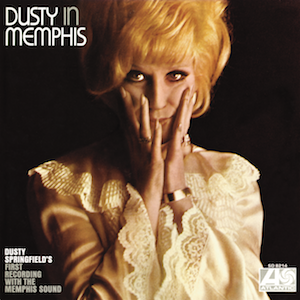
83. Dusty Springfield – Dusty in Memphis (1969). When it came to female soul singers in the 60s, the throne belonged rightfully to Aretha Franklin. But, as you began to make your list, you better not overlook the white woman from the UK Dusty Springfield. While she had made some very good blue-eyed soul across the pond, the music world were left to wonder what she would sound like with an authentic southern-fried soul band would bring to her songs of heartbreak and ache. So, Atlantic tried an Aretha make-over by taking Dusty to Memphis to hook up with a band. After the band laid down some hot tracks, Dusty immediately got stage fright, intimidated by the reality of authenticity of the tracks. So, in a compromise, Dusty was flown to New York City, which calmed her down and allowed her to lay down her magnificent vocals. All of this created one of the greatest soul albums ever, regardless of race. All of which came from the pain of a diminutive bisexual English lass. Isn’t it wonderful how music can reach over all obstacles?!

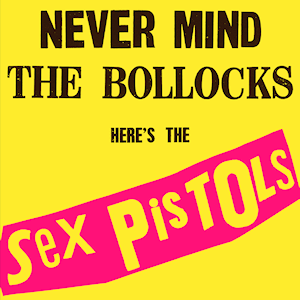
82. Sex Pistols – Never Mind the Bollocks, Here’s the Sex Pistols (1977). By 1976, there was a small coterie of musical misfits in NYC who formed bands that adhered to few of the rules plaguing rock music at the time. Over time, these artists were collectively known to be playing punk rock, since they all appeared to dress as if they were toughs from West Side Story. Then came the Ramones tour of the UK. After their blitz through the mother country, punk bands began to spring up all over London, spreading like a virus into other cities and towns throughout the commonwealth. Then, there were also artists who were looking to cash in on a fashion statement under the guise of being part of the French art movement known as the Situationists. From that crowd came Malcolm McLaren who happened to run a clothing boutique in London called SEX. He put together a band of an equipment-stealing tough with big rock star dreams, a rhythm section of actual songwriters and a confrontational front man with maximum charisma and the ability to piss off the masses. Together this ragtag bunch produced one of the most exhilarating albums of all time. Though the band was more of a singles band, this album has stood the test of time by bringing politics and punk anger together for the first time.

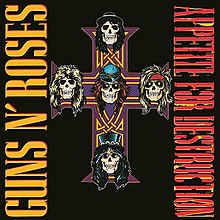
81. Guns N’ Roses – Appetite for Destruction (1987). Although this band popped up from the LA hair metal scene, they were much more than dudes playing pop metal in order to pick up chicks and party. Now, don’t get wrong; GNR played to pick up chicks and party. The difference? GNR were street urchins who were battling against everyone to keep their music “real” and their vision “pure.” The band consisted of two songwriting fighters with chips on their shoulders from the farmlands of Indiana (W. Axl Rose and Iggy Stradlin), a Hollywood gun-slinging guitarist (Slash), a Seattle punk expat bassist (Duff) and a terrific but troubled drummer (Steven Adler). When these volatile personalities came together, they created some of the most real feeling music of the 80s, while being a Molotov cocktail of clashing personalities and drug and alcohol issues. At their most focused, as on this album, GNR were a creative nuclear blast that have ever been released on the public. But, the dark side of each member was bubbling just underneath each member’s dermis waiting to explode. The original lineup only held it together long enough to record two EPs and this album. And, this album remains a testament to a band finally putting together all classic rock influences together with punk and metal to give a glorious but never duplicated hard rock experience.

And, that brings us to the end of today’s writing. Stay tuned for more to come as I go through the last 80 albums on my list. Peace.

My 500 Favorite Albums of All Time, Day 11, #91-100

Woo-hoo! Finally, we are starting to cover my 100 Favorite Albums of All Time. I’m pretty pumped to get to pimp all of these albums. Many of them should be gimmes to my family, friends, former students and long-time readers of this blog. However, many of you are relative new to this blog so you will get to read what this overweight, physically disabled old fart believes are the best albums his has heard in his life.

For those keeping score, out of the 100 albums that I am about to discuss, I owe 86 of them on vinyl. And, like I stated yesterday, I had the others on CD though I still own three of them since one is a Paul Weller that I have not replaced and the other two are by Jellyfish, whose vinyl albums not cost in the triple digits. So, when you happen to be on a fixed income, you have to anxiously await the next vinyl release of those two. The other eleven are all going to be replaced by the time I turn 65.

So, let’s quit dilly-dallying around and get to business. Start it!

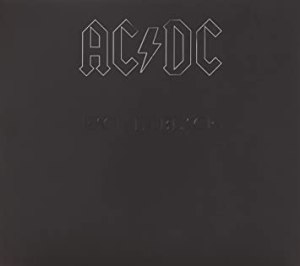
100. AC/DC – Back in Black (1980). Perhaps no other album screams “High School!” than this one. For whatever reason, my classmates latched onto AC/DC back in middle school when the band’s first American release was purchased by a smart ass kid and got passed around the rockers. Back in August 1979, I got to see Bon Scott as the band’s lead singer. Then, in February 1980, he became another casualty in the rock party attrition game that continues to this very day. According to legend, the band had laid down the musical tracks, waiting for Scott to get back from a bender to add his vocals to them. Unfortunately, he never returned. So, the band quickly found a similar hoarse-sounding screamer in the same vein as Scott by the name of Brian Johnson. His impassioned screaming/singing took the lyrics of loss to a whole new poignant level. This album became the quintessential AC/DC album as well as one of the greatest hard rock/metal albums ever.

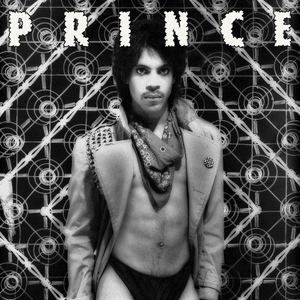
99. Prince – Dirty Mind (1980). 1980 was a pretty good year for great albums, and a diminutive guy from Minneapolis took the promise he showed on his eponymously named sophomore release and mixed in flourishes of new wave and a whole bunch of explicit lyrics to create one of rock’s greatest odes to lust ever put to vinyl. While his previous album covers incorporated some shades of his signature color of purple, this album cover was Prince’s first foray into a stark photograph to signal a slight change in his music. In four short years, Prince will take his new innovative sound to its completion in becoming one of the biggest rock stars on Earth only to turn his back on the sound in order to expand his royal sonic palette.

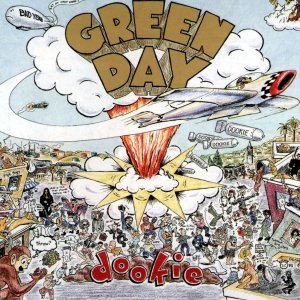
98. Green Day – Dookie (1994). Seriously, it took long enough for punk rock to make a commercial dent in the States. Hell, it was about a decade-and-a-half since punk crawled out of the CBGB and around the world without ever truly gaining a large following in the colonies. Then, the whole Seattle thing knocked down the door, which allowed every musical freak imaginable to walk through and sell some records. One such band was Green Day, who were some Californian skater-punks who started a punk band that had a great grasp on pop melodies, much like The Jam had done to a certain extent or Cheap Trick’s incorporation of punk and new wave trappings into their AOR sound. Regardless, Green Day made a palatable version of punk that later was dubbed punk-pop, kind of a power pop version of punk which was popular at the turn of the century. Green Day captured the slacker zeitgeist of Gen X. While Cobain cowered in the glow of success, Green Day embraced it and that paid off for them as they developed into one of the best rock bands in the world by the end of the 20th century and the dawning of a new millennium.

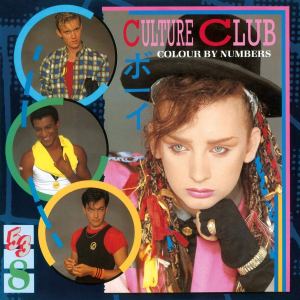
97. Culture Club – Colour by Numbers (1983). It’s just a shame that Culture Club does not receive the critical kudos that the band deserves. If they were not the premier pop band of the era, Boy George and his mates were certainly one of the Top 5. I loved how the guys mixed 70s soul, smooth jazz, some New Romantic cool, a light touch of reggae and world music and a heavy dose of Motown magic into a compelling pop sound that was an Eighties update of Smokey Robinson, both with and without the Miracles. Culture Club are pop perfection at the perfect time during the androgynously homophobic 80s.

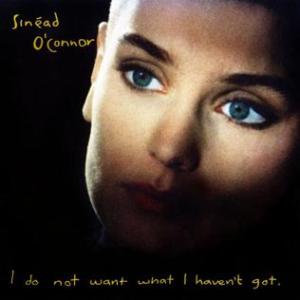
96. Sinead O’Connor – I Do Not Want What I Haven’t Got (1990). This album was one of the best to kick off the 90s. Sinead was coming into her own as a mature rock artist who spoke her own mind. After her compelling a capella version of Bob Marley’s “War” on SNL, she ripped up a photo of the Pope in protest of a cover up of priests sexually abusing children through Ireland and the rest of the UK. A decade later, she was proven to be correct, yet her career laid in ruin due to the backlash for speaking her mind. And, we, the music lovers, are the big losers in the whole thing after her muse was ripped from her.

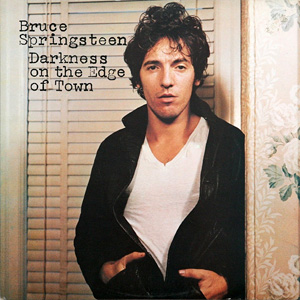
95. Bruce Springsteen – Darkness on the Edge of Town (1978). This album only grows in stature in my book over time. I was taken aback in the day by the starkness of the music and its haunting lyrics. But, after taking several knocks over the years given to me by life, I relate so much better to the album that it continues to rise in stature. Maybe in five years, it will be in my Top 50?!?!

94. XTC – Skylarking (1986). On paper, the pairing of rock Renaissance man Todd Rundgren and punkish popmeisters XTC appeared to be one of the most inspired producer/artist pairings since Phil Spector tried to Wall-of-Sound the Ramones back in 1980. Although the process of the pairing caused creative sparks to fly and arguments ensue, the outcome is an album that is nothing short of spectacular. The album works as an homage to Sgt. Pepper, as well as a parody. But, it also stands as a unique artistic statement by one of more talented pop-smiths to come out of the Second British Invasion. This album is utterly breathtaking.

93. David Bowie – The Rise and Fall of Ziggy Stardust and The Spiders from Mars (1972). Let’s start off my long-simmering question: Did David Bowie’s Ziggy Stardust persona invent the mullet hair cut popularize by punks and new wavers in the early-80s and taken to a whole other level by American rednecks and world hockey players? Regardless, the music Bowie created when his creative back was up against a wall to produce a hit was transcendent and its ripples could be heard through the Glam Rock movement, punk and new wave into Britpop and beyond. Ziggy remains a fun album to this day.

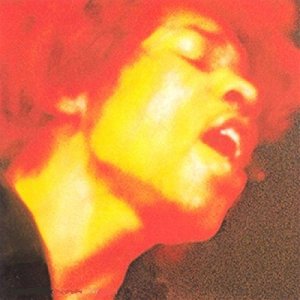
92. Jimi Hendrix Experience – Electric Ladyland (1968). If Are You Experienced begat George Clinton’s Funkadelic, then this album begat Prince and Living Colour, the two sides of the same coin. This was Hendrix’ final fully realized studio vision that he completed during his tragically short life. In so many ways, I prefer this album over all his others from Jimi’s catalog.

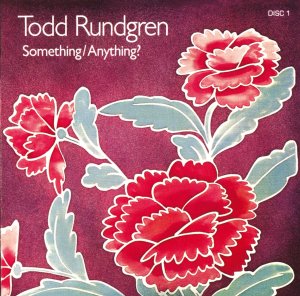
91. Todd Rundgren – Something/Anything? (1972). When Todd Rundgren the Artist allows himself to be himself in the studio, we get this kind of wonderful album. This is four sides of music that runs the gamut of the singer/songwriter (“Hello, It’s Me”), power pop (“I Saw the Light”), Philly blue-eyed soul (“It Wouldn’t Have Made a Difference”), pure AOR (“Slut”) and studio goofiness (when he dicks around the studio showing off his little engineering tricks). Perhaps the emotional centerpiece of the album that simply shows Rundgren’s talent for an all-around great song is “Couldn’t I Just Tell You.” He shows off his ability to take the sounds of the early 70s and distill it all into one terrific pop song. This album represents what happens when an artist lets himself go and just be himself at a period in time. Best of all, this album, along with XTC’s Skylarking are the best examples of his impeccable production abilities.

See you later for the next installment in this series. Peace

My 500 Favorite Albums of All Time, Day 10 – #101-125

It’s taken much longer to get to this point, but hopefully it’s been worth it. This list is what difficult to compile, but I feel like it reflects my tastes fairly well, especially when you throw in the years I covered throughout three decades.

I have been asked many times how many albums I actually own. I really do not like to announce numbers, I feel comfortable doing this on my blog since I’m not widely read. If I remember correctly, I do own between 300 and 400 of the albums on this countdown, and many that I do not own on vinyl I used to own on CD. However, I purged nearly my entire CD collection near the beginning of the pandemic which has knocked my total WAY down as I owned around 1200 CDs. Now, my CD count is below 100 with Prince and Springsteen CDs being slowly replaced by their vinyl counterparts. As far as 7-inch singles, or 45s as they are called here in Indiana, I have close to 400, though now I only collect specific artists (especially Prince, of course) or special releases. In addition, my 12-inch singles/12-inch EP/10-inch EP collection currently stands just a bit under 100. I own approximately 30 box sets, both in vinyl and CD versions. I even own a little over 20 concert videos/documentaries. Despite all of this, my main focus is on vinyl albums, of which I own over 1500, including picture discs and vinyl box sets. To my friends, I may have the largest collection, but rest assured I am nowhere in the Top 100, or even Top 1000, largest collections.

I collect vinyl first for the music. I don’t care, I will listen to all of my purchases, except for the picture discs. Those things are slightly stupid to own but make fantastic artwork hangings in the music room. But, as a reaction to the CD-era and the current streaming age, I love the large, tangible cover and inner sleeves, as well as whatever else is included, be it stickers, a poster, or in the case of Alice Cooper’s School’s Out, paper panties. Plus, during the 60s, 70s and 80s, some musical artists made their packaging some complete works of art. The Velvet Underground’s debut album is an Andy Warhol art piece with a peel-able banana sticker included or the Stones had the man create a usable zipper on the cover of their Sticky Fingers album. Probably the last grand album artwork was a special edition of Talking Heads’ Speaking in Tongues whose packaging was an interesting three-dimensional piece of modern art.

Recently, the introduction of colored vinyl, an old staple of children’s records in the 50s, 60s and 70s, has made a comeback with rock albums. It began when Jack White started Third Man Records in order to release unusual vinyl albums. It then picked up steamed via Record Store Day celebrations since 2008. The final stamp of approval has come in the past five years as both Walmart and Target have been selling special edition colored vinyl of some new and classic albums, making collecting that much more enjoyable.

And, if the current pricing of new vinyl seems steep in comparison to the “good old days,” just keep in mind that your new Prince record in 1984 had a list price of $9.99 would, adjusted for inflation, now cost around $24 in today’s money. Therefore, much of the cost is the same in economic terms. Howevertoday the number of vinyl copies are not being produced at the same levels as they were in the 80s, so there is much more room for growth as a very small investment (You will NEVER get rich with vinyl purchased over the counter; that only happens if you have masters of famous artists or unreleased albums, which are exceptionally rare).

Plus, I just do this because I love to listen to music…all kinds of music.

125. R.E.M. – Document (1987). R.E.M. has always been associated with musical integrity. And, although, this album was a huge hit, the band’s sound was even more aggressive than they had ever recorded. This album was successful because Michael Stipe’s vocals were up front and the playing was aggressive, much like the band’s live shows. The hit was “The One I Loved,” but we all knew back in the day that “It’s the End of World As We Know It (And I Feel Fine)” had the legs.

124. Van Halen – Van Halen (1978). Was there an across-the-board, unanimous decision about a debut like there was for this album? The album absolutely resonated throughout my high school. And why not? It had everything that would appeal to a teenager: aggressive virtuoso guitarwork, a driving rhythm section, a lead singer who acted like a gameshow host, lyrics about teenage lust and loud rock music. The darkside of this album was that it was the dawning of the hair metal scene that gave us such luminaries as White Lion, Firehouse and, perhaps worst of all, Poison.

123. The Beatles – Rubber Soul (1965). Rubber Soul represents The Beatles shedding their “boy band” personae and embracing a new artistic phase. The album also happens to further signal that rock & roll was becoming rock music, as a new maturity permeated throughout the Fab Four’s music and lyrics. This is the album that influenced Brian Wilson to make The Beach Boys’ classic Pet Sounds, as well as the band acknowledging Bob Dylan in their lyrics. Thank God for this album because we might have gotten The Bangles in return.

122. Supertramp – Breakfast in America (1979). Few expected this former prog rock band to capture the attention of the world, but the band found huge success as the 70s were ending. This is what happens when great songwriting meets great musicianship. Breakfast in America will always hold a special place in my heart.

121. Daft Punk – Random Access Memories (2013). My older son made me aware of the whole EDM scene by playing artists such as Moby, Chemical Brothers, The Prodigy, LCD Soundsystem and Daft Punk. But, I could have never imagined how Daft Punk would embrace their inner-Giorgio Moroder to produce a modern disco classic. And they accomplished this by reaching back the glitter ball era and tap Nile Rodgers as their guitarist. In doing so, they hit the jackpot by giving the kids of that generation a taste of what mine all ready knew: Disco rules!

120. The Strokes – This Is It (2001). I distinctly remember telling my boys how I missed Cheap Trick/The Cars-type bands. Shortly after saying that, he came home with this CD, slapped it in the CD player and told me to listen. Yep, those bands were still around at the time. The Strokes, however, had something my bands didn’t and that was a New York cool. For me, The Strokes saved rock music just as I was beginning to think it was dying.

119. Sugar – Copper Blue (1992). The years 1991 through 1994 had some terrific music. Plus, it was a time of the Third Wave of Power Pop. We all knew that a power pop artist was residing deep in the psyche of Bob Mould, as we could hear it all buried behind the feedback and speed of Hüsker Dü and some of his solo work. But when his latest trio Sugar debuted, he put it all out in the open and on display on this outstanding album. Yet, another album I feel as though doesn’t get enough love.

118. David Bowie – Scary Monsters (And Super Creeps) (1980). Pound for pound, this just may be my favorite Bowie album. This is where all of his musical instincts and previous experiments combined in one coherent, influential sound. If most of the successful new wave artists that sprung up in the aftermath of this album didn’t get all of their ideas from this album, I’m not sure where exactly they did. Plus, if you carefully watch the video for the terrific “Ashes to Ashes” video, you might recognize that one of the male dancers is future-MTV VJ Alan Hunter. You just don’t get that kind of information from any other rock writer.

117. The Go-Go’s – Beauty and the Beat (1981). As an older member of Generation X, like much of us, I had no idea at the time just how important The Go-Go’s were. I just loved their music. Then, I realized they were accomplishing things that no other band composed completely of women had done so previously. You see, I grew up with female rockers like Fanny, Suzi Quatro, The Runaways, Heart, Pat Benatar, solo Joan Jett, that I simply thought this was normal. At least now we can say that an all-female IS normal. But, it couldn’t have been done if the women of The Go-Go’s weren’t talented musicians and superb songwriters. Plus, they had that added sex appeal that we cannot overlook, since these women appealed sexually to both men and women. I can’t help it, but I will ALWAYS be a Jane and Kathy man!

116. The Rolling Stones – Some Girls (1978). Yes, this album is of its time. It is full of misogyny and unflattering racial stereotypes. But, God, there is so much fantastic music surrounding those gawd awful lyrics. Plus, what other album could give a supremely great dance track (“Miss You”), a faux country tune (“Far Away Eyes”), a Keith Richards cowboy-ish song (“Before They Make Me Run”), some totally wrong songs (“Some Girls” and “Beast of Burden”), a Motown cover (“Imagination”) and a batch of snotty rock songs as an answer to punk (“When the Whip Comes Down,” “Respectable” and “Shattered”). Regardless, when the Stones are on, and they are here, there are few as good.

115. Daryl Hall & John Oates – Abandoned Luncheonette (1973). On their second album, the greatest duo in rock history officially threw their hat in the Yacht Rock ring, though we just called it great music back then. It was as if the guys had been holed up listening to Steely Dan’s debut album and came up with this batch of songs as an answer. This album would be significant if it only contained “She’s Gone,” which inexplicitly would not become a hit for another three years. Yet, it is full of the rock and soul sound for which Hall & Oates became famous. This was their first classic, but not their last.

114. The Stooges – The Stooges (1967). Although 1967 is known for The Summer of Love and all the groovy sounds that followed in its wake, it is significant for being the year in which both punk and alternative music were born. Not only did The Velvet Underground release their debut, but so did our proto-punk heroes from Detroit, The Stooges. Unfortunately, outside of the great Creem magazine, few were singing their praises. Eventually, the rest of the world did catch up.

113. Rage Against the Machine – The Battle for Los Angeles (1999). Man, I love these guys! No one articulated my angst for the free market system than RATM. Plus, they did it with their innovative metal/hip hop amalgamation that was light years ahead of the Nu Metal sound in both execution and style.

112. Tom Petty & the Heartbreakers – Damn the Torpedoes (1979). Petty had the biggest balls in all of rock history. He was in a contract dispute with his band’s record company, held firm and actually broke the company while not even having a real hit or big album. When the dust settled, he got the contract, paid AND his own label. Then, the band released their career-defining album that blew them up so big and fast that it took them years to sort it all out. This is the dawning of the greatest American rock band.

111. Chicago – Chicago II (1970). So, the band dropped the stupid Transit Authority part of their group name and simply called themselves Chicago. Then, they delivered the second consecutive jazz-rock double album. Only this time, the songwriting was more focused AND experimental. This album is most famous for its wonderful Side Two suite Ballet for a Girl in Buchannon which contained TWO monster hits in “Make Me Smile” and “Color My World.” Where else can you get that kind of pop/rock sophistication?

110. The Police – Ghost in the Machine (1981). This album resonates for a couple of reasons. First, you can hear the band on the verge of becoming a musical force, if they weren’t all ready. Second, you knew the volatility of the members of The Police were one day cause the band to implode. One didn’t know at the time that both were coming up in the aftermath of the next album. Ghost in the Machine shows everything that is great about The Police with great playing, lyrics, hooks and one truly classic song in “Every Little Thing She Does Is Magic.”

109. Kanye West – My Beautiful Dark Twisted Fantasy (2010). This album is something of a hip hop Sgt. Pepper in that everything but the kitchen sink is thrown in to make a timeless sound. If this album had not been made, would we have ever gotten Drake? I doubt it. I still feel like the non-hip hop crowd secretly loves this album.

108. Daft Punk – Discovery (2001). Daft Punk kind of stumbled upon the disco sound on this album, even though a majority of it remains steeped in the EDM of the day. Discovery remains a terrific transition album as the duo goes from EDM auteurs to disco innovators, which makes for a compelling listen.

107. Prince – The Gold Experience (1995). I’m going to level with you. The Gold Experience is the last truly great and classic album in the Prince catalog. All of the subsequent albums, sans the Crystal Ball compilation, all pale in comparison to this magnificent yet vastly underrated album. Any album that contains “Endorphinmachine,” “P. Control” AND “The Most Beautiful Girl in the World” has got to be classic in anyone’s book.

106. George Michael – Listen Without Prejudice Vol. 1 (1990). So, the man unjustifiably never got his songwriting respect as a member of the boy band Wham! Then, for some reason, critics got caught up on the man’s great looks instead of his songwriting on Faith, which battled Michael Jackson’s Bad to a near draw with regards to shear numbers of hit songs. So, Mr. Michael fought back with the greatest song cycle of his career. “Praying for Time” and “Freedom! ’90” are just the hits.

105. No Doubt – Tragic Kingdom (1995). If you were like me and loved the ska produced by the English bands Madness, The Specials and The (English) Beat, then I am certain that you were hooked by this album that seemed to squeeze every 80s new wave hook into one album. Personally, I can never say enough good things about No Doubt and how underrated they seem to have become in the wake of Gwen Stefani’s ascent into mega-celebrity. Just don’t forget that she was a legitimate rocker before all of this Blake Shelton crap started.

104. R.E.M. – Out of Time (1991). Don’t get me wrong. For me, Out of Time is the sound of the band taking a well-deserved victory lap as they break little new ground. Hell, nearly everything sounds like an homage to something older. Yes, “Losing My Religion” IS everything that is great about R.E.M., and their quintessential song. Yet, the lead instrument is an mandolin, which guitarist Peter Buck was just learning to play. My MVP for this album goes to mild mannered bassist/vocalist Mike Mills for his fluid basslines and his underappreciated vocals.

103. The Kinks – The Kinks Are the Village Green Preservation Society (1968).  The Kinks, or should I say specifically Ray Davies, became the master of depicting the average working bloke in England of the late-Sixties. And, the band’s playing only enhanced those lyrics. Suddenly, Brits felted like someone was talking about them and not pandering to some unknown and unseen Americans. This album has been noted as a major influence on all of Paul Weller’s incarnations (The Jam, The Style Council, solo), The Smiths, The Stone Roses, Pulp, Primal Scream, Blur, Oasis, Supergrass, The Libertines and the rest of Britpop. Take a bow!

102. Beastie Boys – Paul’s Boutique (1989). If you went to the local record store in 1989 to buy this album expecting a sequel to Licensed to Ill, then you got the shock of your life. The whole musical blueprint was thrown away for a whole new cut-and-paste post-modern approach to hip hop. The boys, with the help of producers The Dust Brothers, took the idea of sampling to a whole new level to create a sonic collage which had the sample weaving in and out and around each other to the point where it was often difficult to recognize where one ended and another began. Yet, it made for a compelling soundscape that immediately influenced the hip hop world, though the general public was slow to warm to it. Think of this album as the Beastie Boys’ version of Fleetwood Mac’s Tusk: experimental, compelling, frustrating and rewarding all at once.

101. Smashing Pumpkins – Mellon Collie and the Infinite Sadness (1995). This album is a prog rock album dressed up in alternative band’s clothing. And, man, is it ever great! You can hear Billy Corgan piling his guitars up like a Boston album. And D’Arcy’s bass is so low end that you’d think it was almost dragging on the ground. The songs are terrific and stick in your head for days on end. How can a song with no real chorus/refrain like “1979” be a great hit song? Only when it is perfectly executed, that’s how. Let me some it up in one word: Masterpiece!

Brace yourself. The Top 100 is coming!