A Little Advice: Get to Know The Waterboys

4.10 waterboys - this is the sea

In the 21st Century, I am not sure what record companies are trying to do to stay alive. Most of the time, they seem to be somewhat sticking to their old way of doing things: sign some artists, record a single with some big named produced written by some hot songwriter, throw the song on iTunes and wait to see if it connects with an audience. If it does, AND the song becomes a hit, we are on to the album stage. If not, that artist is discarded.

Back during the pre-internet era, when record companies ruled the roost, they would sign an artist and give them three albums to develop. Current CEO of Interscope Records, the great Jimmy Iovine made a career out of recording third albums for artists, as he was involved with Springsteen’s Born to Run, Petty’s Damn the Torpedoes and Patti Smith’s Easter, albums that all commercially broke these artists to the general public. He said that this album was the most important album in the artist’s career, and he appears to be correct.

4.10 1984-first-waterboys-show
The Waterboys in 1984. It almost seems like a scene from The Commitments.

Now, back on New Year’s Day 1983, a little known Irish band by the name of U2 released their third album called War. Immediately, the critics were singing the praises of this band whose sound was different from most other commercially successful artists. Instead of blues-based rock that had been the main diet of rock music for nearly 20 years, U2 instead took punk’s minimalism in playing notes and letting the feedback paint the picture within the context of their songs. This was very much a post-punk technique that actually could be traced back to the music of Captain Beefhart, the United States of America and Yoko Ono from the Sixties. Those artists were all challenging the preconceived notions of what was acceptable for rock music. And U2 learned those lessons second-handed, though their shared admiration of Joy Division and Public Image Ltd.

U2’s genius was putting those controlled feedback guitar noises to paint aural textures within the confines of a pop song with real pop melodies that changed everything for Generation X and alienating most Baby Boomers along the way. U2’s sounds became the “IT” sound for the next decade. Record companies began scouring the United Kingdom, as well as the rest of the world, for the next U2, much as they previously searched for the next Elvis Presley, Beatles, Dylan, Hendrix, Zeppelin, Clash and any other transcendent artist. Often, the next transcendent artist is making music completely in isolation until all of a sudden they seem as though they had popped up fully developed over night.

In the aftermath of U2’s 1983 success, bands with similar anthemic sounding songs became something of a small point of emphasis to discover. During that small window, some terrific bands popped up, such as Simple Minds (known for their huge 1985 hit song “Don’t You (Forget About Me)”), Big Country (“In a Big Country”), and, probably the least known of the trio, Scotland’s The Waterboys.

4.10 waterboys - fisherman's blues

I once read that The Waterboys were actually Scotland’s answer to U2. I am not sure if Mike Scott and his mates were cognizantly thinking that way, but there are some similarities in that both attack a song the same way. The difference lies in Scott’s willingness to incorporate flourishes of R&B with a sax here or a screeching Irish fiddle there, as well as the alacrity to fully lose their sound in other genres, like they did on 1988’s classic album Fisherman’s Blues. And as great and enjoyable of an album that one is, I have come to play the band’s preceding album, 1985’s This Is the Sea, more often recently.

4.10 waterboys - the whole of the moon

Now, thirty years later, I remain blown away by the arching beauty of the second song on the album called “The Whole of the Moon,” the calling card of their career. I can honestly admit that the song had been buried for a good thirty years in my memory until my wife, Son #1, his wife and me went to see, ironically enough, U2 last fall. U2 likes to play a song as they make the long walk from their dressing room to the stage before beginning their concert. Back on their 360° Tour, they walked out to Bowie’s “Space Oddity”. But, this time, they walked out to this majestic song by The Waterboys, which really acted as a John the Baptist type of song to U2’s rock savior Jesus Christ-like The Joshua Tree. Throughout The Waterboys’ This Is the Sea, Scott describes his heroes being transformed by the music of rock and roll. It’s almost as if The Waterboys, and not U2, are from the same Irish rock lineage as Van Morrison. And, maybe they are.

The Waterboys should have been more palatable to the Boomers’ tastes in music than U2. But, for whatever reason, radio programmers would not touch them. It was as if they allowed U2 radio airplay, in addition to a little to Simple Minds and Big Country, but that was it. Instead, we got every half-assed, same-sounding hair metal band on the Strip like Warrant, Winger and White Lion (nice alliteration, eh?), instead of a bigger-than-life band like The Waterboys who were celebrating things like learning, love and peace instead of rolling the dice in a play of Russian Roulette against HIV, as our hair metal idiots were playing with strippers and heroin addictions. To this day, I remain in awe in how that happened on radio, even though the medium was losing money way back then.

So, allow me to reiterate that if you want to discover a gem of a band from the Eighties, then my big suggestion is The Waterboys, especially the two aforementioned albums. Those are the two albums where The Waterboys sound as if they are ready AND willing to ascend to the top of the rock mountain to save us from the posers of the day. And, This Is the Sea is their third album, so that desperation is clear. Shortly before the recording of this album, the never-ending revolving door membership to The Waterboys started. Most significantly, multi-instrumentalist and fellow songwriter Karl Wallinger left the band, which allowed him to start his solo career under the banner of World Party, another anthemic band that should have been much more popular than a simple footnote in rock history.
4.10 mike-campbell-neil-finn
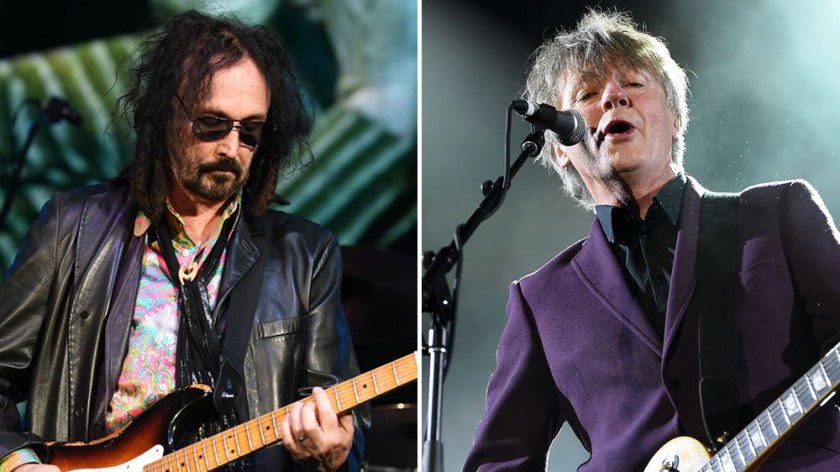
On the left is former Tom Petty Heartbreaker Mike Campbell and on the right is Neil Finn, of Crowded House fame.

Last thing, did you hear that Lindsey Buckingham, the producer and creative mind behind many of Fleetwood Mac’s greatest albums from the 1975 eponymous album up until recently, was fired from the band. Some exciting word is that Tom Petty’s guitarist, the fantastic Mike Campbell AND Crowded House (“Don’t Dream It’s Over”, “Something So Strong”) mastermind and former Split Enz (“I Got You”, “Six Months in a Leaky Boat”) guitarist/singer Neil Finn have been added to the Big Mac as a change to their “special sauce.” For my money, though the band will obviously miss Buckingham’s studio wizardry, Fleetwood Mac may actually become stronger with Campbell’s outstanding soloing ability and songwriting and Finn’s left field pop sensibility. I am actually excited about hearing how these changes affect/help the band. Maybe, especially with Finn’s songwriting ability, the Mac will rise once again to be the hitmakers they once were. I am truly excited by this change. Could the Mac be adding more Heartbreakers in the future? Maybe keyboardist master Benmont Tench could also be added to allow Christine McVie a break and/or enhance the band’s keyboard sound. Regardless, there are some exciting times ahead for Fleetwood Mac in the next future.

Led Zeppelin’s Officially Untitled Album Is Worthy of the Hype It Has Received Over the Years


4.9 Led_Zeppelin_-_Led_Zeppelin_IVBack when I started this blog, I had made a promise to myself that I would stick to writing about the rock artists who may lay just outside of the mainstream and beyond. I mean, how many rock music websites have you visited over the past couple of years that have devoted their space to The Beatles, The Rolling Stones, Pink Floyd, Led Zeppelin, Lynyrd Skynyrd and Black Sabbath, to list but a few of the biggest stars of the rock era. So, I have tried to stay away from these big guns, unless they have released an underappreciated album or two.

But something strange struck me today while listening to a recently released new album by a new band called Greta van Fleet. Greta van Fleet is a group of twenty-somethings who sound as if they have listened to nothing but classic rock for all of their young lives. And, they may have dabbled with the blues elders that the classic rock artists all grew up listening to, from the sound of the songs on their really good album released in late 2017. But, most of all, they sound as if they have been worshiping at the alter of Led Zeppelin, as their lead singer sounds the closet that any young singer has come to the Golden Norse God wail of Robert Plant. But, Greta van Fleet’s album made me want to go back to the original source, Led Zeppelin, to attempt to tackle arguably their finest moment as a studio band, 1971’s untitled album that has come to be known as Led Zeppelin IV.

It seems as though that every fan of rock music owns this album, as over 23 million copies of that album have reportedly been sold over the nearly 50 years this album has been available for purchase. If you listen to the album, even if you are a youngster who has just purchased their first copy of the album, you have probably heard nearly every song on the classic rock radio stations throughout the world. Why? Those songs seemed to have become incorporated in our DNA. Additionally, this album contains The Song That Has Been Played the Most Times on Radio Ever, the power ballad prototype “Stairway to Heaven.”

4.9 led zeppelin band photo

So, what is it about this album that appeals to rock lovers everywhere? Although Led Zeppelin is often lumped under the label of Heavy Metal, the band has always been so much more than metal. All of their music, no matter which album the song in question is placed, the band shows much more dexterity and subtleness than other bands with their power and of their ilk. The Zep has the musicianship that allows them to saddle up with the heaviest bands of their era and beyond, while maintaining a tranquility in their songwriting that allows them to maintain a certain mellowness that is absent from nearly any other metal band. Seriously, could Metallica or Sabbath pull off either “Hey Hey, My My” or “Going to California”? Well, maybe Metallica could, but their reputation would not allow them to travel down that road, while Ozzy and the boys in Black Sabbath could not, even though the musicians sound as if they may have been practicing some jazz on the side.

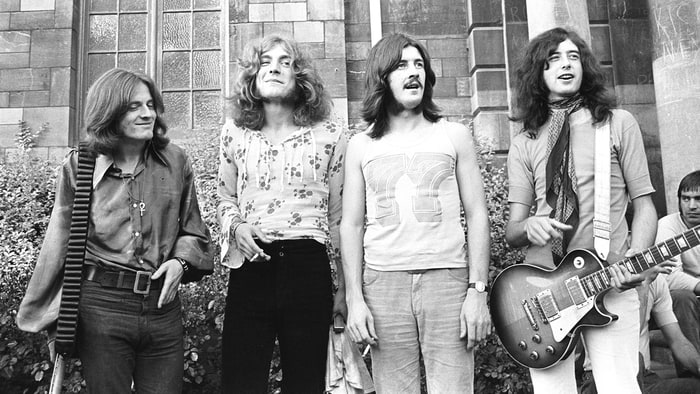
What separates Led Zeppelin from the other heavy blues-based bands of their era or any following, is guitarist Jimmy Page’s love of British folkie Bert Jansch of the band Pentangle, in addition to singer Robert Plant and drummer John Bonham’s experience in the neo-Americana band called Band of Joy. Add to that the talents of bassist and multi-instrumentalist John Paul Jones pushed the band well beyond its initial blues-based heavy rock sound. Page and Jones were well-established session musicians in England, who joined forces with the other two who were relatively novices in the late-Sixties. But, the band quickly gelled and matured so much, that by the time they convened for the recording of their fourth album. The result is now recognized as one of the granddaddies of rock music.

But, as great as the reputation of the album is, it really does live up to all the hype. Everything that Zeppelin did on their first three albums is there, from the heavy blues riffing of their first album on “When the Levee Breaks” to the soft folkie sound of their third album on “Going to California” to their all out show of strength of their second album on “Rock and Roll,” “Black Dog” and “Stairway to Heaven.” It’s all there on this, Zep’s fourth album, their masterpiece.

4.9 led-zeppelin-logo

And, as great as this album is, it never reached Number One on Billboard‘s Top 200 Albums list, nor did it ever win a Grammy Award. Yet, it is constantly listed in the Top 30 Greatest Albums of All Time. Not bad for an album that stalled in the number two position on the album chart.

Led Zeppelin IV, as this album is commonly known, deserves its lofty position as one of rock’s immortal albums. If you do not have, go out and get it for your collection. It really does live up to the hype.

When The Police Finally Hit the Jackpot in the USA

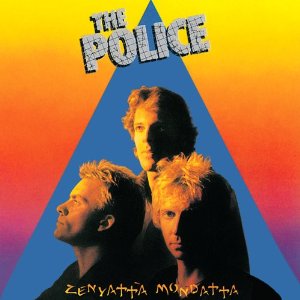
4.6 Police-album-zenyattamondatta

Man, I have not listened to The Police in a long time. But, for some reason I felt compelled to put their deceptively great second album, Reggatta de Blanc. Well, did that album take me back. It seems that I hear more in the grooves of this album than I have ever heard back when my hormones were raging. But, I did not stop with that album. I followed it with what might arguably be the band’s masterpiece, 1980’s Zenyatta Mondatta.

I still remember purchasing that album while going to some high school academic club weekend state-wide convention. I remember sneaking out of the convention with some rock-loving friends of mine, as well as the girl I was dating at the time, who was only with us because she wanted to hang out with me, I guess. The rest of us were on serious business to find a record store in order to pick up some music that wouldn’t be popular with the majority of kids at our high school. That day, I personally walked away with Devo’s classic debut album Q: Are We Not Men? A: We Are Devo and The Police’s aforementioned third studio album.

4.6 police in concert

Needless to say, The Police completed their transformation from a punk/reggae-influenced new wave band with loads of nervous energy, sophisticated musicianship and scholarly lyrics whom many people in my world thought was “punk” into a worldly band poised to become a stadium-filling and million-selling album artist. On Zenyatta Mondatta, the empty spaces between notes being played became longer and longer, meaning this band’s music was becoming something akin to jazz, except this was rock music.

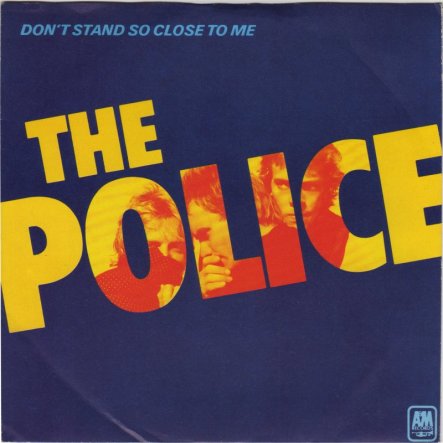
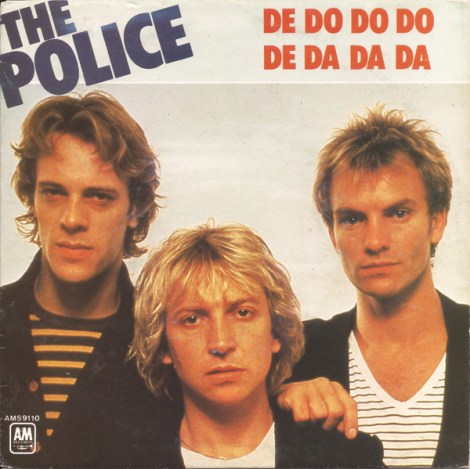
This was the album that finally broke the band in the US. Instead of a minor hit, like they had with “Roxanne,” or the non-hits The Police released from their second album, Reggatta de Blanc, such as “Message in the Bottle” and “Walking on the Moon.” Now, their hits were brushing the Top 10 on Billboard‘s Hot 100 Singles Chart. Those two singles, “Don’t Stand So Close to Me” and “De Do Do Do, De Da Da Da” have become classics in the own right. It’s almost as though as The Police’s music grew more complex, the public understood it better. You can see that as their next two albums, Ghosts in the Machine and Synchronicity reach number two and number one, respectively, on Billboard’s Top 200 Album Chart. But, their whole success in the US began with this album, as sales pushed it all the way to number 5 on the chart.

4.6 the-police-dont-stand-so-close-to-me 1980

The album begins on Side One with the eerie synthesized sounds of droning as it segues into “Don’t Stand So Close to Me.” This song is not your typical pop song theme, as it deals with the attraction between a young female student and her male teacher, all the while the lyrics are comparing it to the book Lolita without ever naming it. Sting, the band’s bassist, vocalist and main songwriter, coyly clues us into that book by name-dropping the author Nabokov. Side One runs through some of the band’s least alternative-sounding music, often with lyrics calling out worldly concerns. My personal favorite song comes in the middle of all of these worldly affairs with a little personal declaration of love in the form of “When the World Is Running Down, You Make the Best of What’s Still Around.” This song brings in a little personal humanity in the form of love for another that allows us to keep our sanity while the rest of the world is spinning down the proverbial toilet.

4.6 police - de do do do de da da da

The other hit song, “De Do Do Do, De Da Da Da,” jump starts Side Two. Now, this is a deceptive love song, dressed up in the simple language of baby talk, as if we were to strip all worldly concerns and languages away to the core emotions that will keep humanity working as the society collapses around us. It is these moments of sophisticated levity that keeps this album’s music grounded as The Police without the band morphing into ultra-serious cats like Rush.

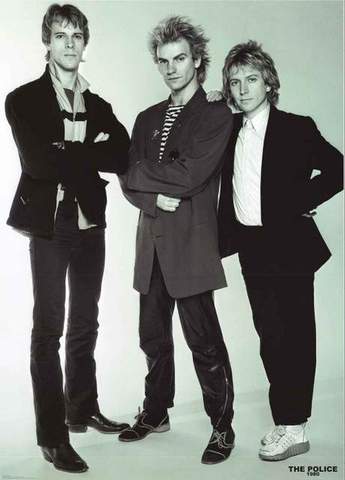
What makes The Police’s lyrics so poetic is that Sting, before he became a full-time professional musician was an English teacher. This frees up the other two, drummer Stewart Copeland and guitarist Andy Summer, to take those songs in magical places through their unparalleled musicianship.

4.6 police publicity photo

To me, Zenyatta Mondatta was the album when The Police made the jump from a club band to a world-wide sensation. Boy, I am sure glad I rediscovered it today. By the end of the day, I will have gone through their whole discography, which should have never ended so quickly as it did. As great as their whole career was, I sure have missed what they might have recorded. And, as fine of album Sting released immediately upon the demise of The Police, those albums would have become classics in the hands of The Police as opposed to session musicians, no matter how great they are.

The Police are truly a missed opportunity. But, isn’t that the history of the many bands that broke up too soon in their careers.

The Culturally Significant ‘Saturday Night Fever’ Soundtrack

4.4 Saturday Night Fever album cover

Allow me the moment to pose a question to you. Think about this and take your time. What albums in history have been so culturally significant that the album alone changed things at the time of its popularity? Yes, it’s a pretty deep question, but I feel it is worth pondering.

As I sit here thinking about the question, some answers pop up. Let’s begin with the first album that went off like a nuclear bomb in society during the Fifties. I am talking about the first Elvis Presley album released on RCA, simply titled Elvis Presley. Before that album, there were handfuls of “race records” and afterwards there was this thing called rock ‘n’ roll that swept the nation and “corrupted” a generation of teens in the US, Britain and elsewhere.

4.4 Studio 54
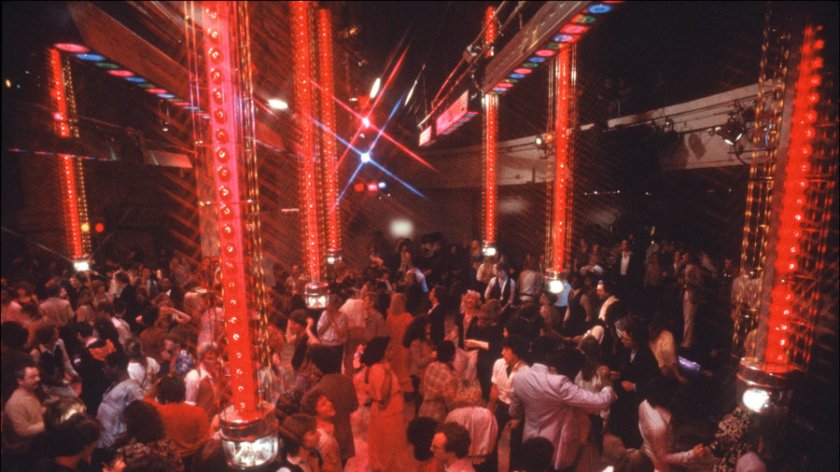
The famous and hedonistic Studio 54 at the height of its disco glory.

Following that album, there was the Beatles’ first US album titled Meet the Beatles that set off Beatlemania in the States. Then, three short years later, the Beatles did it again by ushering in the Summer of Love in 1967 with their first foray into psychedelia with their masterpiece album Sgt. Pepper’s Lonely Hearts Club Band. After that album, rock ‘n’ roll became simply rock, an album oriented genre.

4.4 John Travolta in SNF

In the Eighties, there was Michael Jackson’s Thriller and Prince’s Purple Rain, both ushering in an era of black artists being seen as sex symbols and rock gods. And, then, in the early-Nineties, the alternative nation generally speaking and the world of grunge specifically entered the world’s conscientiousness behind Nirvana’s Nevermind. Unfortunately, after that album, the only thing that affected music stance within society significantly was Napster, a file-sharing computer program that totally leveled the music industry, from which the industry has yet to recover.

4.4 Trammps-2008
The Trammps

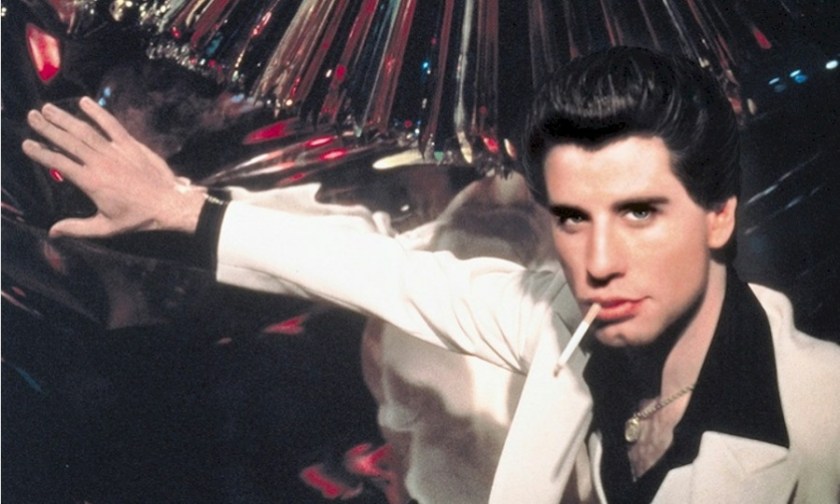
However, I skipped one album that just may be the granddaddy of cultural significance. Before its release, the music it was pushing may have just began to wane in popularity and may have even faded from memory if not for this album. After this album caught on with the public, the genre it was pushing was revived quickly and immediately entered a golden period of musical excellence and cultural significance. The phenomenon I am alluding to is that movie and its highly successful soundtrack called Saturday Night Fever. The image of a young John Travolta striking his famous one-arm-up-dance-pose may be the single most iconic image of the disco era. The movie was good enough to be nominated for an Academy Award, but it was the soundtrack that transcended everything in society, pushing disco out of the gay night clubs in New York City, Miami and San Francisco and into the clubs of middle America and the music onto most formats of radio and even finding its way into high school dances. The watered-down funk beats augmented with string sections was the sound of music beginning in late-1977 with the release of the Saturday Night Fever soundtrack and lasting through to the summer of 1979, when Chicago DJ Steve Dahl held his famous “Disco Destroyer” Night between games of a Chicago White Sox double-header, during which Dahl literally blew up thousands of disco records in centerfield. So much damage was done to the field that the second game had to be forfeited by the Sox. Although the disco hits continue for the next couple of years, Disco as a movement died that night in Chicago.

4.4 Bee Gees
Bee Gees just before ‘Saturday Night Fever’ made them disco icons

Although the Bee Gees had been changing their sound from the Beatles-like ballads toward the disco-fied sounds they released on their 1975 Main Course and 1976 Children of the World albums, it was not until they released a string of three classic songs from the Saturday Night Fever soundtrack that made the trio into disco stars. That string of hits, “How Deep Is Your Love”, “Stayin’ Alive” and the sublime “Night Fever”, became the new calling cards for the disco-movement. Additionally, the soundtrack yielded many more classic disco hits, such as Yvonne Elliman’s “If I Can’t Have You,” “More Than a Woman” by Tavares and arguably the greatest disco cut of all-time, The Trammps’ “Disco Inferno.” Not to mention that the album also included former disco hit songs like the Bee Gees’ own “You Should Be Dancing” and “Jive Talkin'”, Walter Murphy and the Big Apple Band’s “A Fifth of Beethoven” and KC & the Sunshine Band’s “Boogie Shoes” only solidified the street cred of the soundtrack. This album quickly became a cornerstone in nightclubs across the world. Unfortunately, since their reputations were so entwined with the album, the Bee Gees became poster children of the disco movement. Suddenly, the three brothers were blamed for all the bad disco music that was released during the waning days of disco. As if it were the Bee Gees’ fault that people released albums of disco music by the Muppets or Ethel Merman. Nor was it their fault that lame disco songs were released by the Beach Boys, Rod Stewart and KISS. But, the blame was placed on the Bee Gees because they helped revive disco with Saturday Night Fever just as it seemed the genre was about to collapse.

4.4 KC & the Sunshine Band
KC & the Sunshine Band

Today, disco is insidiously everywhere. You can hear it used in commercials. It pops up during movies and television shows. Even 21st century musical artists like Daft Punk, Arcade Fire, Madonna, Lady Gaga and LCD Soundsystem all have incorporated disco into their sounds. Even hip hop artists have been known to sample disco songs in their own hit songs. So, disco never really died. It went back underground, exactly where it belonged, and actually started back in the Seventies.

4.4 Bee Gees with Andy Gibb live 1979
Bee Gees with younger brother Andy Gibb in a preview of the Bee Gees line-up that never happened.

So, the genre know for excesses of all kinds, be it sex, drugs, clothing, fashion, music, etc., is alive and well. And, now that we are forty years past those peak-days of Saturday Night Fever, the music is alive and well. Long live Disco!

The Runaways Were a Great Band – Period

4.6 the runaways - the runaways

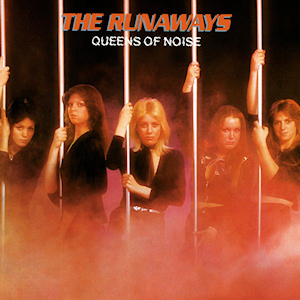
A couple of weeks ago, I finished a great book about the teenage female rock band from the mid-Seventies known as the Runaways. This book, titled Queens of Noise: The Real Story of The Runaways and written by Evelyn McDonnell, was great at bringing back to those relative innocent days of the bicentennial, when the whole world was less uptight and ultimately less threatened by change. Except, when it came to women actually playing rock music aggressively, totally aimed at the groin. Enter Sixties rock impresario Kim Fowley and five teenaged (for the perverts out there, “jailbait”) female musicians. The five, whom Fowley christened as the “Fabulous Five” where sixteen-, seventeen-, eighteen-year-old young ladies by the name of Sandy West (drums), Jackie Fox (bass), Cherie Currie (singer), Lita Ford (yes, THAT Lita Ford, on lead guitar) and Rock & Roll Hall of Famer Joan Jett (rhythm guitar).

4.6 Runaways

Back in 1976, I had read a few articles about this band called The Runaways from LA, who played music that fell someone between glam , punk and metal. But, what these young ladies did was change the rock forever. Even though this five-some never reached the top of the charts, they did build the road for women to rock their way to stardom, whether the women were part of the Go-Go’s, The Bangles, L7, Hole, Vixen, The Donnas or any of the others. The Runaways took the sexist remarks, the perverted statements and leers, and other forms of sexual harassment and abuse to make it easier for the women of today to rock out for a living.

4.6 the runaways publicity photo

My advice to you is to go out and find versions of the bands’ first two albums, so you will get the fundamentals of women who rock. You might want to find the CDs, since they will be much cheaper than the vinyl versions. As a matter of fact, I had purchased that first eponymous Runaways’ album back in 1976, when I was just beginning my eighth grade year in middle school. If I still had that album today, it is worth over $100. Go figure! Anyway, I must be honest, I was NOT prepared for the rock that The Runaways had recorded for their debut album. The music was raw, primal, every bit as a punk rock classic as the first Ramones album, also eponymously titled).

RUNAWAYS

From the opening song, The Runaways’ anthem “Cherry Bomb” through the last song, the rocking “Dead End Justice,” these girls took on juvenile delinquent personas, but each unique to her personality. For example, Lita was the spandex-sporting metal goddess, Joan the punk rocker, Cherrie the good girl turned bad, Jackie the girl next door and Sandy the California beach baby, who were all tough and beautiful. But, what has been lost throughout the years was how great of musicians each one was, especially drummer Sandy West, to whom history was never kind.

4.6 The_runaways,_queens_of_noise

If deserving bands such as the Velvet Underground and The Stooges can get into the Rock & Roll Hall of Fame as towering influences more than commercial successes, then The Runaways should be held in the same high esteem that they are currently being held by the young pop and rock artists of both sexes today. Check out both of those first two Runaways’ albums. They are classics. Then tell me, are they punk, metal or just plain rock? Aw, who cares! They rock!

Daryl Hall, Solo – ‘3 Hearts in the Happy Ending Machine’

4.2 daryl hall - 3 hearts

Ladies and Gentlemen! I hope everyone had a fantastic Easter, end to Passover, April Fools Day or the end to a good weekend, depending on your point-of-view. And, by the way, if you live in Illinois, April 1 is Cheap Trick Day in the state, so I was able to celebrate three holidays on a single day, even though I do not, nor have I ever, live in Illinois, I still celebrate Cheap Trick Day since I am a fan of theirs.

So, what does all of this have to do with today’s topic? On the surface? Seemingly, nada…uh…nothing. Yet, there is a connection so indulge me a bit. You see, in 1983, Cheap Trick released their eighth album, One on One. The album, which was an unfortunate flop because the band’s record company was busy trying to force extremely poor song choices on the band for them to record. This was happening all the while lead singer Robin Zandt had penned one of his finest songs ever called “I Can’t Take It”. If you go back and listen to that song you will be listening to one of the finest non-hits ever to not make the Top Forty. Why is this significant? It’s not worthy, except for who produced this album: Todd Rundgren.

4.2 Hall & Oates in concert

In addition to being a terrific songwriter, singer, solo artist, member of Utopia, Todd Rundgren is one of the greatest producers of all time. Among the many artists whom Rundgren has produced, you will find albums by the likes of New York Dolls, Patti Smith, Tubes, XTC and Meat Loaf. Additionally, you will discover that Rundgren produced the third Daryl Hall & John Oates album, War Babies from 1974.

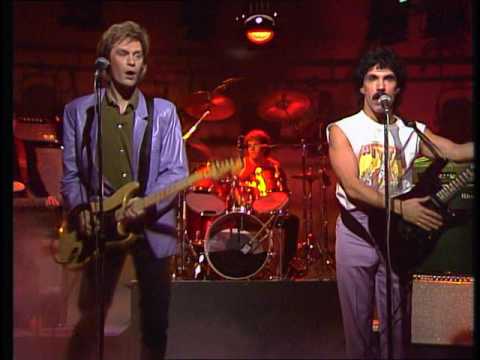
Now, we all know that Daryl Hall & John Oates went on to become the biggest-selling duo in rock history and members of the Rock and Roll Hall of Fame. I hope everyone remembers that Hall & Oates had their earliest tastes of commercial success with the album released immediately after working with Rundgren. That album is known as “The Silver Album” due to its metallic silver cover with the photograph of an androgynous-looking Daryl and John. That 1975 eponymous album is significant because it had the duo’s first Top Ten hit single “Sarah Smile”. In the aftermath of that song’s and album’s success, the album that was released the year BEFORE Rundgren produced War Babies, the song “She’s Gone” along with the album Abandoned Luncheonette were re-released and became hits all over again.

4.2 daryl hall - sacred songs

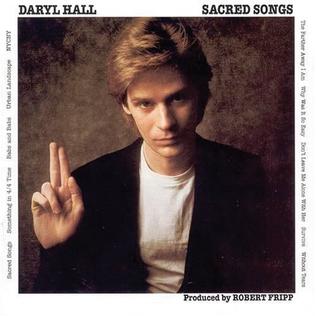
Hall and Oates, as you know, hit number one on the Hot 100 Singles list in Billboard in 1977 with “Rich Girl”. Then, the hits quit being so big, as they ended the Seventies with songs peaking in the Top 20 but no better. But, once the calendar flipped over to the new decade of the Eighties, the band got white-hot. From 1980 through 1985, the duo experienced a hot streak that few other artists have ever seen. By 1986, Daryl Hall and John Oates were now wearing the crown of the most successful duo of the rock era, but they were also “fried.” They decided it was time to take a small break in order to recharge their creative batteries. John Oates did some production work and raced race cars, while Daryl Hall decided to record his second solo album. If you remember, Hall released his highly experimental rock album, Sacred Songs, produced by King Crimson leader Robert Fripp as an audition for Hall to join a new incarnation of the dark art-rock band, way back in 1980, even though the album had been on the shelf since 1978.

In 1986, Daryl Hall dropped his second solo studio album, Three Hearts in the Happy Ending Machine. The album begins with what is arguably Daryl Hall’s finest single, “Dreamtime.” To my ears, Hall has sunk all of his rock music influences into one terrific pop song. Throughout the glorious four minutes and forty-four seconds, you get to hear many Beatle influences, from Eighties-drenched Sgt. Pepper nods to the driving Ringo-esque drumming by Tony Beard, to little Bob Dylan lyrical courtesies (“man with movie star eyes” immediately jumped out at me) throughout the song, to the Electric Light Orchestra-like touches of keyboards courtesy of Eurythmics’ Dave Stewart, who added some other-worldly guitars as well. The whole thing comes off as a Brian Wilson-like Wall of Eighties’ Sound over an Eighties era Hall & Oates dance beat.

4.2 Hall & Oates

Now, after such a glorious single to kick off an album, few artists would be able to re-gather themselves enough to keep the quality of the material of the rest of the album close to that opener. Yet, Daryl Hall, who had been inching closer and closer to writing complete enough songs to fill a Hall & Oates album, rose to the occasion, which makes me wonder how some of the songs on 3 Hearts never ended up on a duo album. The duo’s loss was solo Daryl’s gain, as the rest of the album sounds as if it were an actual duo album. Whatever was happening at the time, this album represents the final gasp of terrific songs written by Daryl, with and without co-writers.

Other songs that stand out as possible hits have always been “Only a Vision” and “I Wasn’t Born Yesterday,” which are the typical H&O mid-tempo rock & soul songs the duo is known for, while “Someone Like You” is the typical big H&O ballad for which the band had become known for since the dawning of the Eighties. After those first four songs, I had always been confident that Hall was creating his masterpiece, only to be disappointed by the quality drop off the rest of the way.

Side One closes with a stereotypical Eighties-sounding pop-rock-dance-hip hop mix, as much of the post-Artists United Against Apartheid song predicted. In other words, this is not so much a song as it is a collage of songs written by Hall; Eurythmic Stewart; Hall & Oates bassist, the late Tom “T-Bone” Wolk; and Eighties superstar producer/engineer Arthur Baker, who was making a name on remixes of various hip hop hits, called “Next Step.” And, that song is only interesting for who is all listed on the writers’ credits, while the rest of the album are all tired Daryl Hall songs that could have used some John Oates, Sara Allen or Jana Allen ingredients added to the songwriting recipe.

4.2 Hall & Oates 86

Once again, Daryl Hall did create a good album that continued to straddle the main influential sounds of the Eighties’ rock, pop and soul that his duo had perfected long ago. Still, 3 Hearts in the Happy Ending Machine is a great solo album and follow-up to Daryl’s fantastic Sacred Songs. This album is worth digging through your collection to rediscover, or to travel to your local independent record store to find in order to add to your collection. This one is a keeper.