I Just Ranked Every Cheap Trick Album and Survived

3.26 Cheap Trick logo

I’m back. The two words Michael Jordan used to announce that he was returning to the NBA after an ill-advised two years spent trying to play baseball. Now, my return to blogging is not as dramatic as Michael’s return to professional basketball. Still, after adjusting to a new concentration of medicine in my pain pump, helping my beautiful bride of 32 years get better after a week-long bout with influenza type-b, and then spending some time out in Pennsylvania and New York City with our older son and his beautiful wife, I finally am back in order to do some writing.

Of course, while in NYC, Graham and I got to visit a record store on the Lower East Side, called A-1 Records. Of course, for the two of us, the store was, in Graham’s words, “a target-rich environment”. The two of us could have spent hours in that store, or any record store for that matter, and made some great finds. Personally, I finally found the vinyl version of Elvis Costello’s Spike and Cheap Trick’s Lap of Luxury. All and all, the visit was awesome.

Yes, Cheap Trick was finally made a member of the Rock & Roll Hall of Fame. I maintain the band would have been inducted ten years sooner if they were a New York or Los Angeles band instead of a Chicago, or more specifically Rockford, Illinois, band. The band’s sound and image were such that 80s metal and hair metal bands, 80s & 90s alternative bands and power pop bands from all decades have named Cheap Trick as major influences. No other band seems to have been so versatile in its influence as Cheap Trick. Let’s run down a quick list of bands and artists whom have listed Cheap Trick as a major influence: Nirvana, Mötley Crüe, Green Day, Poison, Foo Fighters, Smashing Pumpkins, Jellyfish, Matthew Sweet, Enuff Z’Nuff, Guns N’ Roses are but a few to have name-dropped Cheap Trick as a major influence on their sound and career. You could not corner the band as a power pop band, because they could go into a lite metal mode that we now call “Hair Metal” or, more accurately, “Glam Metal”, followed by some heavier metal sounds that could be likened to Thin Lizzy or Queen which became an influence of metal bands like Metallica or Def Leppard. Perhaps, more often, Cheap Trick’s Power Pop side has been sited as an influence upon the power pop and new wave artists of the 80s and 90s, from Marshall Crenshaw to the Posies and fellow Chicagoan Material Issue. Then, the alternative nation of the 80s and 90s also held the band in high esteem, such as Green Day, Nirvana, Smashing Pumpkins, blink-182, Weezer, to name-drop but a few.

So, let’s take a closer look at this unheralded band as I rank their studio albums, since we all know that they created the classic live album from 1979 titled At Budokan. That album was originally intended to be released solely in Japan, as a gift to the enthusiasm of the crowds who had gone crazy for the band. But, that album became the biggest selling import album at the time, so the band’s label decided to release it in the States. Good thing they did, because the album became the biggest-selling album in the band’s catalog. But, it is the studio albums where you will find the aural nourishment from Cheap Trick that makes the band so tasteful.

So, here is my ranking of my favorite artist’s albums this side of Prince.

17. The Doctor (1986). This album has songs that sound like everything that was bad with 80s music at the time. It was produced by 70s Glam rocker Platto, wh0se ham-fisted production kept the band from their own unique sound in an attempt to make Trick sound like Poison or some lesser hair metal band. This easily the band’s worst band.

3.26 Cheaptrickstandingontheedge

16. Standing on the Edge (1985). Sure, this album has the great “Tonight It’s You”, but that song is the only thing keeping this album from being The Doctor, Part 1. Cheap Trick should NEVER have used synthesizers in order to sound hip. They only made their music sound dopey, not hip and current.

15. Busted (1990). So, in 1988, the original line-up of the band reunited, and experienced more success than they had up that point. So, they followed up Lap of Luxury with this album of songs written by more outside writers, thanks to the brains at Epic Records. If it wasn’t for a couple of songs (“Can’t Stop Falling Into Love” and the Chrissie Hynde duet “Walk Away”) written by the band, the album would be forgettable.

14. Lap of Luxury (1988). This was the big comeback album that the label put together. Bassist Tom Petersson, gone since 1980, was back in the fold. Epic, on the heels of the disaster of The Doctor, forced a bunch of outside songwriters on the band, including a lame power ballad the band hated to play, “The Flame”, which ironically became Cheap Trick’s only #1 hit. The rest of the album sounds like the same 80s rock crap that was being force upon us by hair metal bands and songwriter Dianne Warren.

13. All Shook Up (1980). So, guitarist Rick Nielsen and drummer Bun E. Carlos were summoned by John Lennon to his Double Fantasy sessions to rock a rollicking version of “I’m Losing You”, which was not released until the Lennon box set was released in the 90s. So, expectations were high for Lennon’s favorite American Band when he got them together with The Beatles’ former producer George Martin. Outside of the great “Stop This Game”, the rest of the album came out lame and was a huge disappointment. Unfortunately, the band was in disarray as bassist Tom Petersson left the band during this album’s recording.

3.26 CheaptrickSpecialone

12. Special One (2003). Here was the band’s quiet return to studio recordings. It had been six long years for the band’s fans since Cheap Trick had released a new set of songs. Unfortunately, the songwriting was tentative and unsure throughout. The songs were overall simply okay. For some reason, band keeps playing “Scent of a Woman” live. Personally, I wish they would forget about that song and stick with playing “Pop Drone”, “My Obsession” or “Hummer” live in concert.

3.26 cheap trick rockford

11. Rockford (2006). The first single, “Perfect Stranger”, was easily the best song on the album. The only problem was it got my hopes up for the album, which turned out sounding like a distillation of their 80s music, meaning too much reliance on synthesizers. Still, this batch of songs sounds good live.

10. Next Position Please (1983). Everyone in the world thought that the pairing of Cheap Trick with producer Todd Rundgren would be a match made in heaven. At least, it should have been, because the label started interfering since they were desperate for the band’s next “I Want You to Want Me”. So, the label forced a decent song, “Dance the Night Away” made popular by the English new wave band The Motors. The song was totally wrong for the band, since they had recorded the great “I Can’t Take It”, which was a much better tune than the lame cover song the label wanted. If the label had stayed out of the way, this album would have ended up much better. As it is, NPP is a pretty good album.
3.26 Cheap_Trick_One_on_One

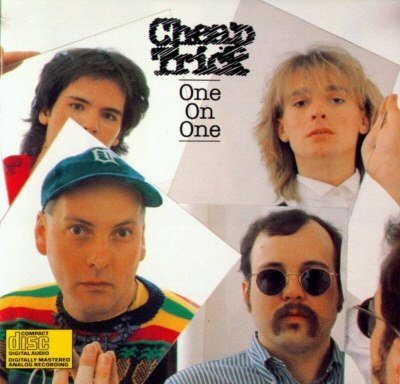
9. One on One (1982). This was easily the best album of the Jon Brandt years. Now, that’s not a knock against the bassist. I remember thinking at the time the band had rediscovered their “punk” side of their sound. This song was full of potential hits, like “She’s Tight” and “If You Want My Love”.
3.26 Cheap Trick The_Latest

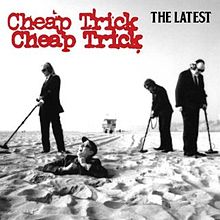
8. The Latest (2009). This ended up being the last studio album with original drummer Bun E. Carlos. But, what a way to prove that Carlos was still a helluva drummer, even after all of his debilitating back problems. The band knocked it out of the park as they covered Slade (“When the Lights Are Out”), rocked out a Cheap Trick classic (“California Girl”) and created THE garage classic of all time (“Sick Man of Europe”). The band had not sounded this cohesive since their 1996 self-titled classic. THIS is what Cheap Trick should sound like.

7. Bang Zoom Crazy…Hello (2016). Last year, the band celebrated their long-overdue induction into the Rock & Roll Hall of Fame by releasing a new album, after coming to a legal agreement with longtime drummer Carlos, in order to record with touring drummer Dax Nielsen, son of guitarist Rick Nielsen. This album was ironically released on the same day as Weezer’s White Album, which made that week one hell of a power pop week. Do NOT overlook this album, since it might have been the best album released in 2016. Who could have predicted the band ever being as vital in their 40 years together.
3.26 CheapTrickWokeUpWithAMonster

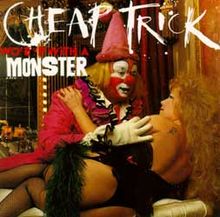
6. Woke Up with a Monster (1994). Here is the forgotten Cheap Trick album. It was the band’s only album on Warner Bros. Then, it was the only album not to use their logo on the cover. Still, it was a solid batch of rockers that only Cheap Trick could do. Unfortunately for the band, the album was released during the heyday of grunge and got lost. Then, the band was dropped by Warner Bros.

5. Cheap Trick (1997). So, after Monster, the band was invited to tour by many of the artists whom Trick had originally inspired. So, the band was one of the first older bands to bypass the big labels by going with the independent labels that are today so prevalent. The band had created the best set of songs since the 70s that had excited the group so much that they were looking at this situation as a “re-boot”, hence the name of the album. Unfortunately, in typical Trick fashion, a series of events that lead to the abrupt bankruptcy of their new label (Red Ant, or as the Trick faithful calls it “Dead Ant”). Which meant this brilliant album was released without any kind of push behind it, so it unfortunately stalled its momentum and left the band so shell-shocked that they stayed out of the studio of another six years. It may be, along with Monster, the long lost great album of the 90s.

4. Cheap Trick (1977). Here is Cheap Trick answering the opening bell with a mix of songs that, at the time, sounded as though they were rooted in the punk movement as well as being part of current rock sound. On their debut, the band may have been the first group to look both forward and backwards simultaneously as they applied the lessons of The Beatles, Who and Yardbirds to what the punks and new wavers were doing in New York City and London by giving the whole amalgamation a Midwestern work ethic needed to smooth things out. If you can’t hear “Oh Candy”, then you might need a hearing aid or two.

3.26 Cheap_Trick_In_Color

3. In Color (1978). This album is full of the band’s classic songs: “I Want You to Want Me”, “Clock Strikes Ten”, “Southern Girls”, “Oh Caroline” and “Come On, Come On”. The problem with the album is the production – it’s too slick. It’s like Tom Werman was trying too hard to get the band on the radio. The result? The band did not get on the radio. If only Jack Douglas had come back to produce this album the way he produced the debut, then this album would be remembered as one of the 100 greatest albums of all time by more people than just me.

2. Dream Police (1979). Yes, Werman’s production is slick. But, this time, the slickness is used in the experimental strings added throughout the album. Yes, this album was held back as the success of At Budokan continued, so it seemed to be released a little too soon for the public at the time. Still, the band had created a great and classic set of songs that sound fresh in the 21st century. C’mon, this LP has the title song, “Voices”, “Gonna Raise Hell”, “Way of the World” and “I Know What I Want”. How can anyone forget about this album?
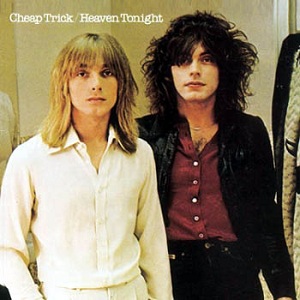
3.26 Cheap_Trick_Heaven_Tonight

1. Heaven Tonight (1978). This is THE album that captures the essence of Cheap Trick best! This time, producer Tom Werman left the “live” warts in the performances of the songs and quit worrying about how to get Cheap Trick on the radio. And the band responded by recording THE best teen angst song of all time with “Surrender”. Then, the band gives us a cover of The Move’s “California Man”, “On Top of the World”, “Auf Wiedersehen”, “Heaven Tonight” and “Stiff Competition”. This is the best Cheap Trick album of the classic late-70s era.

I have been a HUGE Cheap Trick fan ever since I bought In Color during the Fall of 1978. As a matter of fact, many of my high school friends still associate me with loving the band as I did nearly 40 years ago. Today, I am a Prince fan first, but Cheap Trick remains my second favorite artist. Back in the ’90s, I used to tease all of the kids who were discovering and falling in love with Weezer that they were falling in love with a band that shared many similarities with one of my favorite, Cheap Trick. So, when those students listened to Weezer followed by a little Cheap Trick, they heard what I was saying and became converted fans.

So, here is to a band that helped me through some difficult years in my life and continue sound great to this day. Cheap Trick rules!
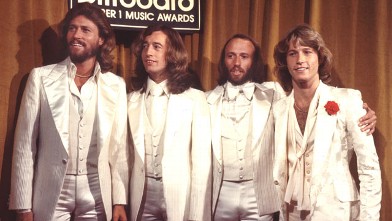
Another Great Family of Rock Music: The Gibb Brothers

3.13 the total brothers gibb

Here I go again. I’m on one of my kicks again! So beware. During the month of February, I was all about hip hop. I read two books on the subject, which is nearly typical of me. But, it looks like I am diving into 70s and 80s pop music again. All of this began with the arrival of a biography of the late, great George Michael. So, the digging began. All of which lead me to my royal Australian-through-the-United-Kingdom, the four Gibb Brothers. The older trio, eldest Barry and the middle twins Robin and Maurice, became the Bee Gees. Several years later, a younger brother came along as a solo act, with the option of eventually joining his older brothers. That brother’s name was Andy.

3.13 andy-gibb-007

In a cruel twist of fate, Andy was a shooting star that burnt brightly and quickly, who, unfortunately, died at a very young age in the late 1980s. Then, just as nostalgia seemed to be building around the original older brothers, the younger of the twins, Maurice, was struck down at the relative young age of 53. But, the fate of the most successful group of the 70s was about to be dealt a huge blow as the older twin, Robin, died unexpectedly in 2012. Still, Maurice has persevered. Last year, he released a fine solo album, that I am certain would have been a huge Bee Gees comeback album, much like the Monkees had earlier.

3.13 bee-gees-art-ppcorn-2016

You know what? The Bee Gees had nine #1 hits, eight of which came between 1975 and 1979. Add to that total, Andy Gibb’s three #1 hits during that time period, and you have a hit machine that scored eleven #1 hits in five years. Now, if we were to throw in Barry’s production work, the brothers would have been responsible for several more #1 hits. All of this means that those of us who cared during that time period were witnessing something along the lines of the Beatles and Elvis Presley.

So, today, thanks to the website musicvf.com, which assigns every Top 100 hit an artist had a number value based upon the number at which the song stopped during its journey. The higher the song places, the more points it amasses. Likewise, the longer a hit stays at a position. I then went through the hits of the Bee Gees, Andy Gibb, Barry Gibb, Maurice Gibb and Robin Gibb. Then I took each songs’ total values to aide me in ranking the songs of the Brothers Gibb.

Let me begin by saying that I am shocked by the number of terrific songs that came out of these talented guys. And, of course, there are so many fantastic singles that did not make this list. Missing are songs like the Bee Gees’ “Fanny (Be Tender with My Love)” (1975) and “New York Mining Disaster 1941” (1967), Robin Gibb’s solo hits like “Boys Do Fall in Love” (1984) and the Beatles cover of “Oh Darlin'” (1978) and Andy Gibb’s “Time Is Time” (1980).

Okay! Enough of my tomfoolery! Let’s make a countdown!

25. “Alone” – Bee Gees (1997 – Still Waters). This was the last US Top 40 hit for trio. #28

24. “You Win Again” – Bee Gees (1987                                                                                                                                                                                                                 – E.S.P.). This song was one of the few songs the Bee Gees had in the Top 100. #75

23. “Run to Me” – Bee Gees (1972 – To Whom It May Concern). This Top 20 hit from the Bee Gees mid-70s doldrums. #16

22. “Nights on Broadway” – Bee Gees (1975 – Main Course). This is the Bee Gees most underrated song. #7

21. “One” – Bee Gees (1989 – One). The brothers found the magic one last time in the late 80s with their last Top 10 hit. #7

20. “I Started a Joke” – Bee Gees (1968 – Idea). In the late 1960s, the Bee Gees were often confused with the Beatles, like with this song. #6

19. “(Our Love) Don’t Throw It All Away” – Andy Gibb (1978 – Shadow Dancing). Here is Andy’s first 0f six entries in this list. #9.

18. “Lonely Days” (1970 – 2 Years On). The Bee Gees’ Beatlesque song was a huge hit on both sides of the Atlantic. #3.

17. “Desire” – Andy Gibb (1980 – After Dark). This is Andy’s last Top 10 hit. #4

16. “Love So Right” – Bee Gees (1976 – Children of the World). This hit came during the Bee Gees’ second run of success. #3

15. “(The Light Went Out in) Massachusetts” – Bee Gees (1967 – Horizontal). What?!?! This one did not even make the Top 10! (Psst! It was huge in Britain) #11

14. “An Everlasting Love” – Andy Gibb (1978 – Shadow Dancing). I gotta admit this song is my favorite one by Andy. #5

13. “I’ve Gotta Get a Message to You” – Bee Gees (1968 – Idea). Yet, another Top 10 hit during the band’s first run of hits. #8

12. “Love You Inside Out” – Bee Gees (1979 – Spirits Having Flown). Here we go, the first of the number one hits. #1

11. “(Love Is) Thicker Than Water” – Andy Gibb (1977 – Flowing Rivers) Of Andy’s #1 songs, this is the weakest, in my opinion. #1

10. “How Can You Mend a Broken Heart?” – Bee Gees (1971 – Trafalgar). This was the brothers’ first #1 hit.

9. “Jive Talkin'” – Bee Gees (1975 – Main Course). This song started off the Bee Gees’ greatest run of hit songs.

8. “You Should Be Dancing” – Bee Gees (1976 – Children of the World). This is the Bee Gees’ best disco song, not the stuff from Saturday Night Fever. #1

7. “Shadow Dancing” – Andy Gibb (1978 – Shadow Dancing) Even though this song had a long stranglehold on the number one position in 1978, it was NOT the number one song of that year. Right! That honor went to his brothers.

6. “I Just Want to Be Your Everything” – Andy Gibb (1977 – Flowing River). This song WAS the number one song of 1977. #1

5. “Tragedy” – Bee Gees (1979 – Spirits Having Flown). I think the record company tried to hold this song back to improve sales, but “Tragedy” would not be held back. There is nothing like an anthemic pop song with a touch of disco and a whole lot of bombast. Just think what this song would song like if Queen had recorded it. #1

4. “Too Much Heaven” – Bee Gees (1978 – Spirits Having Flown). So, the Bee Gees were going to follow the game plan used with Saturday Night Fever: Release a grooving ballad first, then hit ’em over the head with an anthem. This song was the lovey-dovey disco ballad. #1

3. “Stayin’ Alive” – Bee Gees (1977 – Saturday Night Fever OST). I think more people associate this song with disco than nearly any song this side of “Y.M.C.A.” This song is associated with the movie’s iconic scene where John Travolta is walking down the sidewalk.

2. “How Deep Is Your Love” – Bee Gees (1977 – Saturday Night Fever OST). This disco ballad is the song that re-ignited the whole disco movement and allowed disco to move into the mainstream.

1. “Night Fever” – Bee Gees (1978 – Saturday Night Fever OST). This is THE disco song of all Bee Gee disco songs. The song would even stand on it’s own even if it had not been included on that iconic soundtrack. Both “Stayin’ Alive” and “Night Fever” are the memorable songs of the soundtrack.

Well, folks, that’s wrap on the Gibb family. I feel like they are an underappreciated set of artists in rock history. You can hear their influence throughout 80s pop, such as George Michael’s outstanding pop gems, up to and including today’s prefabricated cookie cutter studio hits. Still, can you imagine how the Bee Gees would have sounded if they had become a quartet and tragedy had not struck the family three times.

Queen’s ‘A Day at the Races’ Is a Special Album to Me

3.10 A_Day_at_the_Races_(Queen)

In the winter of 1976, I was in the midst of my eighth-grade basketball season. Unfortunately, no matter how well I played, I was still stinging from my father moving out on us six months earlier. At one time, practicing my Maravich drills, working on my ball handling drills and developing my passing skills were acts of complete joy. But, now, my basketball workouts with my dad were very strained. I was mad at him because I felt a sense of betrayal at his leaving. While I was very protective of my mom, Dad was the one person who understood my strangeness. But, now he was gone, and my gym time dropped from every day to every other weekend. I was way too painful to go with Dad to the gym to workout. So, instead of hitting the gym, I began to obsessively ran every time something in my life was bothering me.

Between running two to three times per day, I was listening to music. Around that time, I heard Queen’s recently released song, “Somebody to Love”. For some reason, that song reached into my soul and caressed my heart, almost giving me five minutes of reprieve from that stupid pain I was feeling. Then, the more I heard the song, the more obsessed I became with it. I would purchase Cream, Circus and Hit Parader magazines that had pictures of the band Queen in their pages in order to read the articles and to cut out the best pictures to hang on my bedroom wall.

3.10 queen 1977-live

Most evenings, I would hang out down the street at a neighbor’s home that had a couple of daughters who became sisters to me during that time. Kim, Lori and I would play music in their family room while their parents and brother would watch TV in their living room. The girls would make me dance to various songs, either on record or on the radio. Occasionally, unbeknownst to me, we would “air jam” songs. Without ever seeing Freddie Mercury perform live or on TV, I used to extrapolate his movements based upon the poses I saw of him in the pages of those once great magazines. Because of the song’s popularity, I was quite song with my air jam performance of “Somebody to Love”.

With “Somebody to Love”, I could feel the pain in Freddie’s lyrics, though I was more in touch with my heterosexual side than Freddie was. But, I found his faux ballet posing hilarious. That, coupled with the facts that I had been forced as a grade school student to take dance and gymnastic lessons, I could pull off a decent Freddie performance.

Anyway, around Christmas, I went down to the neighbor’s home, and discovered their whole family had a Christmas gift for me. Being a teenaged, high energy male, I ripped into the present and discovered they had given me the album A Day at the Races by Queen, an album I have to this very day. I was so excited that I had to be bouncing off the walls of their house, that the girls grabbed my album and put it on the stereo. And, we listened to it. That album was magical to me. I sat reading the lyrics as the album played. Many of the lyrics dealt with the loss of a love, which I felt deeply. Though, the love of the band’s lyrics were directed toward romantic loves lost, I could relate those same lyrics to my situation.

So, from that day until I purchased Love Gun by KISS, that album was nearly played every day, whether I had purchased a new album or not. I played the hell out of that Queen album. The only other albums that came close to being played that much were Tom Petty & the Heartbreakers’ Hard Promises or London Calling by The Clash. Anyway, I KNEW the lyrics to every song on that Queen album. But, the biggest thing is that A Day at the Races helped me get through one of the more difficult times of my life.

Eventually, Dad and I worked through our problems, which were my own teenaged perceptions. But, all of that came after I got married and had my own children. As my children were growing up, I never really played A Day at the Races much. But, I still enjoy it now whenever I listen to it. The album is unique, as the music begins with some sort of Native American-influenced opening, only to kick out the jams with “Tie Your Mother Down”. And, it takes the listener through a day of songs about happy times (“Good Old-Fashioned Lover Boy”), hopeful times (the Japanese-influenced “Teo Torriatte (Let Us Cling Together)” and less happy times (the Native American lament “White Man”). But, smack dab in the middle of the album is that glorious gospel-influenced hit song “Somebody to Love”, which might contain Freddie’s greatest vocal performance ever.

3.10 lego Queen

Although the album continues to pale to its companion album, A Night at the Opera, with the critics, A Day at the Races continues to hold a special place in my heart.

Re-evaluating INXS

Back at the end of the Summer of 1983, I returned home for the month of August after working for a couple of months at a Southern Wisconsin Resort. Those two months working at that resort is a book unto itself, so I will skip over the salacious details and get down to business. You see, my younger brother (younger by 3.5 years, taller by 3.5 inches…the decimal only added for irony) was still mad at me for not taking him to see The Who on their “Farewell” Tour of 1982. He was (and, I think, still is) a big Who fan. I didn’t take him because I did not get paid in time to purchase the tickets, plus I had heard (correctly I might add!) that The Clash were NOT opening for The Who during their Indianapolis stop, which made me mad. So, instead of taking him to see The Who at their most burnt, uncaring, addicted and sad state, I promised to take him to see a band of his choice after I got back from Wisconsin.

Imagine my surprise when he met me at the door of our home after making my eight hour drive from Wisconsin. He said that he wanted to go see the Men at Work/INXS tour in Indy at the end of August. So, being a fantastic yet bleary-eyed older brother, he and I drove to the local record store (remember when you bought tickets at a record store or the box office? Those were the days before scalpers…er…ticket brokers.) to purchase those tickets.

Now, honestly, I enjoyed both of Men at Work’s early albums, as they perfected a pop version of The Police sound, with lyrics that were loaded with whimsy. Plus, their videos were endearing during those early days of MTV. INXS, on the other hand, had yet to break in the States. I was not a big fan of their first single, “The One Thing”, but I loved their forgotten new wave classic “Don’t Change”. That song never found its audience, which was probably good for the band’s long-term prospects as they were forced to grow as writers.

Now, the concert was good, but my brother thought it was one of the greatest concerts that he has ever seen. I am glad he has such great memories of it. Me? I remember Men at Work seeming to have zero chemistry on the stage. So, I left the concert thinking their days were numbered. Unfortunately, it turns out that I was correct, even though the band attempted a half-hearted album in 1985. To me, the band that was hot was INXS. You could tell by some of their songs they were trying to marry Eighties dance rhythms to a Stonesy-type rock sound. And, even though they had yet to hammer down their sound, their performance was sincere and earnest. So, I decided that I would follow this band by purchasing their albums to see if they would develop over time.

In 1984, INXS released The Swing, which contained another classic yet unheralded song called “The Original Sin”. The song tackled interracial romantic relationships, so the times were still a bit tender in Indiana for those views, but it was a hit in dance clubs all over. This album was produced by the genius of Nile Rodgers, but the band’s songs were not up to snuff.

INXS finally hit pay dirt in 1985 with their Listen like Thieves album, and the brilliant lead single “What You Need”. Veteran producer Chris Thomas was finally able to pull that dance/rock sound out of the band for that lead single. The rest of the album, though their best to date, still lacked a certain songwriting consistency throughout. But, another world tour did wonders for the band as they finally gelled and were ready to rejoin producer Chris Thomas in the studio for the sessions that would become the classic album Kick.

Few were ready for the strides this band made on Kick, which was released near the end of 1987. During that particular year of 1987, we were blessed with a near glut of now-classic albums. 1987 was the year of U2’s The Joshua Tree, Prince’s Sign ‘o’ the Times, John Cougar Mellencamp’s The Lonesome Jubilee, Bad by Michael Jackson, Tunnel of Love by Bruce Springsteen, among many, many others. Personally, I was so happy when I heard Kick for the first time that I immediately knew this was the band’s first classic album. I honestly expected the band to explore this sound further with each subsequent album, finally reaching a penultimate musical statement as they found the magic formula to become the Rolling Stones, or even the J. Geils Band, of the Nineties.

Just peruse the titles of the songs on Kick and you will find several US Top 10 hits. First, there was the very sultry “Need You Tonight”. The band followed that one up with “Devil Inside”and the pleading “Never Tear Us Apart”. Radio also made hits of “New Sensation” and “Kick”. I even heard the great alternative music station in Oxford, Ohio playing “Guns in the Sky”. Needless to say, this album was a big one.

But, for some reason, that I will never understand, INXS lost it’s momentum by the time they released their 1990 album called X. The album’s lead single was a blistering slice of dance/rock with a touch of blues thrown in for good measure. That song was “Suicide Blonde”. And, although “Suicide Blonde”, with it harmonica hook, peaked at number 9, the album was considered to be too much like the previous one. And, to be honest, the album is solid, but it shows no growth.

Unfortunately, the band never recovered. They tried a U2 Achtung Baby-type of makeover, but the public wasn’t buying it. Instead of following U2 into Europe, they should have explored American music, like U2 did on Rattle & Hum. INXS is Australian, so it makes more sense for them to have dug through some slimy blues and R&B and even some gospel for their transition. The band had more in common with American music than European music. I still think INXS left their greatest albums unfulfilled. And, even though they had nine Top 10 Hits over the years, I feel as though they never reached their potential, especially when lead singer Michael Hutchence took his own life. He was a brilliant frontman who could never be replaced, not even by a reality music program (anyone remember Rock Star?).

I still say INXS was a great band, perhaps even one of the 10 to 15 best artists from the Eighties. It is just a shame that they never could have realized their full potential.

It’s “Urgent”! Foreigner’s ‘4’ Is a Classic

Today, I found out a former student of mine retired today from the Indianapolis Colts. I got to know Joe Reitz from my time as a varsity assistant basketball coach when he was still in middle school. And, although I became the boys’ varsity track coach, I remained close to the basketball program, constantly trying to get “Big Joe” to come out for track to throw the discus and shot. He always laughed at me because he was playing AAU basketball. He was All-State in both football and basketball and went to college to play basketball. And, even though I had his brother and one of his sisters, Joe never went out for track. Like I told his mom once, “Joe would have been an NFL starting lineman sooner if he had gone out for track.” His mom loved that. And, I still kind of believe it. Throwing would have helped his footwork, which was good, but could have been great. Regardless, this man went from college basketball to professional football, just like he told me he would. Now, Joe is turning to talents to his brain and personality, which are equal to his athletic prowess. So, here’s to you Joe. Not many get to fulfill their dreams, as you have.

After hearing hearing about the retirement of my former student, it got me to thinking rock bands that seemed to have a workman-like attitude toward their music. Recently, I touched upon one band that I enjoyed while growing up, REO Speedwagon. So, my triangulation led me to Foreigner. In the fall of 1977, I was running cross country as a high school freshmen. I was one of four guys from my class to be the first freshmen to letter in cross country in the school’s history. And, he could have had two more letter winners, when our coach took away their letters after they acted stupid at the last meet of the season. I disagreed with the coach’s move, and it broke up a very close class, as those talented guys never ran again.

But, in 1977, a new band called Foreigner had just hit the scene with a hammer. The band had a somewhat infuriating sound that was at times based in the garage but reached for the arena. I never understood why that sound pissed me off so much, but it did. For example, “Long, Long Way from Home” always musically began as a garage-sounding song, but always lost its musical momentum by the first minute. And, the band’s first two singles made me react the same way.

Then, the following year, Foreigner released Double Vision. I bought the album before leaving for Colorado to participate in a national track meet. I dubbed the album on tape for the ride out there, while I had also dubbed the Stones’ Some Girls and Meat Loaf’s Bat Out of Hell. Personally, I preferred the other two, while the others who were on the trip were constantly listening to Foreigner.

But, everything changed for me when, in 1979, I heard “Dirty White Boy” from their Head Games album. It was obvious to me that the band had been influenced by punk and new wave on that song and a couple of other ones on the album. What I like about “Dirty White Boy” was how the band remained in the garage that allowed them to reach the arena in a more authentic manner. But, little did I know that the brains behind the band, guitarist Mick Jones and singer Lou Gramm, were moving in that direction.

The sound came to fruition on the 1981 blockbuster album 4. The first was the hot-sounding “Urgent”, still one of my favorite songs of 1981. The song indicated what I had hoped for the band: get back to a more garage sound that would naturally fill up an arena. And sure enough, that’s what the band did on 4. They released a fantastic, heartfelt power ballad called “Waiting on a Girl like You”. But, the song that grabbed rock fans everywhere was “Juke Box Hero”, which was a concert highlight. This album was the hottest album in the dormitory that fall. “Juke Box Hero” was all over the Indianapolis radio stations. To top it off, something like 10 to 20 Ball State students that I knew, all road-tripped to Indy to see Foreigner in concert (BTW: Billy Squier was their opening act).

I must admit that I love that album, 4. It is easily the band’s greatest album, arguably making the band worthy of the Rock & Roll Hall of Fame. But, I remain on the fence about this band actually entering the Hall. If they are to get into the Hall, they better get in after Pixies, Hüsker Dü, Replacements, The Smiths, Smashing Pumpkins, Nine Inch Nails, Janet Jackson, Whitney Houston, New Order, Joy Division, Eric B. & Rakim, LL Cool J, The Spinners, War, Chic, The Moody Blues, Procol Harum, Big Star, Raspberries, Styx, among many others including Boston.

Still, Foreigner 4 is a great album, and one of my favorite of all-time. So, let’s make this “Urgent” and raise a glass to the brilliant minds behind this album!

Hey! I Rediscovered REO Speedwagon today!

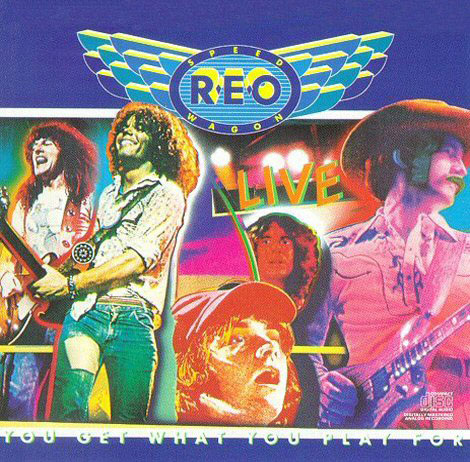
3-2-live_you_get_what_you_play_for

Back in the summer of 1977, as I was getting ready for my ascension to the top of the middle school heap as an eighth grader, I spent the summer training for the upcoming Cross Country season by running with a guy on the high school team. My class was considered to be “loaded” with distance running talent, so I think the high school coach had his upperclassmen runners match up with a middle school runner to encourage them and keep them interested in the sport.

In addition to running, Billy and I shared a love of listening to music. While running, we would talk about this group and that album. Since it was 1977, I was still a member of the KISS Army, and Love Gun was my favorite album. Billy, in an attempt to “broaden” my musical scope, would loan albums to listen to. I remember one day after a particular five-mile run, Billy loaned me his new live REO Speedwagon album called Live: You Get What You Play For. What hooked me was that he told me that one side of this “concert” album had been recorded at the old Convention Center in Indianapolis. I thought that was pretty cool since nothing cool but the old ABA Pacers played in Naptown, the old nickname for Indy.

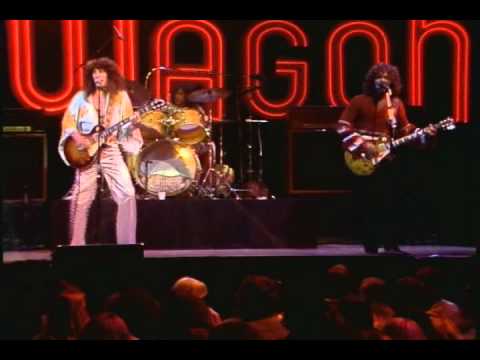
REO had always been played on the big rock station of the Seventies, WNAP, 93.1 FM, “The Buzzard”. So, I was familiar with a couple studio versions of the songs on this album but never thought too much about the group. But, when this band played their music in concert, their performance was transcendent. This “live” album became a favorite of mine, though my younger brother hated the album being played all of the time. After he first expressed that, I had to turn my speakers toward the wall that separated our rooms and blared the album so he would hear it. Now, Mom was cool with my music but would object whenever I did this to my brother.

Anyway, I eventually bought this album on my own, though I traded it in for a punk or new wave album back in college. Recently, I started playing the CD again. And, these memories came rushing back to me. One big memory is when the high students who were DJs on the high school radio station played cuts from this album on the radio. Also, that same year, at the homecoming bonfire, the live broadcast was playing the football team’s song “Riding the Storm Out”, which, of course, sold the song to the middle schoolers who were at that event. In the fall of 1977, “Riding the Storm Out” could be heard all over my hometown.

Another song is something of an Indiana urban legend, especially at Ball State University in Muncie, Indiana. According to the legend, REO played the Muncie bars quite often while paying their dues on the club circuit in the early 1970s. The Ball State students became big and loyal fans of the band. So, according to this legend, the REO show-stopping song, “157 Riverside Ave.” was written in honor of the street on the Ball State campus that is called “Frat Road” there. Allegedly, the band played the frats so often there that they wrote the song in honor of the street. The downside to that legend is that the number 157 would put the house in the middle of the White River that flows through the college town. Frat doe NOT have a street number as low as 157, but the song made for a great story back in the 1970s and early-1980s.

As you know, although I am a huge fan of all kinds of music, my gateway music into rock was arena rock. In addition to REO, I listened to Styx, Journey, Boston, Foreigner, etc., though most of the time, that music left me wanting something more visceral. That’s why I was able to switch to punk, power pop and new wave so easily, since that music seemed to be more “real”. But, I still enjoy listening to my arena rock. And, there are very few great songs like “157 Riverside Ave.” and “Ridin’ the Storm Out”. They take me back to a more innocent time, back when sports and music could really take me away from the worries of finance, homework and politics. This was a time when my records were my best friends, who spoke to my soul whenever I felt like I was way too different than my peers. Music continues to teach me about people’s reactions to society. Although these records and CDs are no longer my best friends, they remain old friends who can transport me back to times while eliciting long-forgotten memories, like the few I spilled on you today. And, to me, that is what we all should hold dear about music and the arts.

3-2-reo

So, here’s to REO Speedwagon! And, more specifically, my first REO album, Live: You Get What You Play For! I’d like to thank the band and this record for helping me get through that difficult eighth grade year. May musicians continue to leave marks on young people’s lives throughout the ages.

Outrageous! Raise Your Glass in Honor of Lionel Richie

2-23-lionel-richie

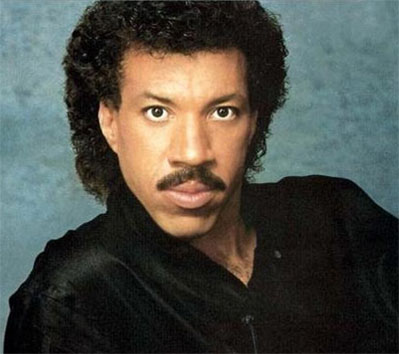
Remember when Lionel Richie hosted the 1986 American Music Awards? That night, he single-handedly attempted to pimp the use of the word “Outrageous!” into our everyday lexicon. Instead, I think the American public cringed and slowly backed away from Lionel. And, unfortunately for us, the man who was on the hottest songwriting and production streak since Barry Gibb masterminded the rise of the late-Seventies Bee Gees empire. It seems that after that fateful night, we basically stopped hearing new music made by Richie while he tried to push the reset button on his life by dealing with those dreaded demons of success.

It seems that over the years, many people have forgotten just how good Lionel Richie was not only as a solo artist, but also as a member with the great funk/soul band Commodores. At one time, the Commodores were mentioned with George Clinton’s “P-Funk” Family, Earth, Wind & Fire and the Ohio Players as the greatest funk band of the Seventies. FYI: My wife and I have a “song”, which is the Style Council’s “You’re the Best Thing”. Unfortunately, we did not dance to that song at our wedding reception 32 years ago today. Instead, bowing to external pressures that we don’t have “weird” music played at our Southern Indiana wedding reception, and danced to Lionel Richie’s “Truly”. To this day, we always dance to the Style Council first, followed by “Truly”. So, here it is, to my man Lionel Richie, My Top Twenty Favorite Songs by Lionel Richie and the Commodores.

20. “We Are the World” – USA for Africa (1985 – We Are the World). Yep, Lionel co-wrote the song with Michael Jackson. ‘Nuff said.

19. “Endless Love” – duet with Diana Ross (1981 – Endless Love OST). I wish I could have ranked this one higher, but honestly, Lionel has a bunch of better songs that he did without Diana Ross.

18. “Penny Lover” (1984 – Can’t Slow Down). Okay, so this song’s not really better than “Endless Love”, but if Richie had big enough balls to know it was going to be a hit song, then you’ve got to give the song some props.

17. “Say You, Say Me” (1985 – Dancing on the Ceiling). This song was technically included on the soundtrack of some long forgotten movie, but that movie’s soundtrack had TWO number one hit songs: this one and “Separate Lives” by Phil Collins & Marilyn Martin. The movie? White Knights.

16. “Hello” (1984 – Can’t Slow Down). Yes, the video is stalker-creepy, but the song isn’t that bad. Still, it’s so difficult to separate the two…

15. “Oh No” – Commodores (1981 – In the Pocket). This song proves that Lionel’s songwriting talent is so great that this ballad, without a chorus or hook, could go Top 10 AND cause emotional responses.

14. “Sweet Love” – Commodores (1975 – Movin’ On). This is the song that started me down the whole Commodores/Richie path.

13. “My Love” (1983 – Lionel Richie). C’mon! This song is so heartfelt and not saccharine! I will fight you about this song.

12. “Dancing on the Ceiling” (1986 – Dancing on the Ceiling). See, Lionel CAN have fun. We almost forgot by 1986.

11. “Just to Be Close to You” – Commodores (1976 – Hot on the Tracks). I love the lyrics of this song! And, then, there’s what I call the Earth, Wind & Fire hook: “Yeow!” Hmmm! I so dig that when Lionel unleashes it!

10. “You Are” (1983 – Lionel Richie). Pound for pound, this song my be Lionel’s finest love song. The downside, if there is one, is that the song is a mid-tempo song and not a slow jam. Still, those lyrics describe every guy’s true love.

9. “Sail On” – Commodores (1979 – Midnight Magic). This is my favorite country song that wasn’t really a country song. Or is it? This is a very underrated song.

8. “Still” – Commodores (1979 – Midnight Magic). This is another great love song from the brokenhearted point of view. And when Lionel whispers “Still!” at the end of the song, man, you feel the pain.

7. “Three Times a Lady” – Commodores (1978 – Natural High). This was a great ballad, until Eddie Murphy stole it for a classic Buckwheat bit on Saturday Night Live, back when SNL rarely had anything that was funny.

6. “Nightshift” – Commodores (1985 – Nightshift). This is the post-Lionel Commodores’ last hit that was in honor of their late Motown brother Marvin Gaye. I still love this song.

5. “Brick House” – Commodores (1977 – Commodores). This song taught me so much when I was young. Who knew that 36-24-36 was a Brick House? And, I never forgot it either.

4. “All Night Long” (1983 – Can’t Slow Down). I remember the dance floors at dance parties I DJ’ed back in the day would fill up when this song would come on. By the way, the African-sounding chant in the song is nonsensical words that only sound African. Lionel invented a language on this song but didn’t tell us what it meant.

3. “Truly” (1982 – Lionel Richie). I rank my wedding dance third on this list? Yes, because Lionel really did write a couple of better songs.

2. “Stuck on You” (1984 – Can’t Slow Down). I can remember vividly the moment when I noticed that I was in love with my wife. We were together when this song came on the radio, and I said this song reminds me of her. And, she laughed, because she thought I was being my usually sarcastic self. Boy, did she feel sheepish when you finally figured out that I was being sincere. When laugh about it to this day.

1. “Easy” – Commodores (1977 – Commodores). This is such a Seventies song. It could have been sung by the Eagles or Jackson Browne, but Lionel gives it a touch of soul to the song that makes it jump above the country rock/west coast stuff that was popular at the time.

At this point, I want to give special mention to Kenny Rogers’ 1980 hit “Lady”, which was written and produced by Lionel Richie. I often wonder how great that song would have been if Lionel would have recorded it. As is, the song was the finest one recorded by Mr. Rogers.

So, Rock & Roll Hall of Fame voters: Put Lionel Richie, with OR without the Commodores, in the RRHOF! This man helped define the music from 1974 to 1981 with the Commodores and 1981 to 1987 as a solo artist. That’s 14 years of radio domination of songs mainly written by one main – Lionel Richie.

The First Modern Diva: Diana Ross

2-22-diana-ross

Yesterday, I saddled Whitney Houston with the Greatest Diva of the Rock Era title, even enough I never really said such a thing nor is she alive to really worry about such a title of hyperbole. Anyway, I would like to turn our attention to one of the first divas to emerge during the rock, Miss Diana Ross. The Supremes burst onto the rock scene as an all-girl singing trio from the Motown family. After a  run of five straight number one hit singles, Berry Gordy took his infatuation with singer Diana Ross to new levels, where he first gave Miss Ross top billing in the group’s name, then had her break away from her two long-time friends to pursue a solo career. Along the way, Diana Ross developed into a true diva, by hitting number one on the Hot 100 Singles Chart a whopping 17 times (both with and without the Supremes) and earning an Oscar nomination for her lead performance in the 1973 movie Lady Sings the Blues.

Although, Gordy was highly motivated to make Ross into an across-the-board star, Diana was most successful as a singing diva. So, today, I present to you My Top 10 Diana Ross Solo and the Supremes Songs. Let’s get going.

10. “Love Hangover” (1976 – Diana Ross). What a great disco ballad! Did Ross knock this outta the park…or what? Rhetorical, just being rhetorical.

9. “Ain’t No Mountain High Enough” (1970 – Ain’t Know Mountain High Enough). Personally, I love Marvin Gaye & Tammi Terrell’s version better, but Ross sang the crap out of this song in such a majestic manner that the song single-handedly anointed Ross a diva. This song is the blueprint for the careers of Whitney Houston, Mariah Carey, Katy Perry and the rest of the divas who have followed.

2-22-supremes

8. “Stop! In the Name of Love” – Supremes (1965 – More Hits by the Supremes). This is simply an iconic song.

7. “Theme from Mahogany (Do You Know Where You’re Going To)” (1975 – Diana Ross). This song was playing during one of my first slow dances ever at a school dance, so forgive me that memory. Oh, and the song is great too.

6. “Endless Love” – Duet with Lionel Richie (1981 – Endless Love OST). First, this song is easy to make fun of because it’s on the schmaltzy side. But, Richie wrote this one when he was just beginning to hit his stride as the writer of 80s ballads. Controversially, this song was used in the sexploitation film of a naked underage Brooke Shields. If you throw out the yucky pedophilia context of that stupid film the song was recorded for and focus on the great lyrics Lionel wrote, it is a great song. Thank goodness the movie association has been lost to history.

5. “You Keep Me Hanging On” – Supreme (1966 – The Supremes Sing Holland-Dozier-Holland). According to my mom, the three-year-old version of myself used to dance through the house whenever the song came on the radio she was listening to.

4. “Upside Down” (1980 – Diana). From the album that was produced by the Chic Organization, this was the first single from that album and Diana Ross’ last solo number one hit.

3. “Where Did Our Love Go” – Supremes (1964 – Where Did Our Love Go). This one kicked off the Supremes’ domination of the charts, as well as Diana’s.

2. “Baby Love” – Supremes (1964 – Where Did Our Love Go). This song, like so many from the early Motown period, is timeless and holds up when other artists cover it.

1. “I’m Coming Out” (1980 – Diana). This great piece of Chic Organization production is Ross’ ode to her gay fans as well as a statement of independence from Motown, whom she was about to leave as an artist. Personally, I love the drum intro; and, I was hooked.

So much for my quick overview of Diana Ross. I hope it inspires you to check out deeper cuts in her magnificent catalog.

Whitney Houston: Didn’t She Almost Have It All?

2-21-whitney-houston-sf

Wikipedia defines the term diva like this:

A diva is a celebrated female singer; a woman of outstanding talent in the world of opera, and by extension in theatre, cinema and popular music. The meaning of diva is closely related to that of prima donna.

If you were born in the Sixties, like me, then we missed out on the European opera divas of the 19th and first half of the 20th centuries, who were renown throughout the Old World. We, as well, missed out divas from the blues such as Ma Rainey and Bessie Smith, along with gospel divas like Mahalia Jackson. We are left to dig into the history of music to discover recordings of those early divas.

For most of us, we learned about the term diva when it was attached to such pop/rock/R&B singers as Aretha Franklin, Diana Ross, Dusty Springfield, Karen Carpenter, Donna Summer and Janis Joplin. Then, the Eighties and Nineties rolled around, and all of a sudden, we were blessed with some many talented females singers, or as they collectively became known as divas. Ponder these names: Deborah Harry (Blondie), Cyndi Lauper, Tina Turner, Madonna, Janet Jackson, Chaka Khan, Patty Smyth (Scandal/solo), Terri Nunn (Berlin), Annie Lennox (Eurythmics/solo). They were but a few of the women who burst during the first decade of MTV. Then, those ladies were followed by Sinead O’Connor, Mariah Carey, Mary J. Blige, Faith Evans, Christina Aguilera, to name but a few very. Yet, in my mind, we have one beautiful woman who casts such a large shadow over all of these women, that it is difficult for the most of these talented singers to get much of the spotlight. But, when drugs and alcohol had robbed this diva of her superpower, we still loved her. The diva who knocked us out with her 1985 debut album, eponymously titled album is none other than Whitney Houston.

Whitney hit us hard with a crystal clear voice that emerged from the body of a supermodel. She was the perfect “package”. Unfortunately, no amount of success could ever take away the pain she long felt. So, even during her most successful days, the path of self-destruction had been set in motion, and most probably hasten her ultimate fate. Yet, we are still left with some of the finest music ever recorded by a female, or diva.

Today, I bring to you My Top 20 Whitney Houston Songs.

20. “Love Will Save the Day” (1988 – Whitney). I always used to ask why Whitney sang such crappy songs like this, and not great songs like the ones I ranked in the Top 10.

19. “I Believe in You and Me” (1996 – The Preacher’s Wife OST). Once in a while, Whitney actually got a decent song to sing. Too bad it wasn’t this one.

18. “I Learned from the Best” (1999 – My Love Is Your Love). Here, Whitney’s talent transcends the song.

17. “Didn’t We Almost Have It All” (1987 – Whitney). This was a decent song that Whitney made better.

16. “My Love Is Your Love” (1999 – My Love Is Your Love). Much of Whitney’s career was singing the hell out of crappy songs, instead of giving her classy blues/rock/R&B song, and this song is proof of the former instead of the latter.

15. “Where Do the Broken Hearts Go” (1988 – Whitney). Another nice Whitney pop song.

14. “It’s Not Right but It’s Okay” (1999 – My Love Is Your Love). Here is the album where we start to hear Whitney’s gift leaving her.

13. “All the Man I Need” (1990 – I’m Your Baby Tonight). Whitney made this crappy song into a good song, which she seemed to do all too often during her lifetime.

12. “Greatest Love of All” (1986 – Whitney Houston). Now, I really do prefer George Benson’s version of this song. But, the way radio overplayed this version only drove the point home.

11. “Exhale (Shoop Shoop)” (1995 – Waiting to Exhale OST). For some reason, this song sounds like Whitney doing a Motown song.

10. “Heartbreak Hotel” (1998 – My Love Is Your Love). I don’t know why, but I’ve always liked this song.

9. “I Have Nothing” (1993 – The Bodyguard). In retrospect, maybe Whitney connected to this summer all

8. “I’m Your Baby Tonight” (1990 – I’m Your Body Tonight). Here is a fun pop song that Whitney just sings the hell out of it.

7. “I Wanna Dance with Somebody” (1987 – Whitney). Once again, “fun” Whitney from this video was a ruse.

6. “I’m Every Woman” (1993 – The Bodyguard). Somehow, Whitney made me forget that Chaka Khan did this song first.

5. “Saving All My Love for You” (1985 – Whitney Houston). This song was a natural for the “Quiet Storm” playlists of those types of radio formats.

4. “How Will I Know” (1985 – Whitney Houston). This song showed the world just how much fun this young lady could be. Unfortunately, it was just a video and not reality.

3. “You Give Good Love” (1985 – Whitney Houston). This song hooked me onto the Whitney Houston train. I’ve always felt this song had a double meaning.

2. “I Will Always Love You” (1992 – The Bodyguard). Sure, we were all tired of hearing this version of Dolly Parton’s song, but, you know what? This is Whitney’s signature song.

1. “So Emotional” (1987 – Whitney). I don’t know why, but when Whitney talks at the beginning of the song about not knowing why she likes it, she just does, I’m hooked.

From the Mind of George Clinton: It’s More Than Just Parliament and Funkadelic

Greetings everybody! Sorry about my writing the past couple of days. I know it was nothing but crappy drivel. I had fallen on Saturday, so my back spasms were way out of control, not that my spasms are ever under control. But they have been worse than normal. Then, Monday morning I got a call from my step-father called me to say that he was having trouble getting my mother out of bed. Long story short, Mom has pneumonia and is in the hospital. As most of you know who are around my age or older, watching your parents’ health deteriorate is heartbreaking and stressful. So, instead of not writing and just listen to music, I chose to write two crappy entries. Oh well…

So, I have been listening to lots of music. Recently, I had received George Clinton’s autobiography. I have not started reading it, but it is next on my list. But, I have been pulling out my records/CDs/mp3s of the various artists of his empire. I did not limit myself to his Parliament, Funkadelic and solo stuff, but his Bootsy’s Rubber Band, Eddie Hazel and Zapp music as well. This musical empire has yet to have been matched by anyone. Some people have compared Clinton to Frank Zappa, and maybe artistically they were attacking their music from a similar muse, but where Zappa always likened himself to classical composers, Clinton was more about fusing different forms of rock and R&B musics into his own, recognizable sound. His basses and synths melted into each other, providing a bedrock of whizzes, pops and farts, not the simple dance sounds of traditional sounds. Clinton’s funk was an amalgamation of space sounds, rock guitars, fuzz basses and adapted reggae/funk beats colliding head on with James Brown’s funk. Clinton’s music is busy, strange and quite possibly the sound of funk rock on acid. And, yet, you can dance yo’ butt off on the dance floor to this music.

When Clinton started, his band was called The Parliaments, and the band had a hit in the 60s with the song “(I Wanna) Testify”. After that hit, a lawsuit arose about the band’s name. So, Clinton, under the influence of late-60s rock music and his own use of LSD lead to a rechristening his band under the banner of Funkadelic. Funkadelic was created as an R&B-based rock.

Then, after a few years, Clinton won the right to his original band’s name, but he decided to drop the “The” and the ending “-s”, renaming this band Parliament. Clinton’s genius was his ability to use the same crack musicians while creating two completely difference musical identities. Thus, Parliament became the funk band. As the years moved on, various members of the bands produced solo albums for various members, such as guitar god Eddie Hazel, bassist extraordinaire Bootsy Collins and leader of the Horny Horns Fred Wesley. Then Clinton created two girl groups to give him his own “Supremes” in the form of Parlet and a more rocking R&B girl group like Labelle called The Brides of Funkenstein.

The strange thing is that as the 70s moved toward the 80s, there was very little difference in the sounds of Parliament and Funkadelic. Parliament got more guitars in their, and Funkadelic got more horns. Still, with a huge stable of some of the finest, and wildest, musicians who played in every form of the bands, Clinton could establish a concert tour that featured five or more bands with the same musicians playing all night long. Add to that the crazy recording scheduling, from which they could release five albums in a calendar year while touring during their “off” time. This led to mass defections of the musicians, leading to financial problems for Clinton.

But, what saved George Clinton and his empire’s reputation was the rise of rap music and it’s reliance on samples from music. Clinton was a huge supporter of rap music and was the friendliest musician toward rap’s use of samples. Those samples gave Clinton the cash flow that was desperately needed. So, through the 90s, Clinton and all of his Motown-inspired bands’ reputations were on the rise, recognizing the genius of the Parliafunkadelicment Thang. Now, Clinton and his posse are musical gods .

With that said, here are My Top 20 Albums from George Clinton’s P-Funk Empire, along with an album rating, from 0 to 5, from the website AllMusic.com.

20. Bootsy’s Rubber Band – Bootsy? Player of the Year (1978). 4.5

19. Fred Wesley and the Horny Horns – A Blow for You, a Toot for Me (1977). 4

18. The Brides of Funkenstein – Funk or Walk (1978). 4

17. Parliament – Up for the Down Stroke (1974). 4

16. Bootsy’s Rubber Band – Stretchin’ Out in Bootsy’s Rubber Band (1976). 4.5

15. P-Funk All-Stars – Urban Dancefloor Guerillas (1983). 4

14. Funkadelic – Uncle Jam Wants You (1983). 4.5

13. Funkadelic – Standing on the Verge of Getting It On (1974). 4

12. Funkadelic – Free Your Mind…And Your Ass Will Follow (1970). 4.5

11. Parlet – Invasion of the Booty Snatchers (1970). 4

10. Bootsy’s Rubber Band – Ahh…The Name Is Bootsy, Baby? (1977). 4.5

9. Parliament – The Clones of Dr. Funkenstein (1976). 4.5

8. Funkadelic – Funkadelic (1970). 4.5

7. Parliament – Motor Booty Affair (1978). 4.5

6. Eddie Hazel – Games, Dames and Guitar Thangs (1977). 4

5. George Clinton – Computer Games (1982). 4.5

4. Parliament – Funkentelechy vs. the Placebo Syndrome (1977). 5

3. Funkadelic – Maggot Brain (1971). 5

2. Funkadelic – One Nation Under a Groove (1978). 5

1.Parliament – Mothership Connection (1975). 5

I love the music from the mind of George Clinton, and his lasting legacy has been galvanized by the rise of rap music on the samples used from his music. It’s never too late to discover the main source of many of the young people’s favorite rap songs. Don’t be afraid!