Re-Evaluating Kansas

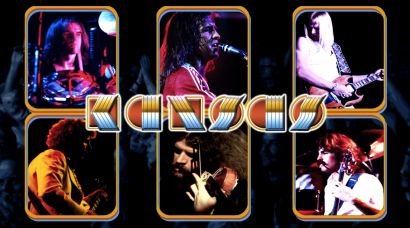
8.4 Kansas band iconic pic

From the first time I ever heard “Carry on My Wayward Son” all the way back around Christmastime 1976, I had mixed feelings. You see, my parents were going through a divorce at the time that had left my head spinning in confusion. At that moment, a song’s lyrics could have a very visceral effect on me. So, the lyrics (and song for that matter) written by guitarist extraordinaire Kerry Livegren messed with me. I was should if Kerry was espousing some cloaked variation of Christian view of life, or was he being existential? Or, to make me more befuddled, was he being an existential Christian? That is the thing about Kansas, they were much, much more than just an American version of Yes or Emerson, Lake & Palmer, virtuoso players attempting to integrate classical music movements, sounds and instrumentation in with good ol’ rock music. Regardless, they were never easy for me to digest. Heck, I think I had an easier time learning about the imagery of Don McLean’s lyrics in “American Pie”.

8.4 kansas miracles

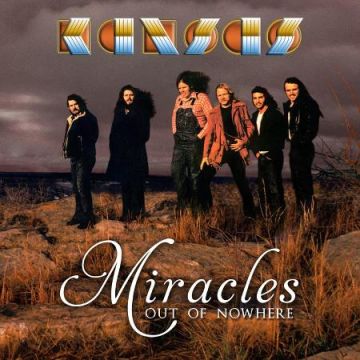
Well, I recently watched a documentary about Kansas on MTV-Classic. The documentary, entitled Miracle: Out of Nowhere, which got me thinking about this band once again and listening to their music for the first time in years. First off, the documentary is excellent. I love well-done documentaries about rock artists that not only give you the history of the band, but also make you interested enough in the band to re-evaluate the artist. And, that is what I am doing now. Think about it! An all-star band of the best musicians in the state of Kansas all organically assembling into a band with a common goal: to develop a unique art-rock sound that is American in nature. The original line-up was Phil Ehart (drums), Dave Hope (bass), Kerry Livegren (guitars, songwriting), Robby Steinhart (violin, vocals), Steve Walsh (lead vocals, some songwriting and some keyboards) and Rich Williams (electric and acoustic guitars). Immediately, all of the band members were on the same musical page, though it did take a few years for the band’s sound to develop. But, once it did develop, Kansas was very successful from 1976 through 1979. Then, new wave and punk kicked their overblown sound. Now, in the twenty-first century they band is content to rake in royalties and continue live performances.

Kansas_-_Leftoverture

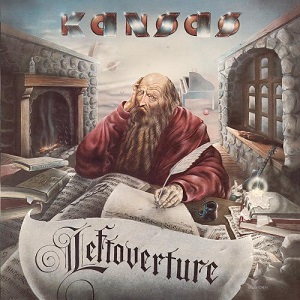
By the time in 1976 when the band was recording what was to become their breakout hit album, Leftoverture, Kansas was feeling the pressure to write a hit song. They were becoming a solid concert draw, after successful turns opening for Aerosmith and Queen, the latter with whom Kansas developed a strong friendship. When the band initially entered the studio, they looked to their two main songwriters Kerry Livegren and Steve Walsh, but neither had much. So, Kerry took the reigns and each new day in the studio, Kerry brought a new song with him. Then, just as the band was getting ready to wrap up work on the album, Livegren brought in a killer new song called “Carry on My Wayward Son”. At that moment, the band, management and the label all knew the band had a hit. The song peaked at number eleven on the Hot 100, while the album topped out at number five. Now, Kansas were superstars.

Kansas_-_Point_of_Know_Return

As is often seen in rock history, once a songwriter gets hot, his streak can be stretched into multiple albums. While Kansas had their biggest selling album of their career with Point of Know Return, they also created two more hit songs with the title song (which stalled at number 28 but was huge on FM radio) and the band’s most iconic song “Dust in the Wind” which peaked at number 6, though I swear central Indiana radio stations were all playing the song EVERY hour for the song’s two month life-span, or was it six months?. Regardless of the answer, Kansas had developed into one of biggest bands in the world. But, then came MTV.

Unfortunately, Kansas was not a darling of the music channel. Their songs, which were deep in lyrical thought and abstract playing, were the antithesis of MTV’s WAM BAM, Thank Ya MA’AM montage of glitter, fun and an underpinning of sex. For a couple more years, Kansas continued to make creative music all the while attempting to adjust to the new musical climate. And for that short period of time, the band had rock radio hits, but they were not the huge superstars they were just a couple years earlier in the late Seventies. Slowly, original members began leaving the band, while surprisingly maintaining friendship with their former band mates. For a while it even seemed as though there were a couple of different versions of Kansas, but that was quickly rectified.

8.4 kansas band poster

To this day, you can turn on any classic rock radio station and hear any of Kansas’ three big hits, especially “Dust in the Wind”. And that song has even survived a great heartfelt parody in Bill and Ted’s Excellent Adventure to be earning respect from today’s current crop of rock critics. So, here’s to Kansas! The United States’ very own art rock band from Middle America!
WTF Wednesday: I Am A Carpenters Fan

8.3 Carpenters_-_Nixon_-_Office

Go ahead! I dare you to ask me for my “man card” friends. Yes, when we became teenagers we also became too cool for the Carpenters’ brand of music. Or, at least so I thought. Then, in the Nineties, a bunch of alternative groups came together, recorded versions of their favorite Carpenters’ songs and the compilation was released as If I Was a Carpenter. It was at that moment that I re-evaluated those great songs. Sure, the Carpenters had songwriters who wrote most of their songs for them, but brother Richard arranged them musically to perfectly cuddle his sister Karen’s smooth voice that belied an undercurrent of pain.

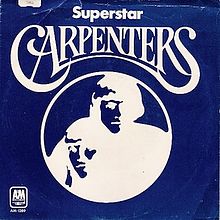
8.3 Superstar_album_cover

As we know now, Karen was entrapped in a cloud of darkness that was manifested in the disease of anorexia. Still, during her life, Karen Carpenter was the female voice of a period of time from 1969 through 1974. C’mon! I dare you to tell me that “Superstar” is not one of the great pop songs of all-time. Yes, they did The Beatles’ “Ticket to Ride” no favors, and I will never forgive them for taking Klaatu’s “Calling All Occupants (Of Interplanetary Craft)”. But, you take away those two, and you have a hit song resume that other artists would die for.

During those salads days, the Carpenters had three number one hits in the US (“(They Long to Be) Close to You”, “Top of the World”, “Please Mr. Postman”), four number two hits and two that hit number 3. Then couple those with their one, number one hit album, Singles 1969-1974, with their three other albums that peaked at number 2, and you have a great career, even one that might be worthy of consideration for the Rock and Roll Hall of Fame. Shoot, if the RRHOF can inducted ABBA, then tell why the Carpenters are not being considered.

8.3 Singles_1969-1981

During their heyday, critics blasted the duo for their emphasis on what was called “bland” ballads and mid-tempo pop songs and their “squeaky clean” image. But, now, I can find a depth in Karen’s vocals that I never noticed as a youngster. Seriously, how could anyone without a touch of darkness find the melancholy within the lyrics of “We’ve Only Just Begun”. And, now we all know that Karen did have problems, making retroactively obvious why she was able to find the infinite sadness in the lyrics of “Rainy Days and Mondays” or “Goodbye to Love”.

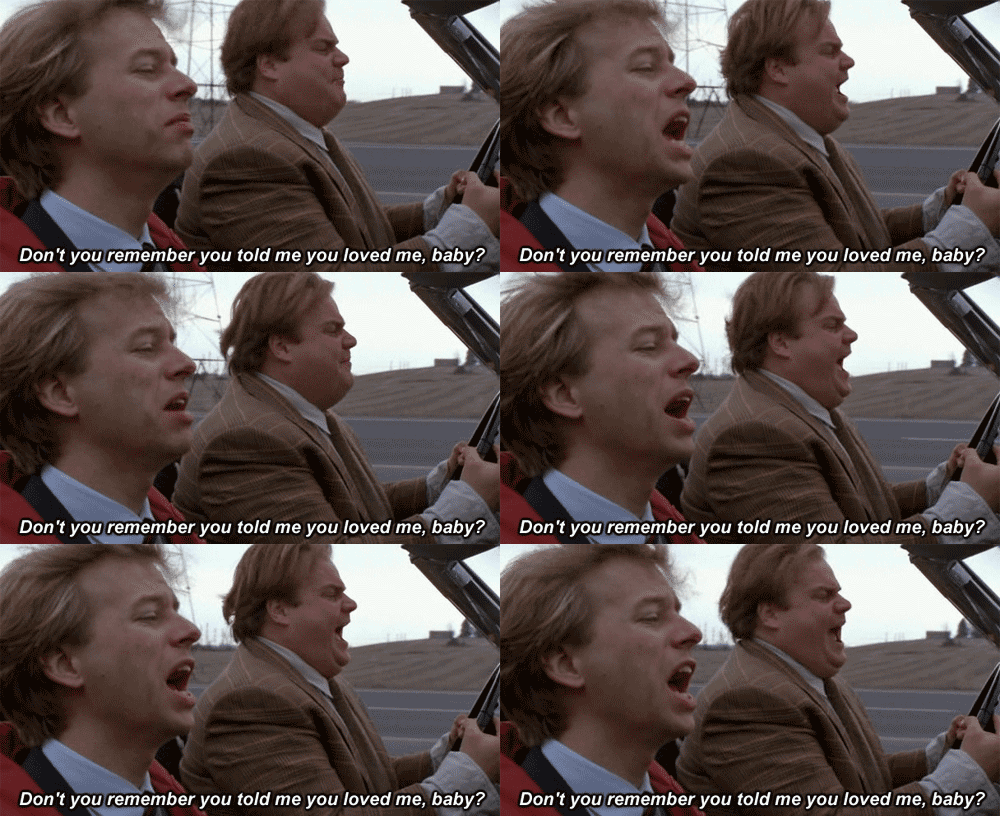
8.3 tommyboy1

So, now when you hear a Carpenters’ song, don’t blow it off like that scene in Tommy Boy Chris Farley and David Spade are singing “Superstar”, but really take the time to listen to those vocals along with how the music is arranged to insulate Karen with some musical protection. The Carpenters made great music and deserve to be recognized for it. And, no, I am NOT off my rocker! I truly believe this. Go get their greatest hits and enjoy that moment in time when we really didn’t realize the Carpenters were really humans like us.

Thank God For The Go-Go’s

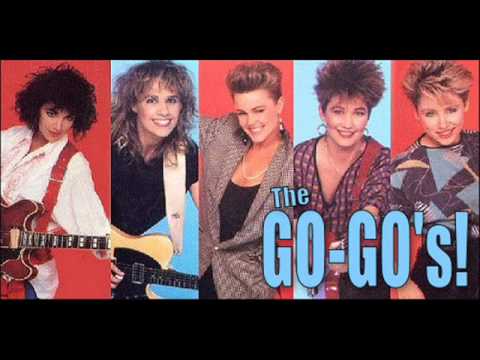
8.2 go gos in 80s

During the early days of rock music, women were not really considered musicians. The one exception to that rule was Carole Kane of L.A.’s session musicians called The Wrecking Crew. She played bass on many hits of the Sixties, most notably one of my favorite albums, the Beach Boys’ Pet Sounds. The rest were forced into vocal girl groups run by a producer, such as Phil Spector’s The Ronettes and Berry Gordy Jr.’s The Supremes. By the end of the Sixties, strong-willed female singers were making inroads on their creative process, like Janis Joplin or Aretha Franklin. Even those bands with female singers allow the women in on the songwriting, like Grace Slick did with Jefferson Airplane, then Jefferson Starship.

In the Seventies, female music heroes were popping up as strong solo artists (Patti Smith) or lead singers in bands (Deborah Harry of Blondie). Then, finally, Heart hit the big time with “Magic Man” from their debut album called Dreamboat Annie. Yes, Heart had a female lead singer, Ann Wilson, but Heart also had Ann’s sister Nancy playing both lead and rhythm guitars, while the two ladies wrote the songs. That happened in 1976.

1976 was an important year in that rock music was peaking in quality, punk was being to rumble in the Bowery of NYC and disco was giving us some very good music. All the while, rock impresario Kim Fowley decided it was time to create an all-girl rock group. He gathered five teenage girls, including Joan Jett and Lita Ford, got the group to practice and write songs and provocatively named them The Runaways. Although The Runaways were prefabricated in much the same way The Monkees were, the band struck a nerve with women all over. By the time the Eighties rolled around, girl groups like The Slits or The Raincoats were becoming commonplace in the underground scene.

8.2 The_Go-Go'sBeautyandtheBeatalbumcover


By 1981, rock music was ready for an all-girl rock band. That’s when five California young women released an energetic album chock-full of buoyant pop-punk, new wave classic songs. Today, the album, Beauty and the Beat, by The Go-Go’s is considered one of rock music’s 500 Best Albums of All-Time, according to Rolling Stone.

The Go-Go’s were the perfect group to break the glass ceiling for women in rock in 1982 when that very album hit number one. They had hit songs from the album, like “Our Lips Are Sealed” and “We Got the Beat”. Now, boys were ogling the Go-Go’s and choosing their favorite band member (me? I was always partial to Jane Wiedlin) much like the girls did 20 years earlier with the Beatles.

Unfortunately, The Go-Go’s were really party animals and not All-American girls. Their record company made them go back to the studio to record their sophomore album when they were not ready. Then, health problems and addiction got in the way and their music suffered. But, over the next couple of years, The Go-Go’s left us a couple more great singles with “Head over Heels” and “Vacation”, but the squabbling and the addictions were too much, and the band parted ways.

The good thing is that The Go-Go’s paved the way for more all female bands like The Bangles. Now, women are playing lead guitar in male artists’ bands. Jack White and Prince recently recorded and toured with all-female bands, who could blow most all-male bands off the stage. Slowly, over the past 35 years we are getting equal rights in rock music.

8.2 go gos farewell tour

In the words of The Go-Go’s last album title: God Bless The Go-Go’s!

Happy 35th Birthday MTV!

8.1 MTV-Logo-HD

Back on August 1, 1981, MTV blasted “the revolution that would do for TV what FM did for radio” as The Buggles’ new wave classic “Video Killed the Radio Star” hit the airwaves. For my generation, MTV was everything. It was our national radio station that united us for what is now considered to be a short period of time. We all had the opportunity to learn about new musical artists since they were played on MTV.

Now, You-Tube is where teens go to see music videos, if they want to. It was my observation as a former high school teacher to see the decline in the importance of music in the lives of teens. As a matter of fact, I can draw a line on a timeline when this change took place. Music was huge to kids who graduated in 2004 and earlier. After that, they were more interested in, no particular order: internet, Play Station/X-Box, ring tones, iPods, You-Tube, instant messaging, texting, smart phones, online gaming, chatting, and so on.

No longer is music bringing together people. Like society is teaching us now, the individual is most important, so our technology has moved in that direction as well. I don’t know whether I miss the community of music more or the ability to learn about new music via a music video channel.

8.1 mtv-cast-members-jpg

But, guess what?!?! VH1 Classic has become MTV Classic. I spent the afternoon reliving the first two hours of MTV’s life. That was a magical moment then, but was still pretty powerful to me today. Sure, the videos were silly at first, but at least I was getting music from The Go-Go’s instead of Neil Diamond. And, MTV forced Top 40 radio to change too.

8.1 Yo_mtv_raps_stussy_jorge_oswaldo

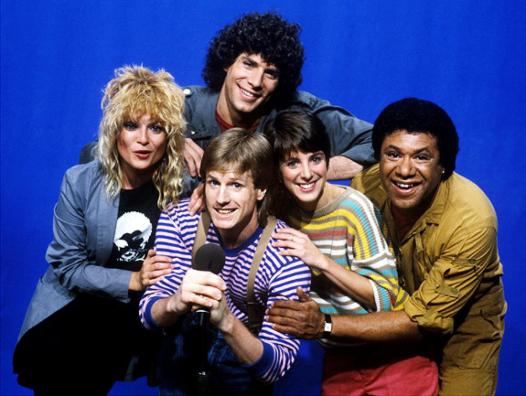
Guess what else happened in that first hour? We were introduced to the five original VJs, or video jockeys. You all remember them: Mark Goodman, Alan Hunter, JJ Jackson, Martha Quinn and Nina Blackwood. Sure, MTV looked like radio on TV. But, then the station began to act like our generation. All of those “I Want My MTV” promos, followed by the irreverent promos. All of a sudden we were given Pee Wee Herman, the Fat Boys, “Thriller”, The Police, hair metal, Spring Break, Pauly Shore, and Yo! MTV Raps.

I want to hear your opinions. Could MTV ever reached the same status in the younger generations that it had in ours or has its time passed? Maybe, I am over-the-hill and should be branded “Classic” as well.

Back When I Finally Got A Heart

7.29 Heart Logo

If you have been following rock music since the mid-Seventies like I have, you are familiar with the up-and-down-and-comeback-and-down again-and-rock and roll stateswomen and Rock and Roll Hall of Famers Heart story. I must admit that I was really into their music in the Seventies, with hits like “Magic Man”, “Crazy on You” and “Barracuda”. Then, I kind of put them on my back burner as I started getting into New Wave and Punk music.

7.29 Heart - Privateaudition

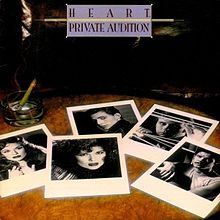
Then, one day in the summer of 1982, a good friend of mine stopped by on her way back from Indiana University to drop off a cassette tape of the latest Heart album, Private Audition. While she was still around, I popped the cassette into my stereo and kicked back for a bit of a listen. What I heard was a band that was branching away from its Zeppelin-slash-hippie-folk sound in order to spread their wings with a little metal here “City’s Burning”), a little Beatles there (“Private Audition”), and even a little Motown thrown in to really mess up my mind (the minor hit “This Man Is Mine”). I had to admit that I really liked that album, even though it was a total commercial flop.

I had always felt that the band’s most potent weapon was lead singer Ann Wilson’s unparalleled vocals and sister Nancy’s versatile acoustic and electric guitar work. And, like I said, I always seemed to enjoy their albums. Now, remember, in the summer of 1982, in Indiana, a little rocker by the name of John Cougar was burning up our radio airwaves with his first mega-hit American Fool. One thing about Hoosiers is we are usually VERY loyal to other Hoosiers. We kind of get a bad rap, but we are fairly loyal people when it comes to our athletes and musicians. So, when I learned that Cougar was opening for Heart, I thought what the hell? I’m going to the concert to see Cougar, like most of the 17,000 fan who were there. And, John Cougar did NOT disappoint us at all! And when he opening act stint was over, I thought that now I could just kick back an enjoy a good performance.

Heart 1982 Tour Tshirt

Little did I know that I was about to get my butt kicked by Heart. And the biggest effect on that stage was Ann Wilson’s voice! No matter how high a guitar or keyboard note could get, her voice could rise above it. No matter how loud the band played, her voice rose above the fray. I instantly became a fan.

In 1983, the band turned back toward hard rock with their Passionworks album. That album contains my all-time favorite Heart song “How Can I Refuse”. What a great song! To hear song women being vulnerable within a hard rock song was a huge turn on to a young man. I played the hell out of that album. I could hear their subtle influences on the up-and-coming alternative American bands, which was based solely on the band’s musicianship and not because they were women. In my mind, they were always equals.

Then, Heart was dropped by their label, and Capitol signed them. And, to me, when Capitol redid their image to sell their sexuality and make them into a hair metal band, I found it to be demeaning and sexist. Sure, I occasionally enjoyed one of their hits (“Never” is killer), but for the most part I felt the label was treating them in a sexist manner. Yes, Ann was gaining weight, but that was NO reason to hide her in the videos! It was her voice that was driving the songs. Yes, Heart deserved to be mega-stars, make big bucks and have hits. But, Ann should have never been treated as a pariah. She has always been a musical force, whose vocals will blow away anyone. Have you ever heard her sing next to Carrie Underwood, who is supposed to be the younger generation’s diva? Carrie can’t even come close to Ann’s purity and force of nature vocals. I think one person could have come close in his youth and that was Robert Plant, but I seriously doubt it.

7.29 Heart live

When the Seattle grunge and alternative bands began hitting big in the Nineties, they all paid homage to Heart. Heart is to Seattle what John Mellencamp is to Indiana, only on a much larger scale. Heart deserves the RRHOF and their legacy is sterling. They kicked the walls down for women in rock music. But, more importantly, they are equals to those men in the RRHOF.

7.29 heart beautiful broken

By the way, Heart has a great new CD out called Beautiful Broken. Many of the songs are old ones that they have redone and they all sound terrific. You will even get the privilege to hear Metallica’s James Hetfield try to keep up with Ann Wilson’s vocals. James does his thing well, but he’s still no Ann. No one is. Thank God for Heart!

What Time Is It?

7.28 The Time photo 80s

All of you Prince fan’s out there should remember the following introduction to their new song “The Bird” that lead singer Morris Day of The Kid’s rivals The Time in the classic movie Purple Rain:

“Hold on, hold on, why y’all beatin’ on shit, what’s that mean?
Hold up, do y’all wanna learn a new dance?
Are you qualified to learn one? That’s what I thought
Who can dance out there? Okay, we gonna try a new dance
And if I don’t see everybody doin’ it, I don’t wanna see you no more
Jellybean, are we ready? y’all better do this one
What time is it? Alright, y’all got 10 seconds
To get to the dance floor and whawk!”

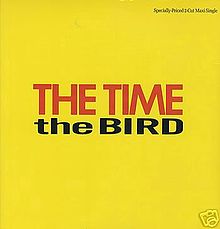
7.28 The_Time_Bird

By the moment Purple Rain introduced Prince-proteges The Time to the masses, that band had become a shadow of the touring machine that pushed Prince and the Revolution each and every night during the 1999 tour. As that tour was winding up, and The Time was developing into the latest funk band dynamos, members of The Time were being pursued by other early Eighties R&B artists to “spice up” their sounds. When Prince caught wind that keyboardist Jimmy Jam, bassist Terry Lewis and keyboardist Monte Moir were producing R&B band S.O.S. Band’s latest album, the Purple One fired those three. As we know now, in short time Jam and Lewis would become the hottest producing duo on the planet, while Moir discovered artists and directed them to the aforementioned producers. Those guys were able to take the Minneapolis Sound beyond Prince recording studio Paisley Park.

7.28 TheTime_debut

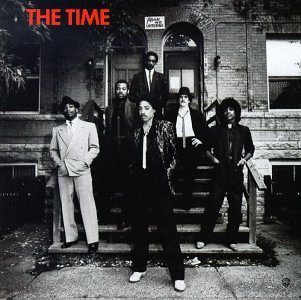
Originally, the idea of The Time was Prince’s. He wanted to set himself up to some kind Svengali to a group of artists for whom he could anonymously write, produce and even play the music that an artist could add their vocals to. Then, Prince could hire some musicians to play the songs as opening acts on his tour. The first group he did this for was The Time. Prince desperately wanted to place his long-time friend Morris Day in front of a hot funk band. What Prince did not anticipate was that the band would develop a chemistry that transcended his vision. Prince had the band “record” two albums that a man by the name of Jamie Starr, Prince’s first pseudonym, produced. The first album was self-titled and released in 1981 that ended up being as commercially successful as Prince’s latest album at the time, Dirty Mind.

7.28 The Time What Time Is It

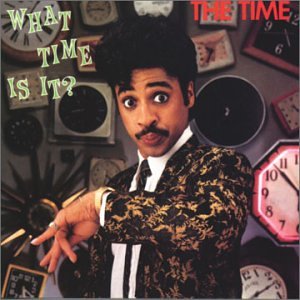
But, it was the “band’s” second album that established The Time as true “artists”. The album was What Time Is It? and was lead by the singles “The Walk” and “777-9311”. Then, just as the band was gelling into artists in their own right, Prince fired three of the band members in order to show who was the boss.

7.28 The Time - Ice Cream Castle

Yet, by the time Purple Rain was released in the summer of 1984, an audience had developed in support of The Time that their 1984 album Ice Cream Castles became a big seller, with a couple of Top 40 songs, “Jungle Love” and “The Bird”. Then, lead singer Morris Day and his assistant Jerome Benton became break-out actors from the movie, especially Day. As tensions developed between long-time friends Prince and Day, Day left The Time to strike out on his own to middling success.

As Prince’s music became more sophisticated, he had smaller roles for the members of The Time that stuck around. Singer and keyboardist “St.” Paul Peterson, drummer Jellybean Johnson and background vocalist and percussionist Benton were regrouped by Prince into another band called The Family, which included saxophonist Alan Leeds and singer (and Prince girlfriend) and Revolution guitarist’s sister Susannah Melvoin. The Family played a more sophisticated sounding European-influenced funk sound. Most significantly, The Family were the first to record the Prince song “Nothing Compares 2 U”, which became a huge hit for Sinead O’Connor.

7.28 Pandemonium_(The_Time_album)

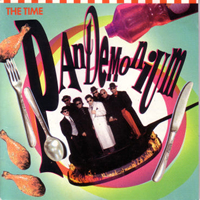
Then, in 1990, word came out of Minneapolis that the great band The Time were reuniting. Their album, on which Prince played a minimal role, was titled Pandemonium and was a big hit on its own. The original band even had their own Top 20 hit called “Jerk Out”. But, just as the momentum was gathering steam for The Time, Prince pulled the plug on the big Graffiti Bridge tour. Once again, the original line-up of The Time was left hanging.

7.28 Original 7ven-Condensate

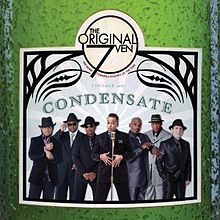
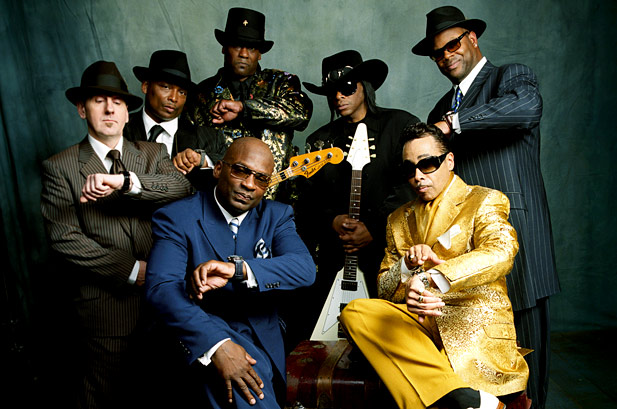
Finally, in 2011, that original line-up of the classic Time wanted to reunited. This time, however, Prince would not let them tour under the name The Time. Instead, the band recorded an album, Condensate, and toured under the name The Original 7ven. Ironically, if Morris Day wants to tour with a band, he is allowed to call it “Morris Day and the Time.” But, if that once hot touring band of original members want to create new music and tour, they get the privilege of using a totally different new, such as The Original 7ven.

Let me say that The Time really does deserve a re-evaluation. Yes, initially, they were Prince’s puppets, but quickly they were forged into a gold-standard band through constant touring. As the group began splintering, we got to witness Jam, Lewis & Moir become highly regard record producers (just ask Janet Jackson what Jam and Lewis did for her career!). Morris Day went solo and scored his own hits. Guitarist Jesse Johnson recorded his own brand of rock/funk music and even had a hit song called “Crazay” that he cut with funk pioneer Sylvester Stone of Sly and the Family Stone. Then, when the band reunited in 1990, people were excited to hear what they could do together and were rewarded with a hit album and a hit song. How many bands can brag about such an influence upon rock music?

7.28 Original 7ven group photo

Whenever I am feeling a little down, I pop in The Time’s What Time Is It? or “The Bird”, and my day begins to brighten. The Time were a very talented band who transcended their boss Prince. This is a great band that deserves re-evaluation of their place in the history of rock music. Just like they said at the end of “The Bird”,

“It’s the last call for alcohol
If you ain’t got what you want
You got to get the hell outta here!”

It’s WTF Wednesday: Say ‘Hello’ To The Hindu Love Gods

7.27 hindu love gods publicity photo

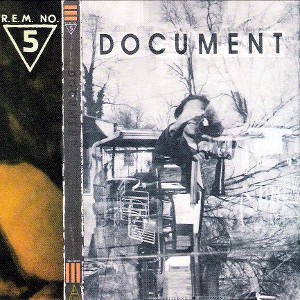
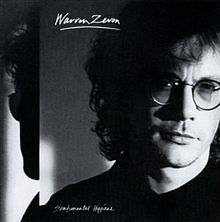
Way back in 1987 (it seems so strange to be saying that), a little band from Athens, Georgia, was about to make the transition from cult band to headlining superstar band when they decided to take an offer from a fading yet still cynical singer/songwriter from the Seventies to be his studio backing band as he recorded he comeback album. This match-up between a great up-and-coming band and a critically-acclaimed songwriter ended up a match in heaven. The proof is called Sentimental Hygiene, that the great Warren Zevon release in 1987 to great fanfare still his backing band was none other than R.E.M. whose Document album was burning up the pop charts since it contained the band’s first Top 10 hit (“The One I Loved”) and an eternally great song (“It’s the End of the World As We Know (And I Feel Fine)”).

7.27 R.E.M._-_Document7.27 Sentimental_Hygiene_album_cover

The Warren Zevon album was his best since his 1978 Excitable Boy album that contained one of the all-time great songs, “Werewolves of London”. At the time, Zevon was one of the few singer/songwriters from the Seventies that was held in high respect by the young alternative bands that were coming into prominence at the time. Now, the greatest young band at the time was helping their hero in his comeback. And, for Zevon, this album was a big comeback.

7.27 Hindu_Love_Gods_-_Hindu_Love_Gods

Zevon’s music is rarely going to be commercial, especially in his hands. But, Sentimental Hygiene was a critical and commercial success. The album was an artistic success as well. During the recording sessions for Zevon’s album, the group created several other songs in that relaxed yet creative environment. Word at the time was that the unreleased music was some of the musicians finest record songs in both of their careers. One song in particular, a cover of Prince’s “Raspberry Beret” was making it’s way through the bootleg collector’s netherworld. Such was the demand for this long-rumored treasure trove of great music was finally released under the group name the Hindu Love Gods. The album was an eponymous titled album and was one of the rare bootleg albums that truly lived up to its reputation. As a matter of fact, there were two super popular bootlegs from that year: Hindu Love Gods and Prince’s The Black Album. Who knew that Prince was going to play a role in both albums.

7.27 Hindu Love Gods - Raspberry Beret

To me, there is nothing like hearing Zevon, while being backed by a great rock band like R.E.M., while singing in his own acerbic manner “Raspberry Beret”. The rest of the songs were all blues and folk standards, so that’s what made their version of “Raspberry Beret” so stark. The artists had found the underlying blues within Prince’s dance/pop classic. Their version of the song seems just like another blues standard in their hands. Yes, this song is truly great in that it holds up as a great song in either version.

So, if you are seeking out more music to give you a more historically accurate view of the music of the Eighties, Hindu Love Gods will help you expand that vision beyond what’s heard on the radio. Music like this is the true alternative music, not “Video Killed the Radio Star” or “I Melt with You”.

Am I Crazy Since I Still Love Sweet?

7.26 sweet publicity photo

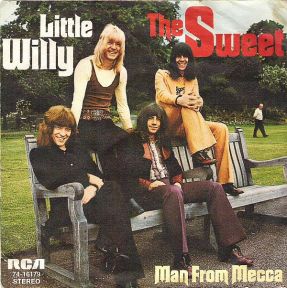
When those of us here in the USA first generally heard music from the English band Sweet, the song was probably “Little Willie”. I remember all of on the school bus who were in elementary school rhythmically stomping our feet to that song while “singing” the song at the top of lungs. That poor, poor bus driver, Mr. Young, God rest his soul. There had to be nothing worse than a bunch of crazed-eyed, sugar-loaded pre-teens animalistically reacting to a bubblegum/Glam rock song in the manner the artists intended. As an adult, I can imagine the sight, since I lived through my own boys doing the same thing with Master P, “Baby Got Back” and Blink-182.

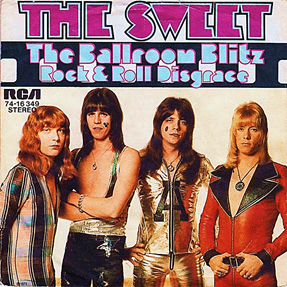
7.26 Sweet Little_Willy7.26 Sweet Ballroom_blitz

Finally, as an adult, I ran across an electronic collection of Sweet’s greatest hits in some packaging that seemed to be more of an individual’s compilation rather than that of a record company, which makes it all the more worthwhile. By the time I reached middle school, I was treated to perhaps Sweet’s greatest songs: “Ballroom Blitz” (which is being pimped in some of the more recent Suicide Squad movie trailers) and “Fox on the Run” (which can be heard, ever so slightly, during the movie Dazed and Confused). The only other US hit song Sweet gave us was during my sophomore year in high school when “Love Is Like Oxygen” was the band’s last hit song. That song was something of an anomaly, since it was more of a Glam ballad than the power pop, bubble metal hits of the other three.

7.26 sweet Fox_on_the_Run_single_cover7.26 Sweet-Love_is_Like_Oxygen

But, what I have learned from this compilation is that Sweet’s talent went much more deep than those four hits would have ever let us believe. Let’s just straighten this out right now. Sweet only released a couple of singles that I would consider “bubblegum”. After those first couple of singles, they were releasing some of the finest examples of hard rocking Glam rock. Personally, I have always seemed to have enjoyed Glam rock, because I seem to find its DNA in the music of the late-Seventies and early-Eighties that I loved: punk, power pop, new wave, Glam metal and alternative music. Sweet’s music, while usually rocking as hard as Alice Cooper, T. Rex or the New York Dolls at the time, but you can hold them up next to Sex Pistols, Duran Duran or Quiet Riot without a loss of quality.

7.26 sweet logo

So, let’s raise our glasses to this band called Sweet, or should I say “The Sweet” as our British brethren call the band. I have to say that finding a Sweet album or CD will very much be worth your effort as their great mixture of Bo Diddley beats, hard rock guitars and Queen-like vocal harmonies will bring you hours of listening pleasure. Anyway, there’s nothing like a “Teenage Rampage”.

I Just Could Not Wait For WTF Wednesday For This Band

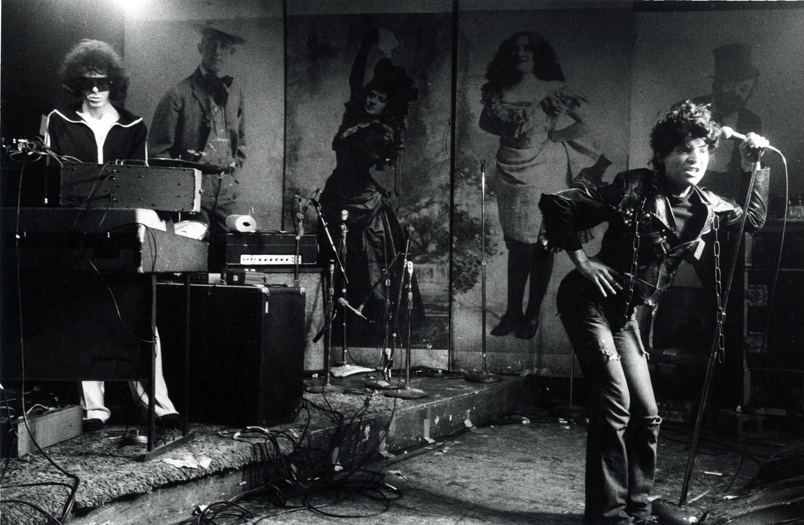
7.25 Suicide at CBGBs

One week ago, Seventies NYC punk impresario Alan Vega passed away at the age of 78. Oh, sure, few of you have heard of him or his innovative electronic band, Suicide. Well, being the old teacher that I am, let’s do a little Rock and Roll History lesson.

When I was seven years old, my brother and I went to a babysitter’s house in the summer. Dad had just been promoted to being the principal at a school in my old school system that is no longer open. And, Mom was taking classes for her Master’s degree in Art Education. Anyway, my brother and I were lucky to go to one of the coolest babysitters around. She would watch several kids, of whom I was the oldest. So, I got to hang with her the younger two of her three sons. One day, those guys thought it would be real could to lock me in their closet while sending the light from a strobe through the slots of the door while playing the beginning of Black Sabbath’s first album. Needless to say, I was freaked out!

Of course, it took me ten years before I could really handle my Sabbath. Thanks, jackasses! But guess what?!?! There’s much scarier sounding music out there than silly Black Sabbath. No, I am not talking about Death Metal, although the subject matter is troubling, their sound is cliche. No, I am going tell you about a relatively unknown electronic punk band called Suicide, of which Alan Vega was the lead “singer”.

7.25 Suicide1977

So, first off, what does the band Suicide sound like? To me, they were the true punks. They took the music of Kraftwerk to American art schools, only to come out sounding like that were on acid and sending Vega’s near-rockabilly vocals through various electronic devices that only made their off-the-wall lyrics sound that much more disturbing. Much of their stuff sounds like the three steps BEYOND the weirdest music The Cars ever put onto their first two albums (“Candy-O”, “Moving in Stereo”) mixed with Peter Gabriel’s truly terrifying song “Intruder” that when taken altogether is truly freaky music.

7.25 Suicide 1980

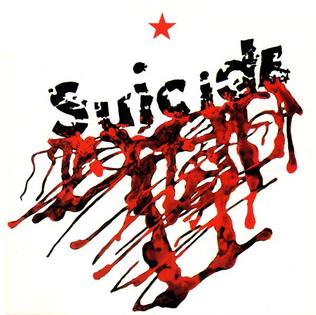
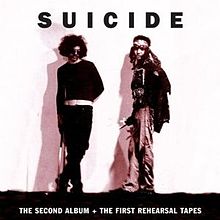
There first and second albums were released at the height of the CBGB’s band all getting signed, so even the least commercial-sounding bands, such as Suicide, were being signed. When the first self-titled album was released in December of 1977, the critics were generally unkind to the band’s music. In January 1980, Suicide released another eponymous album, but this time produced by The Cars’ Ric Ocasek. The band’s label was hoping that Ocasek would make Suicide more palatable to the public, but such was not the case. Instead, Ocasek’s clean production work only made Suicide’s music more disturbing. And, once again, the critics were unimpressed.

Yet, just like other bands who had been written off after a couple of albums, Suicide joined the Velvet Underground and Big Star as being a huge influence on various new genres that opened in their aftermath. If it weren’t for Suicide, we might not have had music from Joy Division (and later New Order), Gang of Four, The Human League or Soft Cell. The whole post-punk and electronic music scenes were the product of those groups of young people relating to the alienation felt by the mall rat generation.

So, if you are in the mood for something different to listen to, just pull Suicide on Spotify or Pandora or whatever. If you can get past the first couple of songs, then here’s a “Bully!” to you! If not, don’t fear! You are in the majority. It’s simply sometimes, I love to run clockwise on a high school track. Actually, turn on the Democratic convention, turn down the TV’s volume and begin playing Suicide’s first album. I hear it’s like listening to Pink Floyd’s Dark Side of the Moon while watching The Wizard of Oz. Start you own tradition tonight!

Supergroup #4: Chickenfoot

7.21 chickenfoot band

Chickenfoot HAS got to be the worst name for a band, let alone a supergroup made up of guitar virtuoso Joe Satriani, former Van Halen and Van Hagar bassist Michael Anthony, Red Hot Chili Peppers drummer and Will Ferrell look-alike Chad Smith, and vocalist from various groups and solo projects Sammy Hagar. When this group was announced in 2008, classic rock and metal fans everywhere rejoiced. And, as a music fan, I too was intrigued. I had to hear what this band would sound like.

7.21 chickenfoot

In June of 2009, Chickenfoot released their first album entitled Chickenfoot. Then I played it. I must say that the first album sounded exactly like the Hagar version of Van Halen, only instead of a Eddie Van Halen guitar solo that flowed nicely within the song, this group’s songs would abruptly break for some crazy guitar solo that only Satriani could whip up, then just as abruptly we go back to the “song”.

Each and every member is an excellent individual player. Unfortunately, what may have sounded like an awesome explosion of music when the members got together for the first time at Sammy’s Cabo Club. And, honestly, they probably were fantastic during a tequilla-filled evening of jamming. But, when it came to writing songs, they all sounded like Sammy Hagar solo or half-baked late-Eighties Van Halen songs with crazier guitar solos simply spliced in the space where a more melodic solo would normally be.

7.21 chickenfoot iii

Still, I gave the band a second chance upon the release of their second album in 2011, sarcastically titled Chickenfoot III. Unfortunately, this album seemed hastily put together. So, the sound seemed spliced together even more. When the band eventually went on tour, Smith could not go. So, another great drummer by the name of Kenny Aronoff, former drummer for John Mellencamp’s band in the Eighties and into the Nineties, went out instead.

chickenfoot lv

Near Christmas of 2012, the touring band released a live album, called Chickenfoot LV. Once again, this album did not prove the should-be prowess of this band. Unfortunately, the band seemed uninspired, which was too bad, as I was hoping that they would show their true strength as a band on a live album. But, such was not the case. All of the successful bands have a certain chemistry that Chickenfoot, despite all of their individual prowess, did not possess as a band. And, that is what the downfall of many so-called supergroups is – a lack of chemistry.

Take a quick look through rock’s sixty year history. The great supergroups had chemistry, like The Power Station, Traveling Wilburys, and Crosby, Stills, Nash & Young. Yet, groups like Blind Faith, Bad English, Damn Yankees and Chickenfoot were all lacking that non-tangible component called chemistry.

Tomorrow, we will finish up this week on supergroups. Then, I will attempt to find a topic you will enjoy. Peace out!